

Dicromantispa Interrupta
dicromantispa interrupta
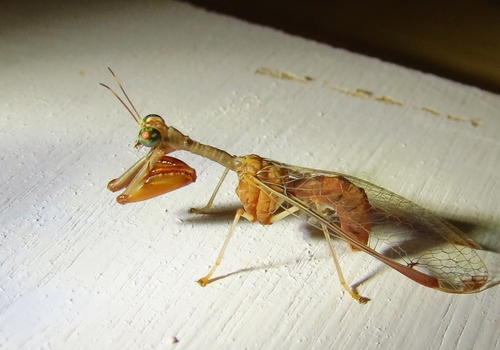
Conozca a Dicromantispa interrupta, un miembro fascinante y dramático de la familia de mantíspidos Mantispidae. A menudo llamado mantíspido interrumpido, este insecto representa un ejemplo increíble de convergencia evolutiva. Si bien sus patas delanteras raptoras y su protórax alargado lo hacen parecer notablemente una mantis religiosa en miniatura, en realidad es un miembro del orden Neuroptera, lo que lo relaciona más estrechamente con las crisopas y las hormigas león. Este pequeño depredador es conocido por su coloración similar a la de una avispa y un ciclo de vida especializado que vincula su supervivencia directamente con las arañas. Durante su etapa larval, Dicromantispa interrupta experimenta hipermetamorfosis, donde las larvas buscan activamente una araña hembra para subirse a ella, esperando a que teja un saco de huevos para alimentarse de los huevos en su interior.
Hábitat: Se encuentra típicamente en bosques caducifolios, bordes de bosques, pastizales y campos donde las arañas y los insectos pequeños son abundantes.
Dicromantispa interrupta presenta un protórax alargado, de color ámbar a marrón rojizo, que se asemeja a un cuello, con una longitud corporal total que oscila entre 1 y 3 centímetros. Su cabeza está equipada con grandes ojos compuestos y antenas cortas, mientras que sus llamativas patas delanteras raptoras están decoradas con bandas oscuras. Sus alas son membranosas y transparentes, que alcanzan hasta 5 centímetros de envergadura, y se caracterizan por una distintiva banda oscura, marrón rojiza interrumpida, a lo largo del borde delantero.
Categoría
InsectosRareza
Común
Peligro
1/5 · Muy bajo
Snaps
1
Aunque se parece casi idénticamente a una mantis religiosa, los mantíspidos pertenecen a un orden de insectos completamente diferente, Neuroptera, lo que los convierte en parientes más cercanos de las crisopas.
Si una larva de mantíspido se sube a una araña macho en lugar de una hembra, esperará en él y se transferirá a una araña hembra durante el apareamiento.
Para disuadir a los depredadores, imitan no solo la apariencia de las avispas papeleras, sino también su patrón de caminar a tirones y su comportamiento de agitar las alas.
Los adultos exhiben mimetismo batesiano, mostrando patrones amarillos, marrones y negros, y comportamientos de agitación de alas que los hacen parecer avispas papeleras con aguijón para disuadir a los depredadores.
Posee patas delanteras muy modificadas y musculosas que pueden cerrarse en milisegundos para atrapar presas ágiles como moscas y polillas.
Las larvas pueden localizar y subirse a arañas que pasan, viajando y alimentándose de la hemolinfa de la araña hasta que se produce un saco de huevos.
Los adultos son depredadores activos de pequeños insectos, mientras que las larvas especializadas se alimentan exclusivamente de los huevos dentro de los sacos de huevos de araña.
Diferencias por edad: Las larvas son parásitos internos o externos de las arañas y sus sacos de huevos, mientras que los adultos son depredadores aéreos de vida libre.
Rabidosa rabida
Las larvas parasitan los sacos de huevos de esta araña lobo, ocasionalmente subiéndose primero a la madre.
Drosophila melanogaster
Los adultos cazan y consumen estas pequeñas moscas en la vegetación.

Poecile carolinensis
Depredado por aves insectívoras que anidan en los márgenes del bosque.
Aún no hay insignias de rasgos asignadas a este objeto.
Todavía no hay alias listados.
Las colecciones para este objeto aparecerán aquí a medida que se añadan más temas.
Peligro
1/5 · Muy bajo
Todavía no hay notas especiales de seguridad.
Busca seis patas, antenas, tres secciones en el cuerpo y la forma de las alas. Los escarabajos tienen las alas delanteras endurecidas; las moscas solo tienen un par que funciona. Los insectos diminutos pueden necesitar un primer plano antes de que se vea su grupo. Identificador de insectos: sube una foto y compara los detalles visibles.
1-3 cm
2-5 cm
0.0001-0.0005 kg
1 años
Los adultos son depredadores activos de pequeños insectos, mientras que las larvas especializadas se alimentan exclusivamente de los huevos dentro de los sacos de huevos de araña.
Se encuentra típicamente en bosques caducifolios, bordes de bosques, pastizales y campos donde las arañas y los insectos pequeños son abundantes.
Emboscada
Acércate para separar los grupos y explorar dónde se ha fotografiado este objeto.

Alabama, US
Puedes ver Colorín Pintado, Pinzón Mexicano y Gavilán De Hombros Rojos.
Ver guía →

Texas, US
Puedes ver Gecko Casero Del Mediterráneo y Sapo De La Costa Del Golfo.
Ver guía →
Llévate el descubrimiento
Haz una foto con Snappit, identifica la especie y guarda el hallazgo en tu colección.