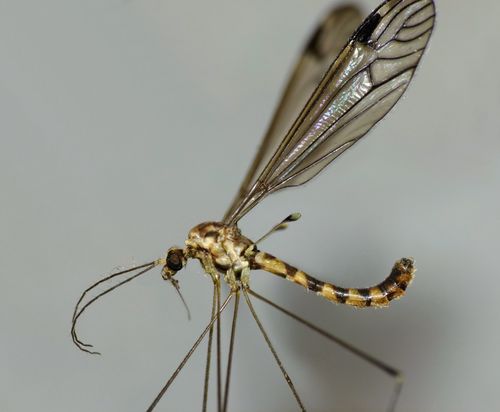


Dolichopeza
dolichopeza
Dolichopeza, un género dentro de la familia Tipulidae, comúnmente conocido como mosquitos grulla o típulas, representa un grupo fascinante de insectos a menudo confundidos con mosquitos gigantes. Estas delicadas criaturas desempeñan un importante papel ecológico, particularmente sus formas larvales, que son descomponedoras cruciales en varios hábitats terrestres. Los adultos suelen tener una vida corta, centrándose principalmente en la reproducción. A pesar de su tamaño y apariencia algo intimidantes, las especies de Dolichopeza son completamente inofensivas para los humanos, alimentándose de néctar o no alimentándose en absoluto como adultos, y sus larvas consumiendo materia orgánica en descomposición. Su presencia es a menudo un indicador de un ecosistema sano y húmedo.
Hábitat: Se encuentran en ambientes húmedos y sombreados como suelos forestales, humedales y zonas ribereñas, a menudo cerca de madera en descomposición u hojarasca.
Los mosquitos grulla Dolichopeza se caracterizan por sus cuerpos extremadamente delgados, patas desproporcionadamente largas y frágiles, y un par de alas largas, estrechas y a menudo translúcidas. Su coloración suele variar de marrón claro a grisáceo, a veces con marcas más oscuras en el tórax. La cabeza es relativamente pequeña con ojos compuestos prominentes y antenas cortas. Generalmente miden entre 1 y 3 centímetros de longitud corporal, con una envergadura que puede superar fácilmente su longitud corporal, dándoles una apariencia muy desgarbada en vuelo o en reposo.
Categoría
InsectosRareza
Común
Peligro
1/5 · Muy bajo
Snaps
¡Sé la primera persona en hacer un snap!
Los mosquitos grulla adultos tienen una vida muy corta, a menudo solo unos pocos días o un par de semanas, centrada principalmente en el apareamiento y la puesta de huevos.
A pesar de su apariencia de mosquito y gran tamaño, los mosquitos grulla adultos (incluido Dolichopeza) no pican a humanos ni a animales.
Las larvas de Dolichopeza, a veces llamadas 'gusanos de cuero', son importantes descomponedoras que ayudan a enriquecer el suelo, haciéndolas beneficiosas para los ecosistemas.
El nombre común 'daddy long-legs' (patas largas) a menudo se aplica confusamente a los mosquitos grulla, las arañas de sótano y los opiliones, aunque son criaturas muy diferentes.
Las etapas larvales de Dolichopeza son detritívoras cruciales, descomponiendo eficientemente la materia vegetal en descomposición, hongos y otros detritos orgánicos. Este proceso recicla nutrientes de vuelta al ecosistema, haciéndolas vitales para la salud del suelo.
Sus patas extremadamente largas y delicadas se desprenden fácilmente cuando son agarradas por un depredador. Esta autotomía permite al mosquito grulla escapar, sacrificando una extremidad para salvar su vida, de forma similar a como algunas lagartijas pierden sus colas.
Los adultos de algunas especies de Dolichopeza poseen la notable habilidad de caminar o patinar sobre la superficie del agua. Esta adaptación les ayuda a navegar por sus hábitats húmedos y a veces a escapar de depredadores acuáticos.
Las larvas de Dolichopeza son principalmente detritívoras, alimentándose de materia orgánica en descomposición que se encuentra en suelos húmedos y hojarasca. Los mosquitos grulla adultos típicamente se alimentan de néctar o melaza, si es que se alimentan, y algunas especies pueden no alimentarse durante su corta vida adulta.
Diferencias por edad: Las larvas son detritívoras, mientras que los adultos pueden consumir néctar para obtener energía o abstenerse de alimentarse por completo, centrándose en la reproducción.

Anax junius
Los adultos y las larvas son una fuente de alimento para varios insectívoros.

Quercus robur
Las larvas descomponen la materia orgánica en el suelo.

Araneus diadematus
Los adultos pueden ser depredados por arácnidos.

Anaxyrus americanus
Las larvas son una fuente de alimento para depredadores terrestres.
Aún no hay insignias de rasgos asignadas a este objeto.
Todavía no hay alias listados.
Las colecciones para este objeto aparecerán aquí a medida que se añadan más temas.
Peligro
1/5 · Muy bajo
Todavía no hay notas especiales de seguridad.
Busca seis patas, antenas, tres secciones en el cuerpo y la forma de las alas. Los escarabajos tienen las alas delanteras endurecidas; las moscas solo tienen un par que funciona. Los insectos diminutos pueden necesitar un primer plano antes de que se vea su grupo. Identificador de insectos: sube una foto y compara los detalles visibles.
1-3 cm
2-5 cm
0.0001-0.0005 kg
8 km/h
Las larvas de Dolichopeza son principalmente detritívoras, alimentándose de materia orgánica en descomposición que se encuentra en suelos húmedos y hojarasca. Los mosquitos grulla adultos típicamente se alimentan de néctar o melaza, si es que se alimentan, y algunas especies pueden no alimentarse durante su corta vida adulta.
Se encuentran en ambientes húmedos y sombreados como suelos forestales, humedales y zonas ribereñas, a menudo cerca de madera en descomposición u hojarasca.
Búsqueda De Alimento
Acércate para separar los grupos y explorar dónde se ha fotografiado este objeto.
Los snaps recientes aparecerán aquí a medida que se añadan nuevas observaciones.
Llévate el descubrimiento
Haz una foto con Snappit, identifica la especie y guarda el hallazgo en tu colección.