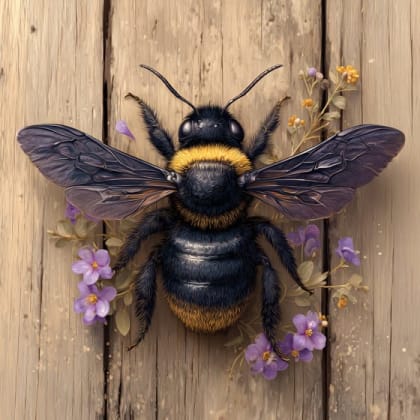
Downy Yellowjacket
Vespula flavopilosa
The Downy Yellowjacket is a small, buzzing insect known for its bright yellow and black stripes. They live in nests and can often be seen flying around flowers and food during the summer.
Hábitat: Urban areas
The Downy Yellowjacket is a medium-sized wasp with striking yellow and black bands across its abdomen. It has a distinctive black anchor-shaped marking on its yellow face and fine, yellowish hairs that give it a slightly fuzzy appearance, differentiating it from other smooth-bodied wasps.
Categoría
InsectosRareza
Common
Peligro
3/5 · Moderado
Snaps
¡Sé la primera persona en hacer un snap!
Downy Yellowjackets help control garden pests by hunting other insects.
Only the queen yellowjacket survives winter to start a new colony in spring!
These tiny wasps build amazing paper nests by chewing up wood fibers!
They sometimes try to share your sweet picnic drinks and sugary snacks!
Downy Yellowjacket can deliver a painful sting because of a barbed stinger that helps them defend their nest.
Downy Yellowjacket has special chemical signals, called pheromones, that help them alert the colony to danger or food.
Downy Yellowjacket can chew wood fibers into pulp that helps them build intricate, multi-layered paper nests.
They eat both sweet nectar for energy and protein-rich insects to feed their young.
Diferencias por edad: Larvae are fed chewed up insects, while adults primarily consume sugary liquids.
Mephitis mephitis
Digs up nests to eat larvae and adult wasps.
Pieris rapae
Hunts caterpillars to feed its growing young in the nest.
Solidago canadensis
Visits flowers for nectar, incidentally transferring pollen.
Marcado con bandas paralelas o líneas de color.
Los animales sociales viven en grupos organizados, cooperando para obtener beneficios de supervivencia como la búsqueda de alimento, la defensa y la cría de descendencia.
Este rasgo identifica organismos cuya dieta incluye tanto materia vegetal como animal.
Colorido describe a organismos u objetos que exhiben una amplia variedad de colores brillantes y distintivos.

Los animales diurnos están activos principalmente durante el día y suelen descansar o dormir por la noche.

Describe una especie cuya presencia y papel tienen un efecto desproporcionadamente grande en su entorno.

Esta característica de hábitat indica especies que pueden coexistir con los humanos en entornos urbanos y suburbanos, utilizando estructuras artificiales y espacios verdes.

Describe organismos que transfieren polen, permitiendo la fertilización y reproducción de las plantas.
Todavía no hay alias listados.
Peligro
3/5 · Moderado
Be careful around yellowjackets; they can sting if they feel threatened.
20-35 mm
10-17 mm
15-45 días
20 km/h
They eat both sweet nectar for energy and protein-rich insects to feed their young.
Urban areas
Foraging
6
Acércate para separar los grupos y explorar dónde se ha fotografiado este objeto.
Los snaps recientes aparecerán aquí a medida que se añadan nuevas observaciones.