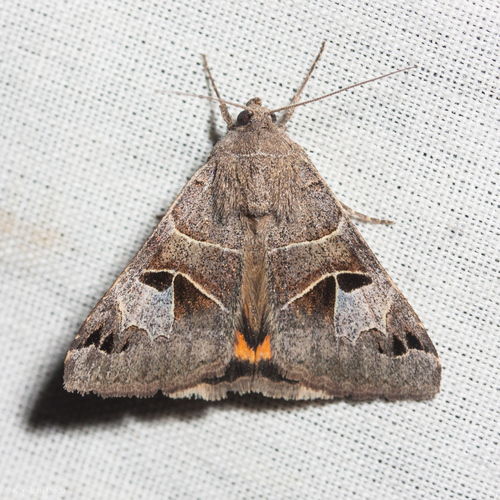


Drasteria Edwardsii
drasteria edwardsii
The Edwards' Drasteria, Drasteria edwardsii, is a fascinating nocturnal moth native to western North America, known for its cryptic camouflage and striking hindwing patterns. As an adult, it plays a role in pollinating various flowering plants by feeding on nectar, while its larval stage is a dedicated herbivore, consuming the leaves of specific woody and herbaceous plants. This species embodies the intricate balance of its ecosystems, from its careful evasion of predators through masterful disguise to its contribution to plant reproduction. Its lifecycle, transitioning from a foliage-eating caterpillar to a nectar-sipping moth, highlights the diverse dietary adaptations found within the insect world.
Hábitat: Found in dry open woodlands, chaparral, scrublands, and areas rich with its specific host plants, such as oak and Ceanothus species.
The Drasteria edwardsii is a medium-sized moth with a wingspan typically ranging from 3.5 to 4.5 cm. Its forewings are usually mottled grayish-brown, often exhibiting intricate darker lines, bands, and a noticeable kidney-shaped (reniform) spot, providing excellent camouflage against tree bark or dry leaves. In stark contrast, its hindwings are distinctively colored, ranging from bright yellow to orange, marked with a broad, dark median band and a dark terminal band. The fringes of the hindwings often display contrasting colors, adding to its unique visual appeal.
Categoría
InsectosRareza
Common
Peligro
1/5 · Muy bajo
Snaps
¡Sé la primera persona en hacer un snap!
Its caterpillars are 'loopers' or 'inchworms', characteristic of the Erebidae family, which move by arching their body to bring their hind prolegs up to their front legs.
The genus name 'Drasteria' comes from Greek, meaning 'runaway' or 'escape', possibly referring to the swift flight or the evasive behavior of these moths.
Unlike many other moths that are drab, Drasteria edwardsii reveals a surprising flash of yellow or orange on its hindwings when it takes flight, a stark contrast to its camouflaged forewings.
The forewings and body coloration of Drasteria edwardsii provide excellent camouflage, allowing it to blend seamlessly with tree bark, dry leaves, and other natural textures during its resting periods, effectively evading visual predators.
This moth is primarily active during the night, utilizing the cover of darkness to forage for nectar and engage in reproductive activities, thereby minimizing encounters with diurnal predators like birds.
Adult Drasteria edwardsii possesses a long, coiled proboscis, a specialized mouthpart that allows it to efficiently extract nectar from a variety of flowering plants, serving as an important pollinator in its ecosystem.
Adult Drasteria edwardsii primarily feeds on nectar from various flowering plants, contributing to their pollination. Its larval stage, however, is herbivorous, consuming the leaves of specific host plants.
Diferencias por edad: Yes, adults consume nectar, while larvae are folivorous, feeding on plant leaves.
Quercus garryana
Larval host plant, providing food for caterpillars.
Ceanothus spp.
Adult moths visit flowers for nectar, facilitating pollination.
Myotis lucifugus
Adult moths are preyed upon by nocturnal insectivores.
Argiope aurantia
Moths can become ensnared in webs, serving as a food source for arachnids.
Aún no hay insignias de rasgos asignadas a este objeto.
Todavía no hay alias listados.
Las colecciones para este objeto aparecerán aquí a medida que se añadan más temas.
Peligro
1/5 · Muy bajo
Todavía no hay notas especiales de seguridad.
La forma más fácil de identificar a Drasteria Edwardsii es usar la aplicación de identificación de naturaleza Snappit.
1-2 cm
3-4 cm
0 años
Adult Drasteria edwardsii primarily feeds on nectar from various flowering plants, contributing to their pollination. Its larval stage, however, is herbivorous, consuming the leaves of specific host plants.
Found in dry open woodlands, chaparral, scrublands, and areas rich with its specific host plants, such as oak and Ceanothus species.
Foraging (adults), Grazing (larvae)
50-200
Acércate para separar los grupos y explorar dónde se ha fotografiado este objeto.
Los snaps recientes aparecerán aquí a medida que se añadan nuevas observaciones.

















