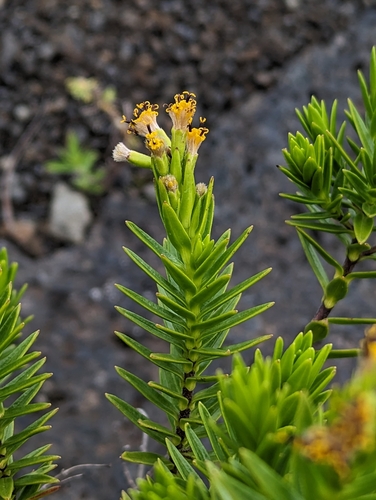


Dubautia Ciliolata
dubautia ciliolata
Dubautia ciliolata, comúnmente conocida como na'ena'e, es un notable arbusto perenne endémico de la isla de Hawái. Creciendo directamente de flujos de lava basáltica áridos y duros, esta planta resistente es miembro de la famosa alianza de la espada plateada hawaiana. Representa uno de los ejemplos más impresionantes de radiación adaptativa en el mundo botánico, donde un único colonizador ancestral de Norteamérica evolucionó en docenas de especies altamente diversas que abarcan desde alturas alpinas hasta selvas tropicales húmedas. Con su hábito de crecimiento compacto, similar a una cúpula, y vibrantes racimos de flores amarillas, Dubautia ciliolata da vida a algunos de los paisajes más jóvenes y estériles de la Tierra. Sirve como una especie pionera esencial, atrapando polvo, materia orgánica y humedad para ayudar a iniciar la formación de suelo en campos de lava recientes.
Hábitat: Se encuentra en matorrales subalpinos de alta elevación y colonizando flujos de lava basáltica estériles en la isla de Hawái.
Esta planta es un arbusto pequeño y densamente ramificado que alcanza hasta 150 centímetros de altura, a menudo adoptando una forma redondeada y compacta. Sus hojas son pequeñas, rígidas y lanceoladas, midiendo de 1 a 2 centímetros de largo, y se agrupan densamente a lo largo de las ramas. Una característica clave de identificación es la presencia de pelos finos, similares a pestañas, a lo largo de los bordes de las hojas. Durante su período de floración, produce llamativas inflorescencias compactas en las puntas de las ramas que contienen pequeñas flores tubulares de color amarillo brillante.
Categoría
PlantasRareza
Common
Peligro
1/5 · Muy bajo
Snaps
2
A pesar de parecer un pequeño arbusto leñoso, está estrechamente relacionada con la famosa espada plateada hawaiana, compartiendo un ancestro común que llegó a Hawái hace millones de años.
Su madera y hojas contienen resinas pegajosas que ayudan a proteger la planta de la pérdida extrema de agua y a disuadir a las plagas de insectos oportunistas.
El nombre de la especie 'ciliolata' proviene de la palabra latina para pestañas, haciendo referencia a la densa franja de pelos finos en los márgenes de sus hojas.
Como fotoautótrofa, esta especie sintetiza sus propios azúcares utilizando la luz solar, el dióxido de carbono y el agua, mientras absorbe nutrientes minerales clave de los suelos volcánicos erosionados.
Aún no hay insignias de rasgos asignadas a este objeto.
Todavía no hay alias listados.
Las colecciones para este objeto aparecerán aquí a medida que se añadan más temas.
Peligro
1/5 · Muy bajo
Todavía no hay notas especiales de seguridad.
La forma más fácil de identificar a Dubautia Ciliolata es usar la aplicación de identificación de naturaleza Snappit.
30-150 cm
10-50 años
Como fotoautótrofa, esta especie sintetiza sus propios azúcares utilizando la luz solar, el dióxido de carbono y el agua, mientras absorbe nutrientes minerales clave de los suelos volcánicos erosionados.
Se encuentra en matorrales subalpinos de alta elevación y colonizando flujos de lava basáltica estériles en la isla de Hawái.
Acércate para separar los grupos y explorar dónde se ha fotografiado este objeto.
Llévate el descubrimiento
Haz una foto con Snappit, identifica la especie y guarda el hallazgo en tu colección.












.jpg&width=800)



_001.jpg&width=800)




