

Eastern Beebalm
monarda bradburyana
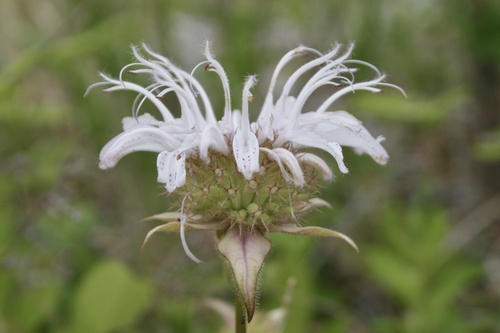
Eastern Beebalm, scientifically known as Monarda bradburyana, is a delightful perennial wildflower native to the open woodlands and rocky glades of the central United States. Named in honor of the 19th-century English naturalist John Bradbury, this plant is one of the earliest beebalms to bloom in spring, bringing life to the forest floor with its crown-like clusters of pale pink flowers. Beyond its striking visual appeal, Eastern Beebalm is famous for its highly aromatic foliage, which releases a pleasant, oregano-like scent when bruised or crushed. This fragrance serves a dual purpose, acting as a defense mechanism against herbivores while inviting a parade of essential native pollinators, including bumblebees and butterflies, to feast on its sweet nectar.
Hábitat: Typically found in dry, open rocky woodlands, limestone glades, savannas, and bluff edges.
This herbaceous perennial grows to about 30 to 60 centimeters tall, featuring square stems characteristic of the mint family. Its leaves are grayish-green, ovate, and opposite, often displaying a purplish tint, especially on the veins and undersides. The flower heads are tight terminal clusters consisting of tubular, two-lipped flowers that are pale pink to white, intricately marked with fine purple dots on the lower lip. The entire flower head is subtended by distinctive, wide bracts that are strongly tinged with purple or bronze, giving the plant a regal appearance.
Categoría
PlantasRareza
Common
Peligro
1/5 · Muy bajo
Snaps
¡Sé la primera persona en hacer un snap!
Like other members of the mint family, Eastern Beebalm has distinctive square-shaped stems that are easily felt when rolled between your fingers.
Native Americans and early settlers used leaves from Monarda species to brew herbal teas to treat ailments like colds, sore throats, and headaches.
The species name 'bradburyana' honors John Bradbury, a British botanist who collected plants in the interior of North America in the early 1800s.
The leaves produce volatile oils like thymol, which emit a strong oregano-like scent that deters mammalian herbivores from grazing on its leaves.
It blooms earlier in the spring than most other Monarda species, providing a critical early food source for emerging native bees and hummingbirds.
Possesses a fibrous root system that allows it to thrive in dry, rocky, and shallow soils where other wildflowers might wither.
As a photoautotrophic plant, Eastern Beebalm generates its own energy through photosynthesis, using sunlight, water, and carbon dioxide.
Archilochus colubris
Feeds on nectar and serves as an important pollinator.
Bombus pensylvanicus
Pollinates the flowers while gathering nectar and pollen.
Lintneria eremitus
Caterpillars feed on the foliage of Monarda species.
Aún no hay insignias de rasgos asignadas a este objeto.
Todavía no hay alias listados.
Las colecciones para este objeto aparecerán aquí a medida que se añadan más temas.
Peligro
1/5 · Muy bajo
Todavía no hay notas especiales de seguridad.
La forma más fácil de identificar a Eastern Beebalm es usar la aplicación de identificación de naturaleza Snappit.
30-60 cm
3-8 años
As a photoautotrophic plant, Eastern Beebalm generates its own energy through photosynthesis, using sunlight, water, and carbon dioxide.
Typically found in dry, open rocky woodlands, limestone glades, savannas, and bluff edges.
Acércate para separar los grupos y explorar dónde se ha fotografiado este objeto.
Los snaps recientes aparecerán aquí a medida que se añadan nuevas observaciones.

Missouri, US
Puedes ver Verbena Rosa y Tortuga De Caja De Tres Dedos.
Ver guía →
Missouri, US
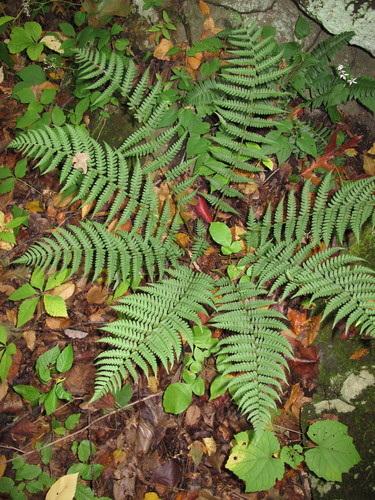
Puedes ver Helecho Leñoso Marginal y Tortuga Mapa Común.
Ver guía →

Missouri, US
Puedes ver Helecho De Navidad, Trilio De La Pradera y Eastern Beebalm.
Ver guía →











