Eastern Blacknose Dace
rhinichthys atratulus
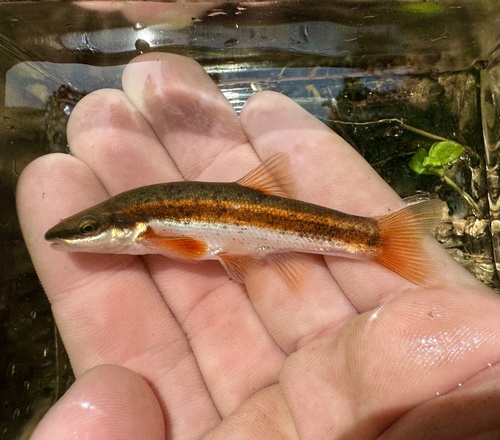
The Eastern Blacknose Dace is a small fish that loves to swim in cool streams and rivers. With its distinctive black stripe on its nose, it's easy to spot when it darts around rocks!
Hábitat: Cool, clean streams and rivers with rocky bottoms.
The Eastern Blacknose Dace has a slender, torpedo-shaped body with a distinctive dark stripe running from its snout to its tail. Its back is typically mottled dark brown or olive, fading to a creamy white belly. Males often display reddish-orange fins and a bright stripe during breeding season.
Categoría
PecesRareza
Common
Peligro
0/5 · Sin peligro conocido
Snaps
¡Sé la primera persona en hacer un snap!
Males get a bright red 'nose' when it's time to find a partner!
Their scientific name means 'snout-fish' because of their pointed nose!
These tiny fish can survive even when streams get very low!
They love to build little nests by moving pebbles with their mouths!
Eastern Blacknose Dace has mottled dark patterns that help them blend perfectly with rocky stream beds, making them hard for predators to spot.
Eastern Blacknose Dace can sniff out tiny prey in murky water because of its keen sense of smell, located in its pointed nose.
Eastern Blacknose Dace can quickly dart away from danger because of its powerful tail fin, helping it escape hungry birds and bigger fish.
Eastern Blacknose Dace can develop bright red and orange colors during spring because these vibrant hues attract mates for spawning.
They eat tiny insects and larvae found on the stream bottom, sometimes even algae!
Micropterus salmoides
A common predator in their habitat.
Megaceryle alcyon
These birds dive to catch dace from above.
Lontra canadensis
Otters are active hunters in dace streams.
Stenonema modestum
Feeds on these common aquatic insect larvae.
Los animales sociales viven en grupos organizados, cooperando para obtener beneficios de supervivencia como la búsqueda de alimento, la defensa y la cría de descendencia.
Colorido describe a organismos u objetos que exhiben una amplia variedad de colores brillantes y distintivos.
Este rasgo identifica a los organismos cuya dieta consiste total o principalmente en tejido animal.
Los hábitats acuáticos abarcan entornos donde los organismos viven principalmente en el agua, incluidos océanos, ríos, lagos y humedales.
Peligro
0/5 · Sin peligro conocido
Todavía no hay notas especiales de seguridad.
6-13 cm
0.002-0.015 kg
2-4 años
They eat tiny insects and larvae found on the stream bottom, sometimes even algae!
12 km/h
Cool, clean streams and rivers with rocky bottoms.
Foraging
2 m
Acércate para separar los grupos y explorar dónde se ha fotografiado este objeto.
Los snaps recientes aparecerán aquí a medida que se añadan nuevas observaciones.