.jpg&width=800)





Eastern Fox Squirrel
Sciurus niger
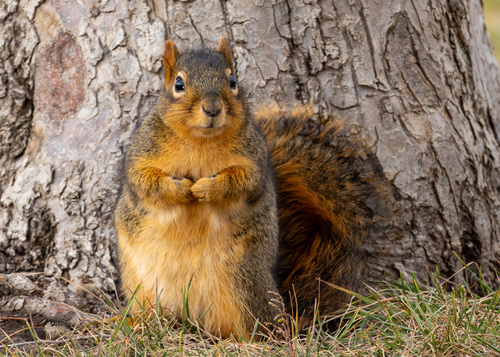
The Eastern Fox Squirrel is a large, bushy-tailed squirrel found in many areas. They are known for their playful nature and love to climb trees and gather nuts.
Hábitat: Forests
The Eastern Fox Squirrel is the largest tree squirrel in North America, boasting a stocky body and a long, bushy tail. Its fur color is highly variable, ranging from grizzled gray to reddish-brown, often with a distinctive rust-colored or orange underside.
Categoría
MamíferosRareza
Common
Peligro
1/5 · Muy bajo
Snaps
¡Sé la primera persona en hacer un snap!
Eastern Fox Squirrels can live up to 18 years, often outliving many smaller rodents!
Fox squirrels fake burying nuts to trick other animals!
Their bushy tail acts like a parachute to help them glide during long leaps!
Their super strong front teeth never stop growing, so they must chew constantly!
Eastern Fox Squirrels can remember thousands of buried nut locations because their excellent spatial memory helps them find food later.
Eastern Fox Squirrels can leap and climb with incredible agility because their strong claws and balanced tail help them navigate trees safely.
Eastern Fox Squirrels use their large, bushy tail for balance while climbing and as a sunshade, helping them communicate warnings.
They love to eat nuts, seeds, and fruits, but also munch on fungi and insects.
Quercus alba
Main food source (acorns).

Carya ovata
Provides nutritious nuts.
Buteo jamaicensis
Common avian predator.
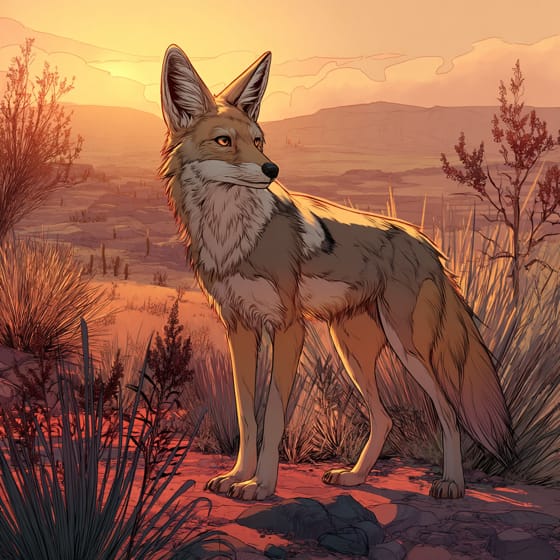
Canis latrans
Ground predator in their habitat.
Peludo describe a los animales que poseen una cubierta densa de pelo o pelaje suave.
Los animales sociales viven en grupos organizados, cooperando para obtener beneficios de supervivencia como la búsqueda de alimento, la defensa y la cría de descendencia.
El camuflaje describe a los organismos que poseen colores o patrones que les permiten mezclarse con su entorno.
Este rasgo caracteriza a los organismos cuya dieta consiste total o principalmente en material vegetal.

Esta característica describe a los organismos que manipulan objetos externos para lograr un objetivo específico.

Los hábitats boscosos son entornos terrestres dominados por una densa cubierta arbórea, que sustentan una gran diversidad de vida animal y vegetal.

Los animales diurnos están activos principalmente durante el día y suelen descansar o dormir por la noche.

Describe una especie cuya presencia y papel tienen un efecto desproporcionadamente grande en su entorno.

Este rasgo identifica a los organismos que exhiben una rapidez excepcional en sus movimientos para cazar, escapar o desplazarse.
Peligro
1/5 · Muy bajo
Watch squirrels from a distance and don't try to touch them, as they can be scared.
45-70 cm
0.5-1.3 kg
8-18 años
24 km/h
They love to eat nuts, seeds, and fruits, but also munch on fungi and insects.
Forests
Foraging
1-6
Acércate para separar los grupos y explorar dónde se ha fotografiado este objeto.
Los snaps recientes aparecerán aquí a medida que se añadan nuevas observaciones.

Ohio, US
Puedes ver Petirrojo Americano, Ciervo De Cola Blanca y Halcón Peregrino.
Ver guía →
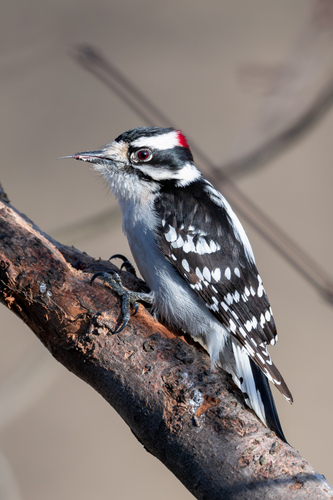
Illinois, US
Puedes ver Carpintero Peludo, Petirrojo Americano y Cuervo Americano.
Ver guía →
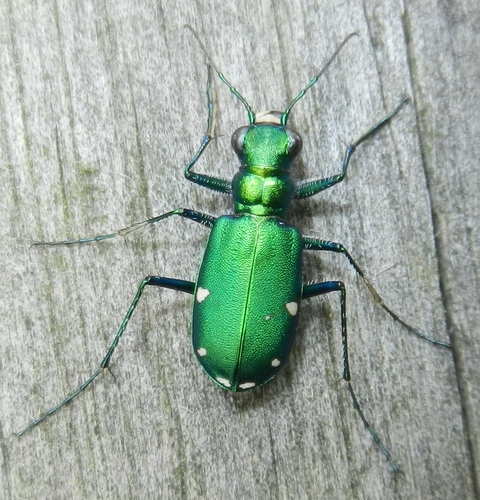
Indiana, US
Puedes ver Six-Spotted Tiger Beetle, Garlic Mustard y Buitre.
Ver guía →
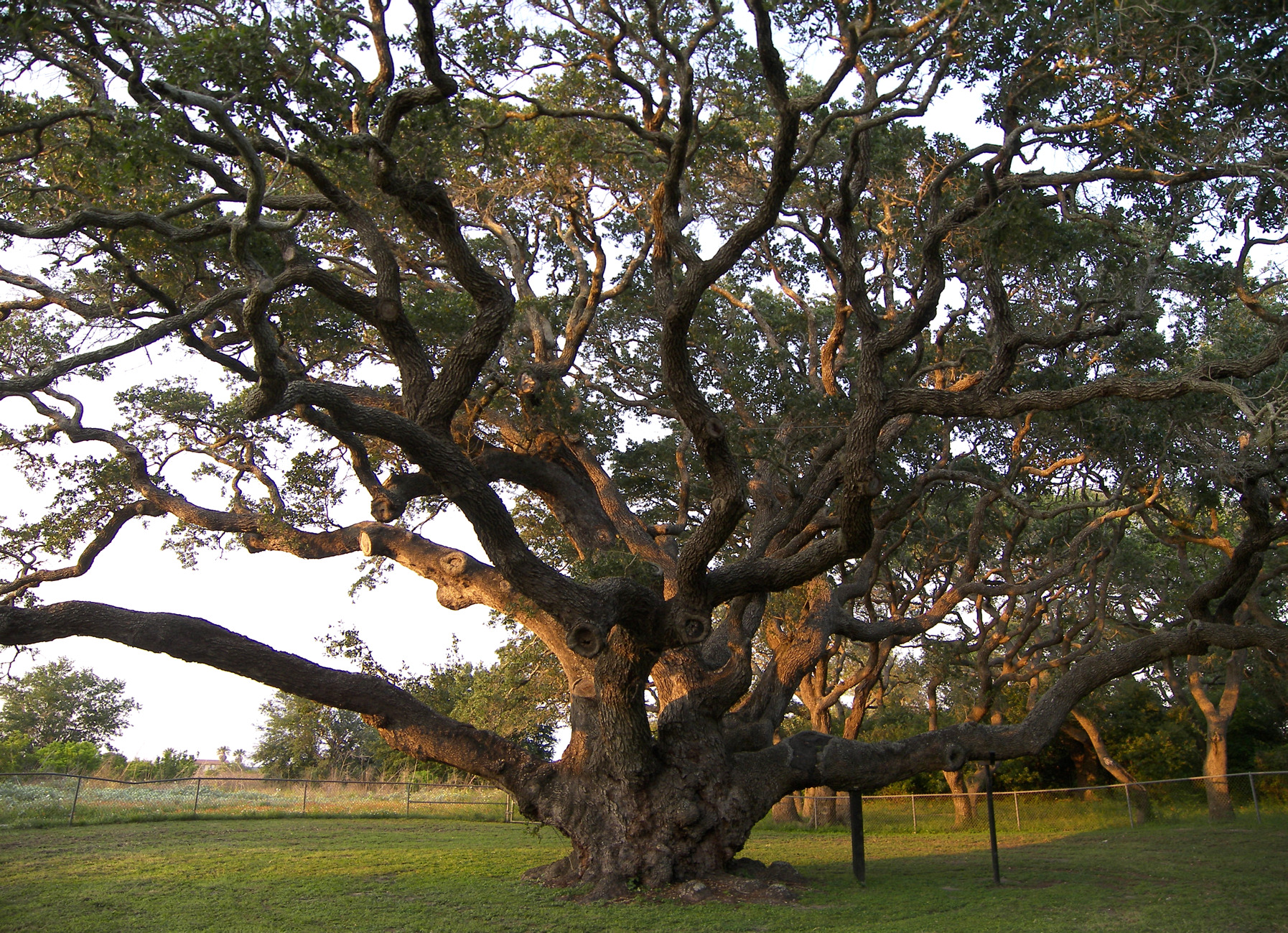
Texas, US
Puedes ver Pelícano Pardo, Ciervo De Cola Blanca y Laughing Gull.
Ver guía →
Texas, US
Puedes ver Anolis Castaño, Ardilla Gris Oriental y Abeja.
Ver guía →
California, US
Puedes ver Eastern Fox Squirrel, Cuervo Común y Paloma Huilota.
Ver guía →