



Edelweiss
leontopodium nivale
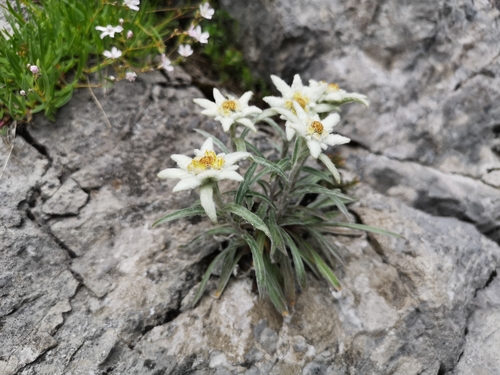
El Edelweiss (Leontopodium nivale) es una legendaria flor de montaña que ha cautivado durante mucho tiempo los corazones de montañistas, poetas y amantes de la naturaleza. Ubicada en lo alto de las escarpadas rocas calizas de los Alpes europeos, los Cárpatos y los Apeninos, esta resistente planta perenne es el símbolo máximo de la pureza y supervivencia alpina. Sus brácteas blancas afieltradas en forma de estrella y sus diminutas cabezas florales amarillas evocan la belleza dramática y prístina de la naturaleza salvaje de alta montaña.
Hábitat: Se encuentra en prados alpinos de gran altitud y grietas rocosas de piedra caliza, a menudo aferrándose a acantilados escarpados y laderas rocosas y abruptas.
El Edelweiss se identifica fácilmente por su patrón único de doble estrella, compuesto por 5 a 15 hojas florales blancas lanudas (brácteas) que rodean racimos de diminutas y densas cabezas florales de color amarillo verdoso. Toda la planta, especialmente las brácteas y el follaje, está densamente cubierta de finos pelos blancos, similares a la lana, que le dan una apariencia gris plateada o aterciopelada. Típicamente crece cerca del suelo en pequeños mechones, alcanzando alturas de 5 a 30 centímetros.
Categoría
PlantasRareza
Común
Peligro
1/5 · Muy bajo
Snaps
¡Sé la primera persona en hacer un snap!
En la época victoriana, los jóvenes escalaban peligrosos acantilados alpinos para recoger flores de Edelweiss como prueba de su valentía y devoción a sus amadas.
El vello blanco de la flor actúa como un filtro UV altamente eficiente, lo que ha inspirado a los investigadores a desarrollar protectores solares naturales basados en su estructura molecular.
El nombre 'Edelweiss' proviene de las palabras alemanas 'edel' (noble) y 'weiss' (blanco).
Los densos pelos lanudos que cubren las brácteas y las hojas absorben la dañina radiación ultravioleta, protegiendo a la planta del intenso sol de gran altitud.
Su forma de crecimiento compacta y la capa protectora de vello atrapan el calor y la humedad cerca de la superficie de la planta, actuando como un aislante natural contra las temperaturas heladas y los vientos secos.
Su profundo sistema radicular fibroso permite a la planta anclarse de forma segura en estrechas grietas rocosas y soportar las fuerzas físicas de la erosión.
Como planta fotoautótrofa, el Edelweiss genera su propia energía a través de la fotosíntesis, utilizando la luz solar, el dióxido de carbono, el agua y los minerales del suelo.
Parnassius apollo
La Mariposa Apolo se alimenta del néctar de las flores de Edelweiss, sirviendo como un importante polinizador de alta altitud.
Capra ibex
El Ibex Alpino pasta en la vegetación alpina, consumiendo ocasionalmente Edelweiss junto con otras hierbas y pastos de alta montaña.
Todavía no hay alias listados.
Las colecciones para este objeto aparecerán aquí a medida que se añadan más temas.
Peligro
1/5 · Muy bajo
Todavía no hay notas especiales de seguridad.
Empieza por la planta entera y luego compara la disposición de las hojas, sus bordes, los tallos y las flores o frutos, si los hay. Las hojas opuestas crecen en parejas; las alternas salen de una en una a lo largo del tallo. Juntos, estos detalles dicen mucho más que una sola hoja verde. Identificador de plantas: sube una foto y compara los detalles visibles.
5-30 cm
3-10 años
Como planta fotoautótrofa, el Edelweiss genera su propia energía a través de la fotosíntesis, utilizando la luz solar, el dióxido de carbono, el agua y los minerales del suelo.
Se encuentra en prados alpinos de gran altitud y grietas rocosas de piedra caliza, a menudo aferrándose a acantilados escarpados y laderas rocosas y abruptas.
Acércate para separar los grupos y explorar dónde se ha fotografiado este objeto.
Los snaps recientes aparecerán aquí a medida que se añadan nuevas observaciones.
Llévate el descubrimiento
Haz una foto con Snappit, identifica la especie y guarda el hallazgo en tu colección.


















