.jpg&width=800)





European Paper Wasp
Polistes dominula
The European Paper Wasp is a friendly insect that builds beautiful nests out of paper-like material. They are often seen flying around gardens and parks, helping to control pests.
Hábitat: Urban areas
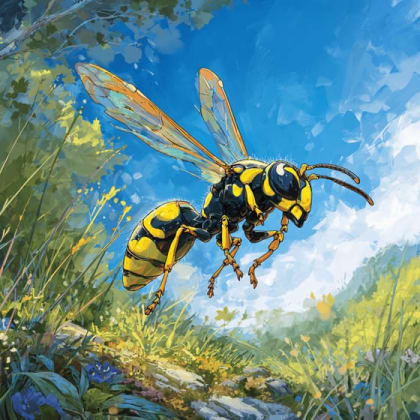
The European Paper Wasp is a slender insect, typically yellow and black with long, reddish-orange antennae. Its body is less fuzzy than a bee and more elongated than a yellowjacket, with distinctive bright yellow markings on its face and a pinched 'waist'.
Categoría
InsectosRareza
Common
Peligro
2/5 · Bajo
Snaps
¡Sé la primera persona en hacer un snap!
Adult wasps mainly drink nectar and fruit juices for energy, but their babies need protein from hunted insects!
Queens can choose to cooperate and build a nest together, but only one will lay all the eggs!
These wasps often "sunbathe" to warm up their muscles for flight on cool mornings, like tiny solar panels!
Unlike honeybees, European Paper Wasps can sting multiple times without dying, though they usually prefer to flee.
European Paper Wasps can recognize individual nest mates by their unique facial patterns, helping maintain social order.
European Paper Wasps hunt and paralyze caterpillars and other insects to feed their young, helping control garden pests.
European Paper Wasps have specialized glands that release pheromones, allowing them to communicate warnings or food sources.
Adults drink sweet nectar and juices for energy, while larvae eat protein-rich insects.
Diferencias por edad: Adult wasps feed on nectar and plant sap, but hunt insects to feed their carnivorous larvae.
Pica pica
Magpies are known to raid wasp nests for larvae and adults.
Pieris rapae
Wasp larvae feed on the caterpillars of this common butterfly.
Chrysis ignita
This cuckoo wasp lays its eggs in European Paper Wasp nests.
Daucus carota
Adult wasps visit flowers like wild carrot for nectar.
Marcado con bandas paralelas o líneas de color.
Los animales sociales viven en grupos organizados, cooperando para obtener beneficios de supervivencia como la búsqueda de alimento, la defensa y la cría de descendencia.
Colorido describe a organismos u objetos que exhiben una amplia variedad de colores brillantes y distintivos.
Este rasgo identifica a los organismos cuya dieta consiste principalmente en insectos y otros pequeños invertebrados.

Los animales diurnos están activos principalmente durante el día y suelen descansar o dormir por la noche.

Describe una especie cuya presencia y papel tienen un efecto desproporcionadamente grande en su entorno.

Esta característica de hábitat indica especies que pueden coexistir con los humanos en entornos urbanos y suburbanos, utilizando estructuras artificiales y espacios verdes.

Describe organismos que transfieren polen, permitiendo la fertilización y reproducción de las plantas.
Todavía no hay alias listados.
Peligro
2/5 · Bajo
If you see a wasp, watch it from a distance and don't disturb its nest.
20-30 mm
10-15 mm
30-365 días
20 km/h
Adults drink sweet nectar and juices for energy, while larvae eat protein-rich insects.
Urban areas
Foraging
6
Acércate para separar los grupos y explorar dónde se ha fotografiado este objeto.
Los snaps recientes aparecerán aquí a medida que se añadan nuevas observaciones.
.JPG)
Massachusetts, US
Puedes ver Virginia Bluebells y Great Golden Digger Wasp.
Ver guía →

Québec, CA
Puedes ver Common Eastern Bumble Bee y Mariquita Asiática.
Ver guía →

British Columbia, CA
Puedes ver Lettuce Lichen, Giant White Fawn Lily y Pacific Trillium.
Ver guía →