


Facchinia Cerastiifolia
facchinia cerastiifolia
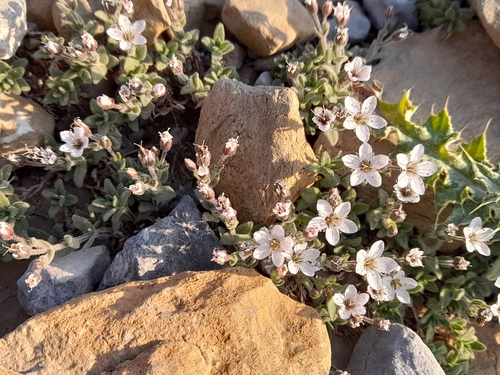
Facchinia Cerastiifolia, comúnmente conocida como facchinia de hojas de cerastio, es una planta perenne alpina resistente perteneciente a la familia del clavel (Caryophyllaceae). Endémica de las alturas rocosas y azotadas por el viento de los Alpes europeos —especialmente los Dolomitas—, esta notable especie ha evolucionado para prosperar en algunos de los entornos más inhóspitos de la Tierra. Adhiriéndose firmemente a las grietas de la roca caliza y a las cambiantes laderas de pedregal, forma cojines bajos, densos y similares al musgo que la protegen del frío extremo y de los vientos secos. Durante el corto verano alpino, estos cojines verdes se transforman al estallar con una espectacular exhibición de pequeñas flores blancas en forma de estrella. Este estallido repentino de vida no solo ilumina los paisajes de piedra caliza gris, sino que también desempeña un papel vital en la atracción de polinizadores de alta altitud, sirviendo como pionero ecológico en la estabilización de suelos montañosos frágiles.
Hábitat: Se encuentra en canchales alpinos, grietas rocosas y acantilados de piedra caliza a grandes altitudes.
Esta especie forma cojines o matas densas, de crecimiento bajo y de color verde brillante, que suelen alcanzar alturas de solo 2 a 10 centímetros. Sus hojas son pequeñas, estrechas, linear-lanceoladas y dispuestas densamente a lo largo de los tallos, muy parecidas a las del género Cerastium. Las flores son pequeñas, midiendo aproximadamente de 8 a 12 milímetros de diámetro, con cinco pétalos blancos distintos que son ligeramente más largos que los sépalos verdes puntiagudos debajo de ellos.
Categoría
PlantasRareza
Común
Peligro
1/5 · Muy bajo
Snaps
¡Sé la primera persona en hacer un snap!
A pesar de crecer en zonas alpinas heladas, su denso follaje evita la formación de cristales de hielo dentro del núcleo del cojín, actuando como una manta aislante natural.
Su nombre de especie 'cerastiifolia' se traduce directamente como 'hojas como Cerastium', destacando la similitud de su follaje con la hierba pajarera de oreja de ratón.
La forma de crecimiento en cojín de Facchinia Cerastiifolia actúa como un 'ingeniero de ecosistemas', atrapando detritos orgánicos y creando un suelo más rico que otras plantas alpinas pueden colonizar.
Como fotoautótrofa, esta planta produce sus propios compuestos orgánicos utilizando la luz solar, dióxido de carbono, agua y nutrientes minerales esenciales absorbidos del suelo.
Aún no hay insignias de rasgos asignadas a este objeto.
Todavía no hay alias listados.
Las colecciones para este objeto aparecerán aquí a medida que se añadan más temas.
Peligro
1/5 · Muy bajo
Todavía no hay notas especiales de seguridad.
Empieza por la planta entera y luego compara la disposición de las hojas, sus bordes, los tallos y las flores o frutos, si los hay. Las hojas opuestas crecen en parejas; las alternas salen de una en una a lo largo del tallo. Juntos, estos detalles dicen mucho más que una sola hoja verde. Identificador de plantas: sube una foto y compara los detalles visibles.
2+ cm
10+ años
Como fotoautótrofa, esta planta produce sus propios compuestos orgánicos utilizando la luz solar, dióxido de carbono, agua y nutrientes minerales esenciales absorbidos del suelo.
Se encuentra en canchales alpinos, grietas rocosas y acantilados de piedra caliza a grandes altitudes.
Acércate para separar los grupos y explorar dónde se ha fotografiado este objeto.
Los snaps recientes aparecerán aquí a medida que se añadan nuevas observaciones.
Llévate el descubrimiento
Haz una foto con Snappit, identifica la especie y guarda el hallazgo en tu colección.


















