

Flatrock Pimpernel
lindernia monticola
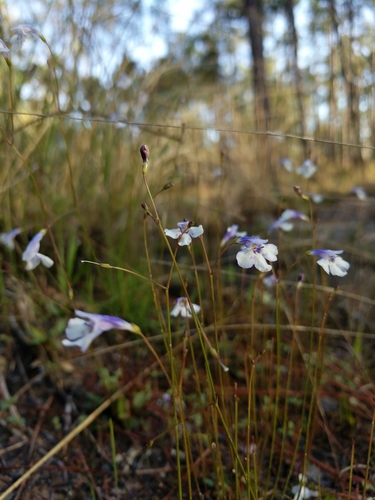
The Flatrock Pimpernel (Lindernia monticola) is a charming, diminutive perennial wildflower native to the southeastern United States, particularly associated with the unique and harsh ecosystems of granitic flatrocks and sandstone outcrops. Growing in thin, nutrient-poor mats of soil that accumulate in depressions on massive stone domes, this resilient little plant has adapted to survive extreme environmental swings, from spring flooding to intense summer droughts. Despite its small stature, the Flatrock Pimpernel plays a vital role in its specialized rock-outcrop communities, bursting into bloom in mid-to-late spring to paint the stark gray stone landscapes with delicate color.
Hábitat: Typically found in thin, moss-dominated soil mats on granitic flatrocks, sandstone outcrops, and rocky seepage slopes.
This low-growing herbaceous plant typically reaches heights of 5 to 15 centimeters, featuring erect, square, mostly hairless stems. Its small, sessile leaves are arranged oppositely along the stem and have an ovate to lanceolate shape. The flowers are approximately 8 to 10 millimeters long, displaying a distinct two-lipped corolla that ranges in color from pale lavender or light blue to nearly white, often adorned with delicate purple guidelines and a bright yellow throat to guide pollinators.
Categoría
PlantasRareza
Common
Peligro
1/5 · Muy bajo
Snaps
¡Sé la primera persona en hacer un snap!
Because it grows in such shallow soil, it often relies on neighboring mosses and lichens to shield its delicate roots from drying out completely.
It lives in one of the harshest microclimates in North America, where exposed granite surfaces can heat up to over 120 degrees Fahrenheit in the summer.
The seeds of the Flatrock Pimpernel are extremely tiny and dust-like, allowing them to be easily dispersed by wind and water across smooth rock surfaces.
Capable of securing its roots in microscopic rock crevices and extremely thin, nutrient-starved soil mats atop solid granite.
Withstands prolonged waterlogged conditions in spring when rainwater flows over rock faces, forming temporary seepage pools.
Endures intense heat and extreme dryness during hot summer months on exposed rock by shutting down non-essential metabolic processes.
As a photosynthetic plant, it manufactures its own sugars using sunlight, water, and carbon dioxide while absorbing trace minerals from thin soil.
Diamorpha smallii
Competes for precious space and moisture in shallow granite outcrop soil mats.
Lasioglossum imitatum
Visits the flowers to feed on nectar, providing essential pollination services.
Cladonia caroliniana
Helps trap moisture and organic matter on bare rock surfaces, facilitating seedling establishment.
Aún no hay insignias de rasgos asignadas a este objeto.
Todavía no hay alias listados.
Las colecciones para este objeto aparecerán aquí a medida que se añadan más temas.
Peligro
1/5 · Muy bajo
Todavía no hay notas especiales de seguridad.
La forma más fácil de identificar a Flatrock Pimpernel es usar la aplicación de identificación de naturaleza Snappit.
5-15 cm
2-5 años
As a photosynthetic plant, it manufactures its own sugars using sunlight, water, and carbon dioxide while absorbing trace minerals from thin soil.
Typically found in thin, moss-dominated soil mats on granitic flatrocks, sandstone outcrops, and rocky seepage slopes.
Acércate para separar los grupos y explorar dónde se ha fotografiado este objeto.
Los snaps recientes aparecerán aquí a medida que se añadan nuevas observaciones.

Alabama, US
Puedes ver Sedo Duende, Barnacla Canadiense y Mahonia De Hojas De Cuero.
Ver guía →

Alabama, US
Puedes ver Sedo Duende, Barnacla Canadiense y Garza Azulada.
Ver guía →

Alabama, US
Puedes ver Sedo Duende, Barnacla Canadiense y Mahonia De Hojas De Cuero.
Ver guía →












_(8616886668).jpg&width=800)

