

Florida Cottonmouth
agkistrodon conanti
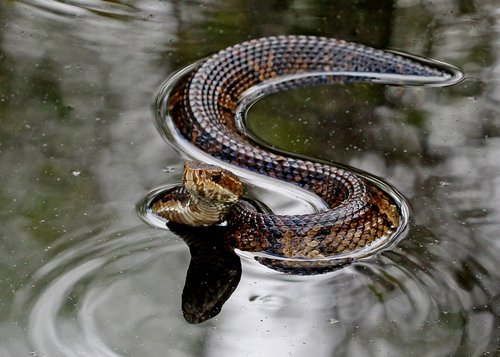
The Florida Cottonmouth (Agkistrodon conanti) is a heavy-bodied, venomous pit viper native to the wetlands, swamps, and waterways of the southeastern United States. As a semi-aquatic species, it plays a vital role in regulating populations of fish, amphibians, and rodents in its ecosystems. Often misunderstood and feared due to its potent hemotoxic venom, the cottonmouth is actually a reclusive reptile that prefers flight over fight, using dramatic defensive postures to ward off potential threats before resorting to a strike. This fascinating snake is incredibly well-adapted to its aquatic lifestyle, utilizing heat-sensing pits located between its eyes and nostrils to detect warm-blooded prey even in pitch darkness. Spotting a Florida Cottonmouth basking on a sunny log or swimming buoyantly across a quiet marsh is a thrilling highlight for any herpetology enthusiast exploring the natural wonders of the American South.
Hábitat: Found in slow-moving aquatic environments like swamps, marshes, retention ponds, and flooded forests across Florida and nearby coastal plains.
The Florida Cottonmouth is characterized by its thick, muscular dark brown, olive, or black body, often patterned with dark crossbands that fade to solid dark brown or black in older individuals. It has a distinct, blocky, wedge-shaped head with a dark stripe running from the eye down the side of the head, bordered by white or cream-colored lines. A key identifier is the white, cotton-like lining of its mouth, which it displays when threatened. Juveniles look strikingly different, sporting bold, reddish-brown bands and a bright sulfur-yellow tail tip used for caudal luring.
Categoría
ReptilesRareza
Common
Peligro
1/5 · Muy bajo
Snaps
¡Sé la primera persona en hacer un snap!
Their prominent, white mouth-gaping display is a defensive bluff intended to scare away predators; they will usually only bite as a last resort if stepped on or handled.
They are equipped with hemotoxic venom, which breaks down blood cells and tissue, helping them partially digest their prey from the inside out before even swallowing it.
When swimming, Florida Cottonmouths keep their entire bodies buoyant and afloat on the surface of the water, whereas non-venomous water snakes typically swim with only their heads above the water.
Uses specialized loreal pits located between the eyes and nostrils to detect minute temperature differences, allowing it to strike accurately in total darkness.
When threatened, it coils its body and opens its mouth wide, exposing the stark white flesh inside to warn potential predators of its lethal bite.
Juveniles twitch their bright yellow-tipped tails to mimic an insect or worm, enticing frogs, lizards, and small fish to come within striking distance.
An opportunistic generalist carnivore that preys on a wide variety of aquatic, semi-aquatic, and terrestrial animals.
Lampropeltis getula
Kingsnakes are ophiophagous predators that are highly immune to viper venom and actively hunt and eat cottonmouths.
Alligator mississippiensis
Young cottonmouths represent prey for adult alligators, while mature snakes may occasionally consume very small hatchling alligators.
Lithobates sphenocephalus
These common wetland frogs are a key food source, especially for younger cottonmouths hunting in shallow waters.
Aún no hay insignias de rasgos asignadas a este objeto.
Todavía no hay alias listados.
Las colecciones para este objeto aparecerán aquí a medida que se añadan más temas.
Peligro
1/5 · Muy bajo
Todavía no hay notas especiales de seguridad.
La forma más fácil de identificar a Florida Cottonmouth es usar la aplicación de identificación de naturaleza Snappit.
0.455+ kg
5 km/h
An opportunistic generalist carnivore that preys on a wide variety of aquatic, semi-aquatic, and terrestrial animals.
Found in slow-moving aquatic environments like swamps, marshes, retention ponds, and flooded forests across Florida and nearby coastal plains.
Ambush Predatorr Active Hunting Mix (often Categorised As Ambush Hunting But Will Forage Actively In Shallows During Warm Nights.) (wait, The Schema Specifies A Single String Or Null, So Let's Stick To 'ambush' Or 'foraging'. 'ambush' Is Most Accurate.)
Acércate para separar los grupos y explorar dónde se ha fotografiado este objeto.
Los snaps recientes aparecerán aquí a medida que se añadan nuevas observaciones.