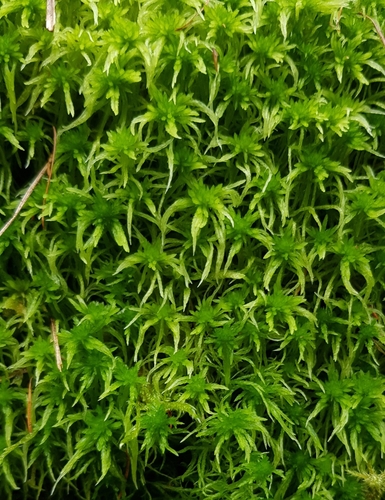


Fringed Bogmoss
sphagnum fimbriatum
Fringed Bogmoss (Sphagnum fimbriatum) is an eco-engineer of wetlands, playing a critical role in shaping acidic bog ecosystems. This slender, delicate moss forms soft, pale-green carpets in wetlands, bogs, and damp woodlands across the Northern Hemisphere. Unlike many other peat mosses, it can tolerate slightly more shade and nutrient-rich conditions, allowing it to colonize disturbed areas, wet ditch banks, and the edges of forest pools. What makes it truly remarkable is its ability to hold vast amounts of water within its dead, hollow hyaline cells. This water-retaining capacity helps it regulate the local hydrology, creating moist conditions that support a unique community of wetland plants and acid-loving organisms while acting as a vital carbon sink.
Hábitat: Found in wet, acidic environments such as bogs, fens, damp forest floors, and the margins of peat pools.
This slender peat moss is characterized by its pale green to yellowish-green coloration, occasionally showing light brown tints in sunlit habitats. The most distinctive identifier is its capitulum (the compact head of branches at the top of the stem), which features a prominent, large, spherical terminal bud. Under a magnifying glass, the broad, spatula-shaped stem leaves reveal a deeply fringed, tattered upper margin that forms a characteristic collar around the stem. It grows in loose, delicate tufts rather than dense, compact cushions, with individual upright stems reaching heights of 5 to 15 centimeters.
Categoría
PlantasRareza
Common
Peligro
1/5 · Muy bajo
Snaps
¡Sé la primera persona en hacer un snap!
During World War I, because of its exceptional absorbency and natural acidic antiseptic properties, Sphagnum moss was widely harvested and used as sterile field dressings.
Peatlands dominated by Sphagnum mosses cover only three percent of the Earth's land surface but store twice as much carbon as all the world's forests combined.
The species name 'fimbriatum' is Latin for 'fringed' or 'fibrous', describing the distinctively tattered edges of the stem leaves.
Utilizes large, dead, hollow hyaline cells lined with pore openings to absorb and hold up to twenty times its dry weight in water.
Pumps out hydrogen ions in exchange for essential mineral nutrients, aggressively lowering the pH of its surroundings to suppress competing plants.
Thrives in lower light levels than most other Sphagnum species, allowing it to successfully colonize wet, wooded catchments and shaded ditch banks.
As a photoautotroph, this moss manufactures its own sugars using sunlight, water, and carbon dioxide via photosynthesis, while absorbing dissolved mineral ions directly from surrounding water.
Sarracenia purpurea
Frequently grows closely associated with pitcher plants, providing the moist, acidic substrate they require.
Vaccinium oxycoccos
Provides a physical sponge-like substrate for wild cranberry vines to scramble over and secure moisture.
Polytrichum commune
Competes directly for space, sunlight, and moisture in damp, acidic soils and transition zones.
Aún no hay insignias de rasgos asignadas a este objeto.
Todavía no hay alias listados.
Las colecciones para este objeto aparecerán aquí a medida que se añadan más temas.
Peligro
1/5 · Muy bajo
Todavía no hay notas especiales de seguridad.
La forma más fácil de identificar a Fringed Bogmoss es usar la aplicación de identificación de naturaleza Snappit.
5-15 cm
As a photoautotroph, this moss manufactures its own sugars using sunlight, water, and carbon dioxide via photosynthesis, while absorbing dissolved mineral ions directly from surrounding water.
Found in wet, acidic environments such as bogs, fens, damp forest floors, and the margins of peat pools.
Absorption
Acércate para separar los grupos y explorar dónde se ha fotografiado este objeto.
Los snaps recientes aparecerán aquí a medida que se añadan nuevas observaciones.