


Giant Nudibranch
Dendronotus iris
The Giant Nudibranch is a colorful sea slug that looks like a little underwater rainbow! It glides through the ocean, eating tiny creatures and showing off its beautiful colors.
Hábitat: Coastal areas
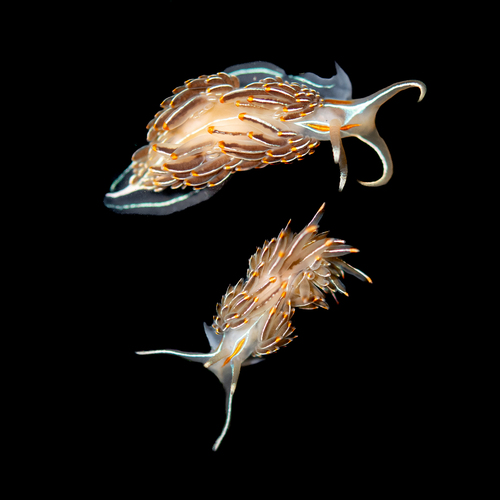
The Giant Nudibranch has a large, elongated body, typically vibrant orange, red, or white. Its most striking feature is the numerous bushy, tree-like cerata (gills) covering its back, which are used for breathing and defense. It stands out with its frilly oral veil.
Categoría
InvertebrateRareza
Common
Peligro
2/5 · Bajo
Snaps
¡Sé la primera persona en hacer un snap!
It breathes using feathery gills on its back, which look like tiny trees!
It can grow as long as a foot, making it one of the largest sea slugs!
It's a sea slug, not an insect, despite its name sometimes causing confusion!
Some scientists call it a 'clown nudibranch' because of its bright colors!
Giant Nudibranch can absorb pigments from its prey, allowing it to camouflage perfectly within its marine environment.
Giant Nudibranch has numerous frilly cerata on its back that deter predators by making it appear larger and less appealing.
Giant Nudibranch can produce unpleasant chemicals in its body, making it an unappetizing meal for most potential predators.
A fierce underwater hunter, it loves to feast on sea anemones.
Urticina piscivora
Consumes whole anemones using its powerful mouth parts.
Metridium farcimen
Slowly grazes on these anemones found in its habitat.

Pycnopodia helianthoides
A primary predator, able to consume large nudibranchs.
Los animales solitarios viven solos durante la mayor parte de su vida y solo interactúan con otros para aparearse o cuidar de sus crías.
Colorido describe a organismos u objetos que exhiben una amplia variedad de colores brillantes y distintivos.
Los animales planeadores se mueven por el aire lanzándose y manteniendo el vuelo con estructuras corporales especializadas, sin batir las alas.
Los hábitats costeros son entornos dinámicos situados a lo largo de la interfaz entre la tierra y el mar, influenciados por las mareas, las olas y el agua salada.

Este rasgo identifica a los organismos cuya dieta consiste total o principalmente en tejido animal.

Los organismos regenerativos poseen la capacidad de volver a desarrollar partes del cuerpo, tejidos u órganos perdidos o dañados.

Los hábitats acuáticos abarcan entornos donde los organismos viven principalmente en el agua, incluidos océanos, ríos, lagos y humedales.

Gigante describe organismos u objetos de un tamaño significativamente mayor al promedio de su especie o tipo.

Los hábitats marinos abarcan todos los entornos de agua salada de los océanos de la Tierra, sustentando una inmensa diversidad de vida acuática.
Peligro
2/5 · Bajo
Never touch sea creatures without asking an adult first, as some can be delicate or harmful.
100-300 mm
300-400 días
A fierce underwater hunter, it loves to feast on sea anemones.
Coastal areas
Ambush
Acércate para separar los grupos y explorar dónde se ha fotografiado este objeto.
Los snaps recientes aparecerán aquí a medida que se añadan nuevas observaciones.

Washington, US
Puedes ver Purple Foxglove, Tansy y Broad-Leaved Sweet Pea.
Ver guía →
British Columbia, CA
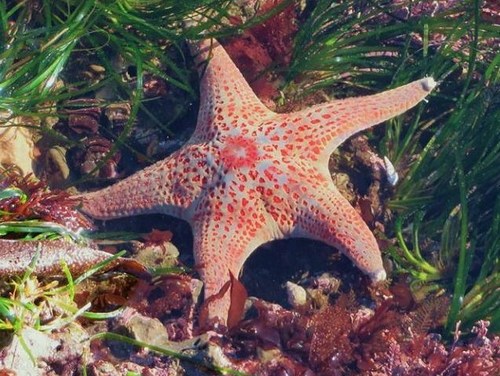
Puedes ver Leather Star, Mottled Star y Foca Común.
Ver guía →
Washington, US
Puedes ver Horned Nudibranch, Madrone Skin Miner y Giant Nudibranch.
Ver guía →
British Columbia, CA
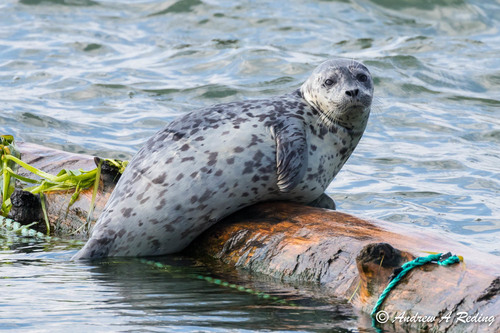
Puedes ver Foca Común, Evergreen Huckleberry y Alumroots.
Ver guía →