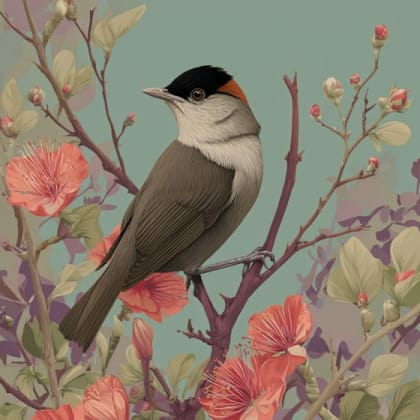
Goldcrest
Regulus regulus
The Goldcrest is a tiny bird with a bright yellow crown on its head. It loves to flit around in trees and is known for its sweet, cheerful song. These little birds are very energetic and can often be seen hopping through the branches.
Hábitat: Forests
The Goldcrest is Europe's smallest bird, featuring an olive-green body and a pale belly. Its most striking feature is a vibrant yellow-orange crest, bordered by black stripes, making it easily identifiable.
Categoría
AvesRareza
Common
Peligro
1/5 · Muy bajo
Snaps
¡Sé la primera persona en hacer un snap!
A Goldcrest's heart beats incredibly fast, over 1000 times per minute!
Despite their size, Goldcrests can cross seas during migration! Wow!
Goldcrests build cup-shaped nests so tiny, they are often hidden high in conifer trees!
They lay up to 12 eggs, which is a huge clutch for such a small bird!
Goldcrests can cling upside down to branches, expertly searching for insects hidden beneath needles.
Goldcrests have a fast metabolism and shiver constantly to stay warm in freezing winter temperatures.
Goldcrests have a very fine, pointed bill that helps them pluck tiny insects from pine needles and crevices.
Tiny insect-eaters, they meticulously search for small bugs among tree needles.

Accipiter nisus
A raptor that preys on small birds like Goldcrests.
Felis catus
A common predator of small birds in gardens and parks.
Picea abies
Goldcrests frequently nest and forage within spruce tree canopies.
Los animales sociales viven en grupos organizados, cooperando para obtener beneficios de supervivencia como la búsqueda de alimento, la defensa y la cría de descendencia.
Los animales cantores producen vocalizaciones complejas, a menudo con el propósito de atraer parejas, defender el territorio o comunicarse dentro de su especie.
Los animales arborícolas viven principalmente en los árboles, utilizándolos como refugio, alimento y protección contra los depredadores.
Colorido describe a organismos u objetos que exhiben una amplia variedad de colores brillantes y distintivos.

Este rasgo identifica a los organismos cuya dieta consiste principalmente en insectos y otros pequeños invertebrados.

Los hábitats boscosos son entornos terrestres dominados por una densa cubierta arbórea, que sustentan una gran diversidad de vida animal y vegetal.

Los animales diurnos están activos principalmente durante el día y suelen descansar o dormir por la noche.

Relativo a especies que son significativamente más pequeñas que lo típico o promedio de su tipo.
Peligro
1/5 · Muy bajo
Always watch birds from a distance and do not try to touch them.
8.5-9.5 cm
13-16 cm
0.004-0.007 kg
2-3 años
30 km/h
Tiny insect-eaters, they meticulously search for small bugs among tree needles.
Forests
Foraging
Acércate para separar los grupos y explorar dónde se ha fotografiado este objeto.
Los snaps recientes aparecerán aquí a medida que se añadan nuevas observaciones.




.jpeg&width=800)