Golden-crowned Sparrow
Zonotrichia atricapilla
The Golden-crowned Sparrow is a small bird with a bright yellow crown on its head. It loves to sing cheerful songs and can often be seen hopping around in bushes and grass.
Hábitat: Urban areas
The Golden-crowned Sparrow has a striking bright yellow patch on its crown, bordered by distinct black stripes, giving it a regal look. Its face is a plain gray, contrasting with its streaky brown back and clean, unstreaked gray belly. This bold head pattern makes it easily identifiable among other sparrows.
Categoría
AvesRareza
Common
Peligro
1/5 · Muy bajo
Snaps
¡Sé la primera persona en hacer un snap!
Golden-crowned Sparrows fly thousands of miles from Alaska to California for winter vacation!
Sometimes, they'll forage upside-down on branches, showing off their acrobatic skills.
Their unique song sounds like 'Oh dear me,' making them quite easy to identify by sound alone.
They use both feet at once to scratch the ground for food, a move called 'double-scratching'!
Golden-crowned Sparrows can find hidden seeds and insects in cold weather, helping them survive chilly winters.
Golden-crowned Sparrows can migrate thousands of kilometers each year, finding their way to breeding and wintering grounds.
Golden-crowned Sparrows has a distinct three-note song that helps them communicate and define territory.
This sparrow enjoys a mixed diet of tasty seeds, berries, and insects all year round!
Diferencias por edad: Eats more protein-rich insects during breeding season and shifts to seeds in winter.
Accipiter cooperii
A swift hunter that preys on smaller birds like sparrows.
Felis catus
Domestic cats are common predators, especially in suburban areas.

Rubus spectabilis
Consumes the berries from this plant as a food source.
_Clock_-_Tennessee%2C_USA_-_May_31%2C_2014.jpg&width=800)
Taraxacum officinale
Feeds on the nutritious seeds of common dandelions.
Malacosoma americanum
Enjoys munching on caterpillars for protein, especially when breeding.
Describe a los animales, principalmente aves, que poseen una cubierta de plumas.
Los animales sociales viven en grupos organizados, cooperando para obtener beneficios de supervivencia como la búsqueda de alimento, la defensa y la cría de descendencia.
Los animales cantores producen vocalizaciones complejas, a menudo con el propósito de atraer parejas, defender el territorio o comunicarse dentro de su especie.
Este rasgo identifica a los organismos cuya dieta consiste principalmente en insectos y otros pequeños invertebrados.

Los animales diurnos están activos principalmente durante el día y suelen descansar o dormir por la noche.

Esta característica de hábitat indica especies que pueden coexistir con los humanos en entornos urbanos y suburbanos, utilizando estructuras artificiales y espacios verdes.
Todavía no hay alias listados.
Peligro
1/5 · Muy bajo
Enjoy watching birds from a distance, and don't try to touch them.
15-18 cm
23-28 cm
0.022-0.029 kg
2-7 años
45 km/h
This sparrow enjoys a mixed diet of tasty seeds, berries, and insects all year round!
Urban areas
Foraging
Acércate para separar los grupos y explorar dónde se ha fotografiado este objeto.
Los snaps recientes aparecerán aquí a medida que se añadan nuevas observaciones.
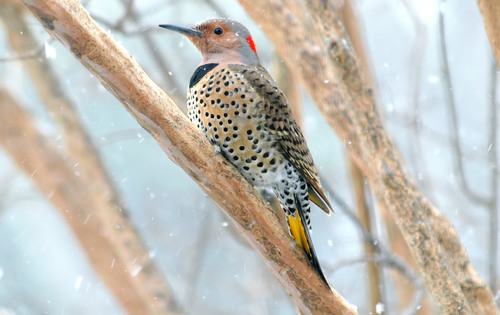
British Columbia, CA
Puedes ver Carpintero Norteño, Pavo Real Común y Red-Breasted Sapsucker.
Ver guía →
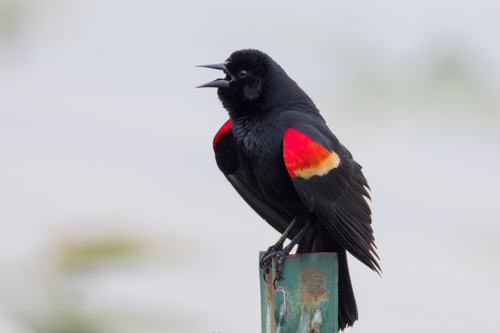
British Columbia, CA
Puedes ver Tordo Sargento, Golondrina Bicolor y Garza Azulada.
Ver guía →

California, US
Puedes ver California Wild Rose, California Wild Grape y Blue Elder.
Ver guía →

California, US
Puedes ver Pacific Hound's Tongue, Pacific Trillium y Secuoya.
Ver guía →