Golden Shiner
notemigonus crysoleucas
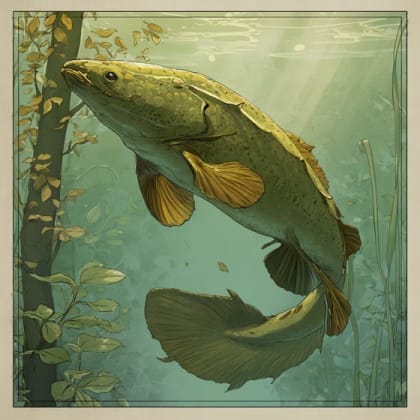
The Golden Shiner is a shiny little fish that loves to swim in schools! With its bright golden color, it sparkles like a treasure in the water!
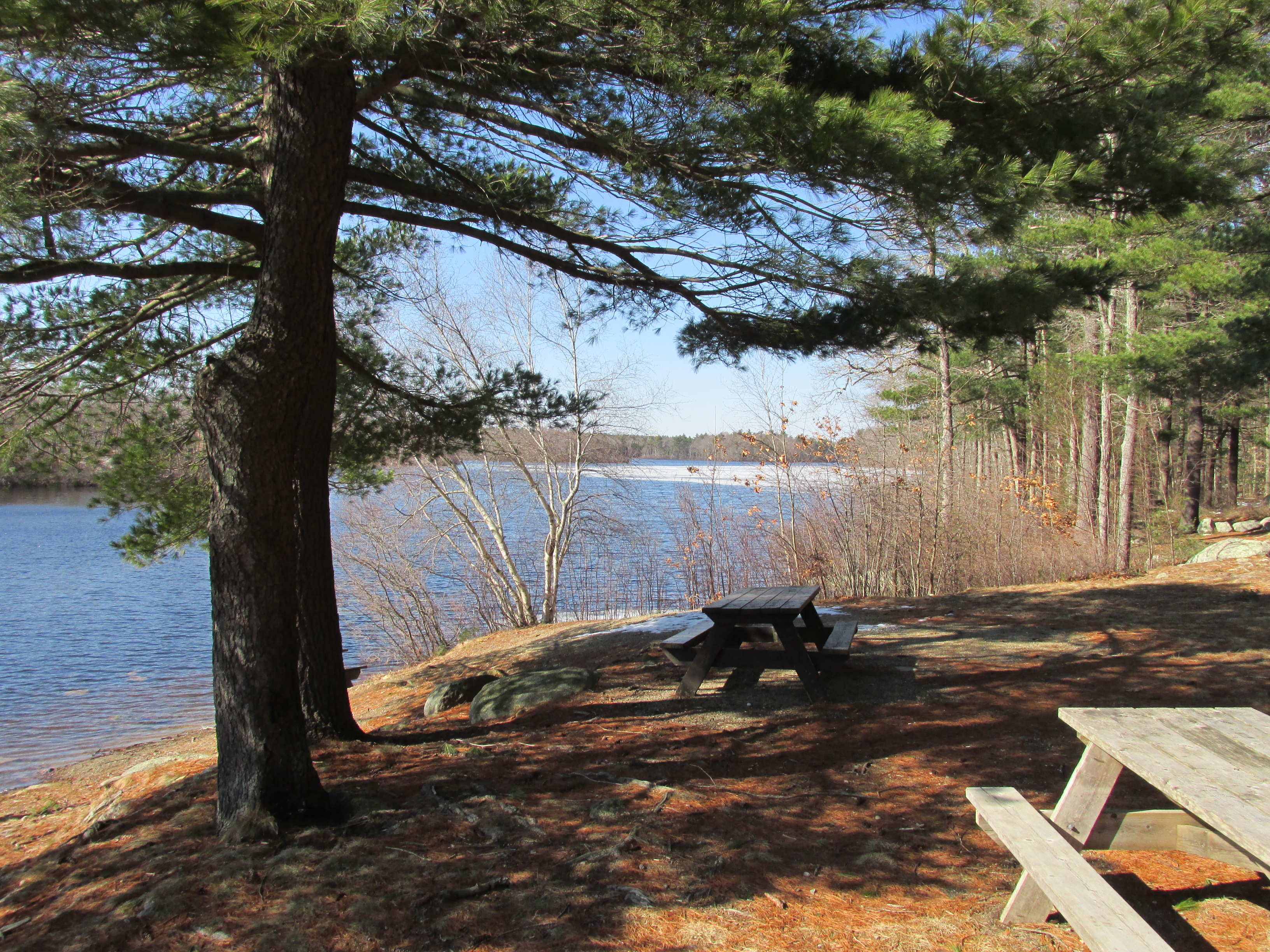
Hábitat: Freshwater lakes and rivers across North America.
The Golden Shiner has a sleek, compressed body with a small, pointed head. Its sides shimmer with a bright golden-silvery sheen, sometimes showing a faint darker stripe along its length. Large, reflective scales give it a metallic appearance.
Categoría
PecesRareza
Common
Peligro
0/5 · Sin peligro conocido
Snaps
¡Sé la primera persona en hacer un snap!
Golden Shiners are farmed as popular bait, helping anglers catch bigger fish!
Golden Shiners can survive in water with low oxygen, thriving where other fish cannot!
Their shiny, reflective scales act like tiny mirrors, making them hard for predators to spot!
These fish form massive schools with thousands, moving like a shimmering liquid cloud!
Golden Shiner has highly reflective, silvery scales that help them blend into bright surface waters, confusing predators.
Golden Shiner can gather in large groups because of their strong social instinct, which helps them confuse and deter predators.
Golden Shiner can leap out of the water quickly that helps them escape from fast-moving aquatic predators.
These omnivores eat tiny bugs, algae, and bits of plants they find floating or on the bottom.
Micropterus salmoides
Major predator in many lakes.
Esox niger
Ambushes them from aquatic weeds.
Ardea herodias
Wades in shallow water to snatch.
Daphnia pulex
Feeds on tiny crustaceans.
Los animales sociales viven en grupos organizados, cooperando para obtener beneficios de supervivencia como la búsqueda de alimento, la defensa y la cría de descendencia.
Colorido describe a organismos u objetos que exhiben una amplia variedad de colores brillantes y distintivos.
Los filtradores obtienen nutrientes filtrando partículas de alimentos suspendidos y pequeños organismos del agua.
Los animales diurnos están activos principalmente durante el día y suelen descansar o dormir por la noche.

Los hábitats acuáticos abarcan entornos donde los organismos viven principalmente en el agua, incluidos océanos, ríos, lagos y humedales.
Peligro
0/5 · Sin peligro conocido
Todavía no hay notas especiales de seguridad.
7.5-30 cm
0.05-0.2 kg
3-7 años
These omnivores eat tiny bugs, algae, and bits of plants they find floating or on the bottom.
10 km/h
Freshwater lakes and rivers across North America.
Foraging
5 m
Acércate para separar los grupos y explorar dónde se ha fotografiado este objeto.
Los snaps recientes aparecerán aquí a medida que se añadan nuevas observaciones.