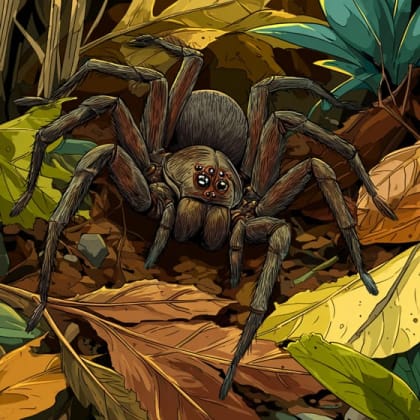
Grammostola rosea
Grammostola rosea
The Grammostola rosea, also known as the Chilean Rose Tarantula, is a fluffy spider that can be pink or brown. They are gentle and often kept as pets because they are calm and easy to care for.
Hábitat: Desert
The Grammostola rosea is a medium-sized tarantula known for its velvety appearance. It often has reddish-brown to pinkish-orange hairs covering its dark body and legs, giving it a soft, rosy glow. This unique coloration distinguishes it from many other darker tarantula species.
Categoría
InsectosRareza
Common
Peligro
2/5 · Bajo
Snaps
¡Sé la primera persona en hacer un snap!
A Grammostola rosea can survive without food for months, even up to a year!
Female Chilean Rose T. can live over 20 years, making them very long-lived pets!
Their venom is usually mild, similar to a bee sting, not dangerous for humans.
They can regrow lost legs after molting, like having a spare set of limbs!
Grammostola rosea can defend itself by flicking urticating hairs from its abdomen that can irritate predators, helping them escape danger.
Grammostola rosea has strong fangs and legs that help them dig intricate burrows, providing a safe and hidden home.
Grammostola rosea can sense subtle ground vibrations through its legs, allowing them to detect nearby prey and predators.
These tarantulas are skilled ambush predators, eating small insects and other tiny creatures.
Buteo jamaicensis
Hawks are natural predators.
Acheta domesticus
A primary food source.
Pseudalopex culpaeus
Foxes can prey on large spiders.
Schistocerca gregaria
A common large insect prey.
Peludo describe a los animales que poseen una cubierta densa de pelo o pelaje suave.
Los animales solitarios viven solos durante la mayor parte de su vida y solo interactúan con otros para aparearse o cuidar de sus crías.
Colorido describe a organismos u objetos que exhiben una amplia variedad de colores brillantes y distintivos.
Los animales excavadores cavan túneles y cámaras en el suelo y utilizan estas estructuras subterráneas para refugiarse, cazar o reproducirse.

Los hábitats desérticos son regiones áridas caracterizadas por precipitaciones extremadamente bajas y, a menudo, temperaturas extremas, que albergan una flora y fauna especializadas.

Este rasgo caracteriza a los organismos con una esperanza de vida excepcionalmente larga en comparación con otros de su especie.

Este rasgo identifica a los organismos cuya dieta consiste total o principalmente en tejido animal.
Peligro
2/5 · Bajo
Always watch from a distance and never touch a tarantula without adult supervision.
50-70 mm
5475-7300 días
These tarantulas are skilled ambush predators, eating small insects and other tiny creatures.
Desert
Ambush
8
Acércate para separar los grupos y explorar dónde se ha fotografiado este objeto.
Los snaps recientes aparecerán aquí a medida que se añadan nuevas observaciones.

North Dakota, US
Puedes ver Zorro Rojo, Lobo Gris y Equus Africanus Asinus.
Ver guía →

Oklahoma, US
Puedes ver León Africano, Dragón De Komodo y Jirafas.
Ver guía →
Kentucky, US
Puedes ver León Africano, Dragón De Komodo y Boa Rosada.
Ver guía →
California, US
Puedes ver Zorro Rojo, Lobo Gris y Pato.
Ver guía →
California, US
Puedes ver León Africano, Lobo Gris y Tigre.
Ver guía →
Illinois, US
Puedes ver León Africano, Jirafas y Equus Africanus Asinus.
Ver guía →




_Female_Dos.jpg&width=800)






.JPG&width=800)