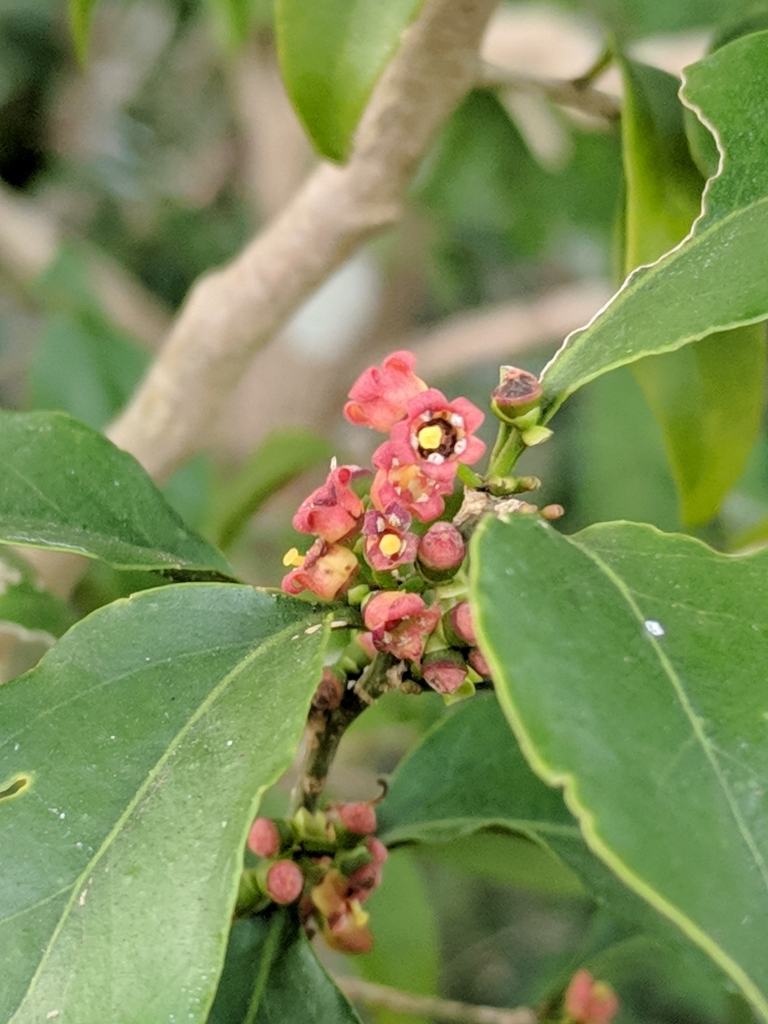





Graytwig
Schoepfia schreberi
Graytwig is a special shrub with thin, gray branches. It grows in forests and can be a fun place for little animals to hide and play.
Hábitat: Forests
The Graytwig is a modest shrub with smooth, grayish-brown bark and glossy green leaves. Its tiny, yellowish-green flowers bloom in clusters, later developing into small, round, bright orange fruits that stand out against the foliage.
Categoría
PlantasRareza
Common
Peligro
1/5 · Muy bajo
Snaps
¡Sé la primera persona en hacer un snap!
It belongs to an ancient family of plants, with relatives going back millions of years!
Its roots can connect to other plants, secretly sharing their food!
The sweet, orange fruits of the Graytwig are a tasty treat for many animals!
Tiny, unassuming flowers transform into brightly colored, jewel-like fruits!
Graytwig can secretly connect its roots to nearby plants, borrowing water and nutrients to help it grow stronger.
Graytwig grows bright orange fruits that signal to birds and other animals that a tasty snack is ready for dispersal.
Mangifera indica
Graytwig taps into the roots of this tree for water and nutrients.
Pycnonotus jocosus
This bird enjoys eating Graytwig's sweet orange fruits.
Apis cerana
The bee visits Graytwig's small flowers to collect nectar and pollen.
Las plantas caducifolias pierden periódicamente todas sus hojas, por lo general durante el otoño o las estaciones secas.
Un arbusto es una planta leñosa más pequeña que un árbol, típicamente con múltiples tallos que se ramifican desde o cerca del suelo.
Las plantas tolerantes a la sombra están adaptadas para crecer y prosperar en áreas con bajos niveles de luz, requiriendo menos luz solar directa.
Los colores otoñales se refieren al cambio estacional en la pigmentación del follaje, principalmente en plantas de hoja caduca, mostrando tonos vibrantes.

Los hábitats boscosos son entornos terrestres dominados por una densa cubierta arbórea, que sustentan una gran diversidad de vida animal y vegetal.
Todavía no hay alias listados.
Peligro
1/5 · Muy bajo
Always stay on paths when exploring nature and don't touch plants without asking an adult.
150-400 cm
100-300 cm
0.3-0.5 cm
Late Spring to Early Summer
Sí
Ninguna
Perenne
Insectos
Acércate para separar los grupos y explorar dónde se ha fotografiado este objeto.
Los snaps recientes aparecerán aquí a medida que se añadan nuevas observaciones.