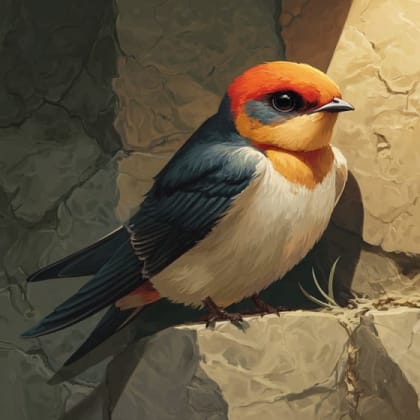
green aracari
Pteroglossus viridis
The green aracari is a colorful bird with a bright green body and a big, fun beak! They love to live in the trees of tropical forests and are great at flying from branch to branch.
Hábitat: Tropical forests
The green aracari has a striking bright green back, a vibrant yellow belly, and a distinctive black head. A vivid red patch marks its rump, and its large, multi-colored beak is mostly yellow on top with a black stripe and dark base.
Categoría
AvesRareza
Common
Peligro
1/5 · Muy bajo
Snaps
¡Sé la primera persona en hacer un snap!
Green aracaris often sleep in groups inside old woodpecker holes, cozying up like a big family!
The patterns on a green aracari's huge beak are unique to each bird, like a special fingerprint!
Their long, feather-like tongue helps them slurp up the juicy pulp from fruits after cracking them open.
They love to toss fruit up in the air and catch it before swallowing, making mealtime a fun game!
green aracari can use its long, serrated beak to crack open tough fruits and find hidden insects deep in tree bark.
green aracari has a strong beak that helps it enlarge existing tree holes, creating cozy nesting sites for its family.
green aracari uses a variety of chirps and calls to communicate with its flock, keeping everyone safe.
These colorful birds enjoy a delicious mix of tropical fruits, tasty insects, and even some small critters.
Ficus citrifolia
Its sweet fruits are a primary food for the aracari.
Boa constrictor
These snakes may prey on eggs or young aracaris in nests.
Atta cephalotes
Aracaris opportunistically snack on these ants or their larvae.
Describe a los animales, principalmente aves, que poseen una cubierta de plumas.
Los animales sociales viven en grupos organizados, cooperando para obtener beneficios de supervivencia como la búsqueda de alimento, la defensa y la cría de descendencia.
Este rasgo identifica organismos cuya dieta incluye tanto materia vegetal como animal.
Los animales arborícolas viven principalmente en los árboles, utilizándolos como refugio, alimento y protección contra los depredadores.

Colorido describe a organismos u objetos que exhiben una amplia variedad de colores brillantes y distintivos.

Los hábitats boscosos son entornos terrestres dominados por una densa cubierta arbórea, que sustentan una gran diversidad de vida animal y vegetal.

Este rasgo de hábitat se refiere a las especies que se encuentran en las selvas tropicales, caracterizadas por una alta precipitación anual, gran biodiversidad y una densa cubierta arbórea.

Los animales diurnos están activos principalmente durante el día y suelen descansar o dormir por la noche.
Todavía no hay alias listados.
Peligro
1/5 · Muy bajo
Always watch birds from a distance and don't try to touch them.
35-45 cm
30-40 cm
0.1-0.16 kg
10-20 años
35 km/h
These colorful birds enjoy a delicious mix of tropical fruits, tasty insects, and even some small critters.
Tropical forests
Foraging
Acércate para separar los grupos y explorar dónde se ha fotografiado este objeto.
Los snaps recientes aparecerán aquí a medida que se añadan nuevas observaciones.








.jpg&width=800)