




Gyponana
gyponana
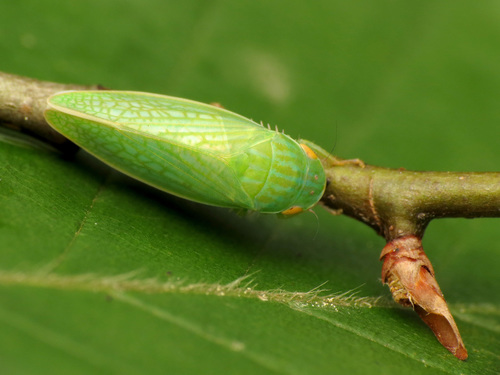
Los miembros del género Gyponana, comúnmente conocidos como cicadelas verdes, son insectos fascinantes y abundantes dentro de la familia Cicadellidae. Estas pequeñas criaturas en forma de cuña están altamente adaptadas a la vida entre el follaje, donde pasan sus días alimentándose de la savia de las plantas. Caracterizados por su coloración verde pálido, que proporciona un excelente camuflaje contra las hojas, son un avistamiento común en jardines, bosques y campos de América del Norte. A pesar de su pequeño tamaño, las cicadelas Gyponana desempeñan un papel significativo en sus ecosistemas, actuando tanto como consumidores de jugos vegetales como fuentes de alimento vitales para varios insectos depredadores, aves y arañas. Su notable capacidad de salto y sus complejos métodos de comunicación vibratoria los convierten en una maravilla de la adaptación evolutiva, cautivando tanto a entomólogos como a observadores de la naturaleza de traspatio.
Hábitat: Se encuentran típicamente en bosques templados, matorrales y jardines domésticos, donde descansan en el envés de las hojas de varios árboles caducifolios y plantas herbáceas.
Las cicadelas Gyponana se caracterizan por sus cuerpos alargados y en forma de cuña, que suelen medir entre 1 y 2 centímetros de longitud. Son principalmente de color verde pálido a verde amarillento, lo que les permite mezclarse perfectamente con las hojas de sus plantas huésped. Sus cabezas anchas y planas tienen ojos pequeños que a veces muestran un sutil tinte rojizo. Dependiendo de la especie, algunos individuos pueden presentar tenues rayas longitudinales anaranjadas o rojizas a lo largo de su pronoto. Cuando están en reposo, sus alas se mantienen en forma de tejado sobre su abdomen, formando una silueta limpia y aerodinámica.
Categoría
InsectosRareza
Común
Peligro
1/5 · Muy bajo
Snaps
¡Sé la primera persona en hacer un snap!
El recubrimiento de brocosomas que secretan es tan estructuralmente único que los científicos lo están estudiando para desarrollar materiales avanzados antirreflectantes y resistentes al agua.
A veces se les llama 'cicadelas tiradoras' porque lanzan activamente gotitas de fluido de desecho, conocido como ligamaza, para evitar atraer depredadores.
Pueden saltar hasta 100 veces la longitud de su cuerpo en un solo brinco, generando fuerzas que harían que un humano perdiera el conocimiento.
Estas cicadelas producen esferas microscópicas, huecas, de proteína-lípidos llamadas brocosomas, las cuales frotan sobre sus cuerpos para crear una capa protectora altamente repelente al agua y auto-limpiante.
Utilizando patas traseras especializadas equipadas con un mecanismo de catapulta, pueden lanzarse al aire a velocidades increíbles para escapar de los depredadores en milisegundos.
En lugar de usar sonidos aéreos como las cigarras, se comunican con posibles parejas enviando vibraciones de baja frecuencia a través de los tallos y hojas de sus plantas huésped.
Las cicadelas Gyponana se alimentan estrictamente de fluidos vegetales, utilizando sus piezas bucales especializadas para perforar y succionar los sistemas vasculares de las plantas huésped.
Diferencias por edad: Las ninfas y los adultos se alimentan de los mismos fluidos vegetales, aunque las ninfas se dirigen a tejidos vegetales más jóvenes y blandos.

Quercus alba
Se alimenta de las hojas y la savia del árbol huésped.
Chrysoperla carnea
Recorre el follaje para cazar y consumir ninfas y adultos de cicadela.
Gonatopus ashmeadi
Infecta y parasita las ninfas de cicadela, matándolas finalmente.
Peludo describe a los animales que poseen una cubierta densa de pelo o pelaje suave.
Los animales sociales viven en grupos organizados, cooperando para obtener beneficios de supervivencia como la búsqueda de alimento, la defensa y la cría de descendencia.
Los animales arborícolas viven principalmente en los árboles, utilizándolos como refugio, alimento y protección contra los depredadores.
Este rasgo caracteriza a los organismos cuya dieta consiste total o principalmente en material vegetal.
Los animales diurnos están activos principalmente durante el día y suelen descansar o dormir por la noche.
Todavía no hay alias listados.
Las colecciones para este objeto aparecerán aquí a medida que se añadan más temas.
Peligro
1/5 · Muy bajo
Todavía no hay notas especiales de seguridad.
Busca seis patas, antenas, tres secciones en el cuerpo y la forma de las alas. Los escarabajos tienen las alas delanteras endurecidas; las moscas solo tienen un par que funciona. Los insectos diminutos pueden necesitar un primer plano antes de que se vea su grupo. Identificador de insectos: sube una foto y compara los detalles visibles.
1-2 cm
1-2 cm
0.00001-0.00003 kg
1 años
Las cicadelas Gyponana se alimentan estrictamente de fluidos vegetales, utilizando sus piezas bucales especializadas para perforar y succionar los sistemas vasculares de las plantas huésped.
Se encuentran típicamente en bosques templados, matorrales y jardines domésticos, donde descansan en el envés de las hojas de varios árboles caducifolios y plantas herbáceas.
Pastoreo
Acércate para separar los grupos y explorar dónde se ha fotografiado este objeto.
Los snaps recientes aparecerán aquí a medida que se añadan nuevas observaciones.
Llévate el descubrimiento
Haz una foto con Snappit, identifica la especie y guarda el hallazgo en tu colección.