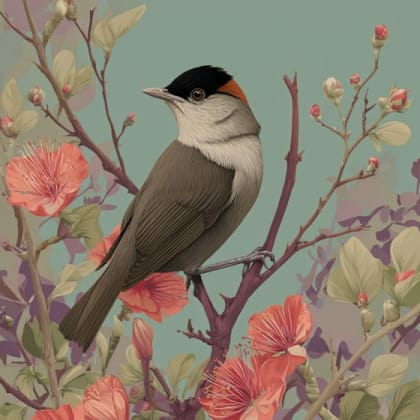
Hadada Ibis
Bostrychia hagedash
The Hadada Ibis is a large bird with a long, curved bill and beautiful greenish-black feathers. They are often seen in groups and love to make loud, honking calls that sound like 'ha-da-da'.
Hábitat: Wetlands
The Hadada Ibis is a medium-large bird with dull grey-brown plumage, but its wings shimmer with iridescent green and purple. It has a distinctive long, downcurved black bill and a bare black face patch.
Categoría
AvesRareza
Common
Peligro
1/5 · Muy bajo
Snaps
¡Sé la primera persona en hacer un snap!
Hadada Ibises often fly in V-formations, just like many geese!
Their loud, piercing call, 'haa-haa-dah', gives them their very own name!
These birds use their strong feet to stomp the ground, flushing out hidden bugs!
They sometimes build nests in surprisingly high places, even tall urban buildings!
Hadada Ibises can expertly probe soft ground because their long, curved bill helps them reach hidden insects and worms.
The Hadada Ibis has a famously loud 'haa-haa-dah' call that helps them communicate across distances and defend their territory.
Hadada Ibises can locate hidden prey in mud because their sensitive bill can detect subtle movements and scents underground.
The Hadada Ibis has excellent eyesight that helps them spot potential predators or good feeding grounds from a distance.
These omnivores love to dig for insects, worms, and small creatures in soft ground.
Lumbricus terrestris
A favorite meal dug from the soil.
Haliaeetus vocifer
A natural predator of Hadada Ibises.
Bos taurus
Forages near grazing animals for insects.
Describe a los animales, principalmente aves, que poseen una cubierta de plumas.
Los animales sociales viven en grupos organizados, cooperando para obtener beneficios de supervivencia como la búsqueda de alimento, la defensa y la cría de descendencia.
Este rasgo identifica a los organismos cuya dieta consiste principalmente en insectos y otros pequeños invertebrados.
Los organismos piscívoros son animales que subsisten principalmente de una dieta a base de peces.

Este rasgo de hábitat identifica especies que se encuentran en humedales, que son áreas de tierra saturadas de agua, ya sea permanente o estacionalmente, e incluyen marismas, pantanos y ciénagas.

Este rasgo identifica a los organismos cuya dieta consiste total o principalmente en tejido animal.

Los animales diurnos están activos principalmente durante el día y suelen descansar o dormir por la noche.
Peligro
1/5 · Muy bajo
Watch from a distance and don't try to touch wild birds.
65-76 cm
90-100 cm
0.9-1.3 kg
10-20 años
50 km/h
These omnivores love to dig for insects, worms, and small creatures in soft ground.
Wetlands
Foraging
Acércate para separar los grupos y explorar dónde se ha fotografiado este objeto.
Los snaps recientes aparecerán aquí a medida que se añadan nuevas observaciones.