

Harpactorini
harpactorini
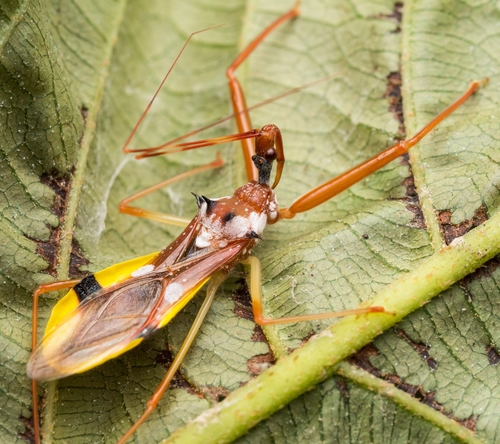
Harpactorini es la tribu más grande y diversa de chinches asesinas dentro de la familia Reduviidae. Reconocidos por su destreza depredadora, estos notables insectos sirven como agentes vitales de control natural de plagas tanto en ecosistemas agrícolas como silvestres. Acechan activamente una amplia variedad de insectos dañinos para los cultivos, utilizando un rostro fuerte y curvado para inyectar un cóctel altamente eficiente de toxinas paralizantes y enzimas digestivas que licúa los órganos internos de la presa para su consumo. Su estilo de caza activo y sus intrigantes comportamientos los convierten en un grupo fascinante para los observadores de la naturaleza.
Hábitat: Se encuentran en diversos entornos terrestres, incluyendo pastizales, campos agrícolas, bosques y jardines suburbanos, generalmente posados en el follaje o las flores esperando a su presa.
Estos llamativos insectos suelen presentar cuerpos alargados y robustos que varían de 1 a 4 centímetros de longitud, a menudo adornados con coloración de advertencia como naranja brillante, rojo y negro intenso. Se caracterizan por una cabeza estrecha con una clara constricción similar a un cuello, ojos compuestos prominentes y un pico curvado y robusto de tres segmentos doblado bajo la cabeza. Sus patas largas y delgadas a veces están cubiertas de pelos pegajosos, y sus alas membranosas se extienden planas sobre el abdomen cuando están en reposo.
Categoría
InsectosRareza
Común
Peligro
1/5 · Muy bajo
Snaps
¡Sé la primera persona en hacer un snap!
Ciertas hembras harpactorinas custodian sus masas de huevos para protegerlas de avispas parásitas.
Algunas especies de esta tribu cubren sus patas con savia pegajosa de árboles para atrapar presas como el papel matamoscas.
Su dolorosa picadura defensiva se compara con la picadura de una avispa debido a las enzimas digestivas que inyectan.
Son insectos estrictamente depredadores que cazan otros artrópodos, utilizando la digestión extraoral para consumir los contenidos licuados de la presa.
Aún no hay insignias de rasgos asignadas a este objeto.
Todavía no hay alias listados.
Las colecciones para este objeto aparecerán aquí a medida que se añadan más temas.
Peligro
1/5 · Muy bajo
Todavía no hay notas especiales de seguridad.
Busca seis patas, antenas, tres secciones en el cuerpo y la forma de las alas. Los escarabajos tienen las alas delanteras endurecidas; las moscas solo tienen un par que funciona. Los insectos diminutos pueden necesitar un primer plano antes de que se vea su grupo. Identificador de insectos: sube una foto y compara los detalles visibles.
1-4 cm
2-5 cm
0.0001-0.002 kg
1-2 años
5 km/h
Son insectos estrictamente depredadores que cazan otros artrópodos, utilizando la digestión extraoral para consumir los contenidos licuados de la presa.
Se encuentran en diversos entornos terrestres, incluyendo pastizales, campos agrícolas, bosques y jardines suburbanos, generalmente posados en el follaje o las flores esperando a su presa.
Acércate para separar los grupos y explorar dónde se ha fotografiado este objeto.
Los snaps recientes aparecerán aquí a medida que se añadan nuevas observaciones.
Llévate el descubrimiento
Haz una foto con Snappit, identifica la especie y guarda el hallazgo en tu colección.