Harris' Antelope Squirrel
Ammospermophilus harrisii
Harris' Antelope Squirrel is a small, lively squirrel found in the deserts of the southwestern United States. They have a fluffy tail and love to dig and play in the sand.
Hábitat: Desert
The Harris' Antelope Squirrel has a grayish-brown back with a single white stripe running along each side of its body, and a pure white belly. Its relatively short tail is often held curled over its back, distinguishing it from other striped ground squirrels.
Categoría
MamíferosRareza
Common
Peligro
1/5 · Muy bajo
Snaps
¡Sé la primera persona en hacer un snap!
Despite their name, 'antelope' squirrels don't eat antelopes; it refers to their antelope-like running!
Harris' Antelope Squirrels use special cheek pouches to carry armfuls of seeds back to their homes!
These desert dwellers often hold their fluffy tails over their backs like tiny parasols for shade!
They can dig amazing burrows with multiple exits, perfect for escaping hungry predators quickly!
Harris' Antelope Squirrel can quickly cool down its body by pressing its belly to a cool rock, helping it survive desert heat.
Harris' Antelope Squirrel can get almost all the water it needs from its food, letting it thrive in dry desert environments.
Harris' Antelope Squirrel can twitch its tail rapidly as a signal to predators, letting them know it has been spotted.
An omnivore, it eats seeds, fruits, insects, and green plants found in its desert home.
Buteo jamaicensis
A common aerial predator of this ground squirrel.
Crotalus atrox
Hunts squirrels on the ground, ambushing from cover.
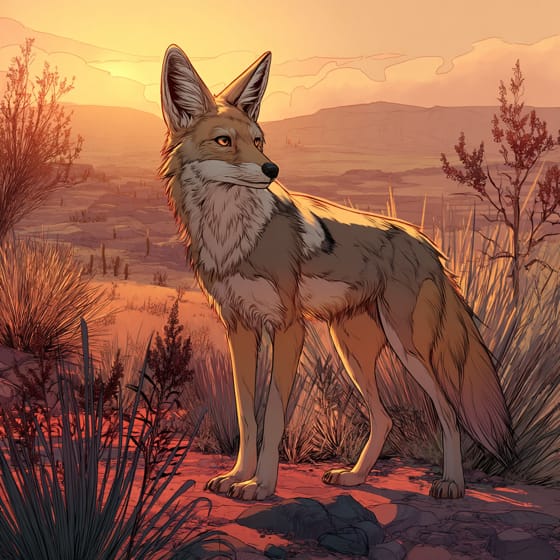
Canis latrans
A terrestrial predator that preys on squirrels.
Prosopis glandulosa
Consumes the seeds and pods of this desert tree.
Opuntia engelmannii
Feeds on the fruits and seeds of this common cactus.
Peludo describe a los animales que poseen una cubierta densa de pelo o pelaje suave.
Los animales sociales viven en grupos organizados, cooperando para obtener beneficios de supervivencia como la búsqueda de alimento, la defensa y la cría de descendencia.
Este rasgo identifica organismos cuya dieta incluye tanto materia vegetal como animal.
Los animales excavadores cavan túneles y cámaras en el suelo y utilizan estas estructuras subterráneas para refugiarse, cazar o reproducirse.

Los hábitats desérticos son regiones áridas caracterizadas por precipitaciones extremadamente bajas y, a menudo, temperaturas extremas, que albergan una flora y fauna especializadas.

Los animales diurnos están activos principalmente durante el día y suelen descansar o dormir por la noche.

Este rasgo identifica a los organismos que exhiben una rapidez excepcional en sus movimientos para cazar, escapar o desplazarse.
Todavía no hay alias listados.
Peligro
1/5 · Muy bajo
Don't try to catch or touch wild squirrels; they are best enjoyed from a distance.
14-17 cm
0.1-0.15 kg
2-5 años
25 km/h
An omnivore, it eats seeds, fruits, insects, and green plants found in its desert home.
Desert
Foraging
6-12
Acércate para separar los grupos y explorar dónde se ha fotografiado este objeto.
Los snaps recientes aparecerán aquí a medida que se añadan nuevas observaciones.