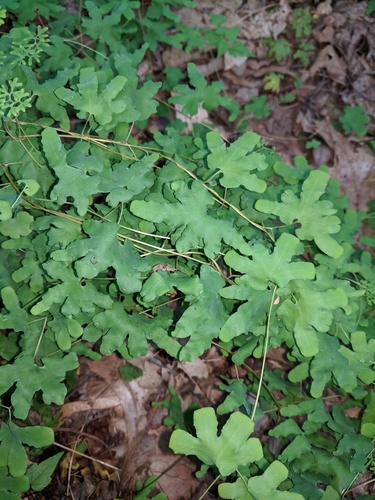


Hartford Fern
lygodium palmatum
The Hartford Fern (Lygodium palmatum) is a captivating, delicate species of climbing fern native to the eastern United States. Unique among North American ferns, this plant behaves like a vine, utilizing its thin, twining leaf stalks to climb surrounding vegetation in search of light. It holds a distinct place in botanical conservation history as the subject of the first-ever plant preservation law enacted in the United States, passed in Connecticut in 1869 to prevent destructive over-harvesting of its elegant fronds for winter decorations. Today, it remains a rare and enchanting find for hikers, nature enthusiasts, and botanists exploring damp, acidic woodlands.
Hábitat: Typically found in moist, highly acidic soils of bogs, seeps, and damp sandy woodlands, often climbing on low shrubs.
This plant is easily recognized by its bright green, hand-shaped (palmate) sterile leaflets with 5 to 7 lobes that grow in pairs along a very slender, flexible, wire-like stem. In late summer, the upper sections of these climbing fronds develop highly branched, compact, and much smaller fertile leaflets that host spore-bearing structures. The entire climbing leaf structure functions like a vine, stretching and draping gracefully over low shrubs and forest floors up to 3 meters in length.
Categoría
PlantasRareza
Common
Peligro
1/5 · Muy bajo
Snaps
¡Sé la primera persona en hacer un snap!
It was the subject of the very first environmental law in the United States, passed in Connecticut in 1869 to stop people from stripping wild populations for home decor.
Its common name honors the city of Hartford, Connecticut, where the plant was once highly abundant and famously exploited by Victorian-era florists.
Technically, the entire vine-like structure of the climbing fern is not a stem, but rather one single, continuously growing leaf.
Unlike most ferns with upright fronds, its leaf midrib behaves like a climbing vine, twining around twigs to ascend toward forest sunlight.
Produces distinctly shaped sterile leaves for energy production near the base, and separate, specialized fertile leaves near the top for reproduction.
Thrives in nutrient-poor, highly acidic soils where many other competing plant species struggle to survive.
As a photosynthetic plant, it produces its own energy using sunlight, water, carbon dioxide, and essential soil minerals.
Diferencias por edad: Spore-producing gametophytes are small and independent, while mature sporophytes develop extensive root networks to support climbing vines.
Vaccinium corymbosum
The Hartford Fern uses the sturdy branches of this shrub as a physical trellis to climb toward sunlight.
Rhizophagus irregularis
Symbiotic root-dwelling fungus that assists the fern in absorbing phosphorus and water from nutrient-deficient, acidic soils.
Aún no hay insignias de rasgos asignadas a este objeto.
Todavía no hay alias listados.
Las colecciones para este objeto aparecerán aquí a medida que se añadan más temas.
Peligro
1/5 · Muy bajo
Todavía no hay notas especiales de seguridad.
La forma más fácil de identificar a Hartford Fern es usar la aplicación de identificación de naturaleza Snappit.
100-300 cm
5-20 años
As a photosynthetic plant, it produces its own energy using sunlight, water, carbon dioxide, and essential soil minerals.
Typically found in moist, highly acidic soils of bogs, seeps, and damp sandy woodlands, often climbing on low shrubs.
Photosynthesis
Acércate para separar los grupos y explorar dónde se ha fotografiado este objeto.
Los snaps recientes aparecerán aquí a medida que se añadan nuevas observaciones.

North Carolina, US
Puedes ver Quimáfila Rayada, Zapatito De Dama Rosado y Galax.
Ver guía →
Kentucky, US
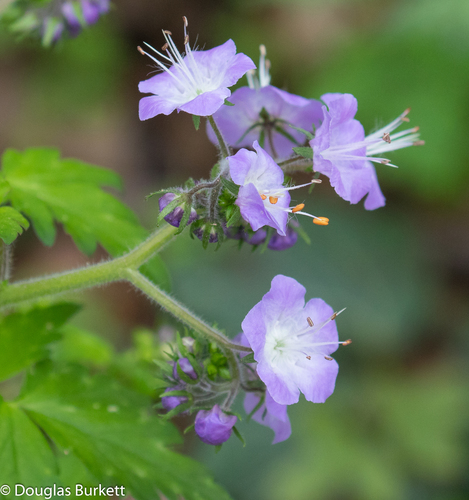
Puedes ver Facelia Púrpura, Tritón Oriental y Raíz De Cáncer Americana.
Ver guía →

Tennessee, US
Puedes ver Magnolia De Hoja Grande, Hartford Fern y Box Huckleberry.
Ver guía →



.jpg&width=800)



_(14586807078).jpg&width=800)







