

Heterotheca Villosa
heterotheca villosa
Heterotheca villosa, commonly known as hairy goldenaster, is a resilient perennial wildflower native to western and central North America. This tough aster thrives in harsh, dry environments where other plants struggle, showing off its cheerful, daisy-like yellow blossoms from mid-summer until the first frosts. It is highly valued for its extreme drought tolerance and ability to stabilize sandy or disturbed soils. Historically, indigenous peoples used hairy goldenaster for various medicinal purposes, including brewing soothing teas to treat respiratory issues and skin irritations. Today, it remains an essential component of native grasslands, acting as a crucial late-season nectar source for bees, butterflies, and other pollinators.
Hábitat: Typically found in dry grasslands, rocky slopes, sandy plains, and open pine woodlands.
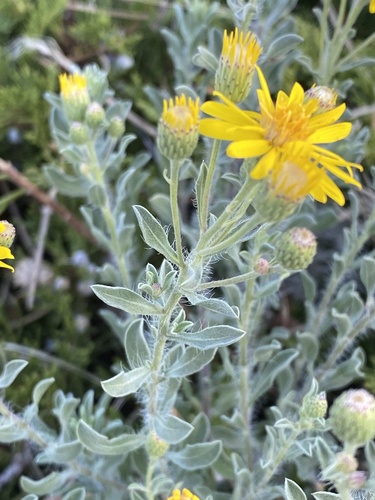
Growing between 15 to 50 centimeters tall, this plant is easily identified by its grayish-green, densely hairy leaves and stems, which give it a soft, dusty appearance. These hairs shield the plant against intense sunlight and dry winds. Its bright yellow flower heads, measuring about 2 to 3 centimeters across, consist of numerous ray florets surrounding a darker golden-yellow center disc, clustered at the ends of branched stems.
Categoría
PlantasRareza
Common
Peligro
1/5 · Muy bajo
Snaps
¡Sé la primera persona en hacer un snap!
In traditional indigenous medicine, infusions of this plant were used to calm hyperactive children and soothe symptoms of colds.
The common name 'hairy goldenaster' is highly literal, describing both the fuzzy texture of its leaves and the golden hue of its starry blossoms.
The dense hairs on its leaves act like natural sunscreen, protecting the plant's delicate tissues from high-altitude ultraviolet radiation.
The plant is covered in dense, fine hairs that reflect intense sunlight and reduce moisture loss by trapping a boundary layer of humid air.
It features a robust, deep taproot that allows it to access water reserves deep underground, ensuring survival during severe droughts.
By flowering late in the summer and autumn, it avoids peak-summer heat stress and capitalizes on autumn moisture while avoiding competition from early-season plants.
As a photosynthetic plant, it generates its own energy from sunlight, carbon dioxide, and water while absorbing essential mineral nutrients from the soil.
Diferencias por edad: Seedlings rely initially on stored nutrients within the seed coat before growing roots and green leaves to perform photosynthesis.
Apis mellifera
Adult honey bees visit the yellow flower heads to collect pollen and nectar, facilitating pollination.
Antilocapra americana
Pronghorns forage on the young, tender foliage of the plant during the spring before the stems become highly fibrous.
Junonia coenia
Adult butterflies feed on the abundant nectar during late summer when other floral resources are scarce.
Aún no hay insignias de rasgos asignadas a este objeto.
Las colecciones para este objeto aparecerán aquí a medida que se añadan más temas.
Peligro
1/5 · Muy bajo
Todavía no hay notas especiales de seguridad.
La forma más fácil de identificar a Heterotheca Villosa es usar la aplicación de identificación de naturaleza Snappit.
15-50 cm
3-10 años
As a photosynthetic plant, it generates its own energy from sunlight, carbon dioxide, and water while absorbing essential mineral nutrients from the soil.
Typically found in dry grasslands, rocky slopes, sandy plains, and open pine woodlands.
Acércate para separar los grupos y explorar dónde se ha fotografiado este objeto.
Los snaps recientes aparecerán aquí a medida que se añadan nuevas observaciones.














