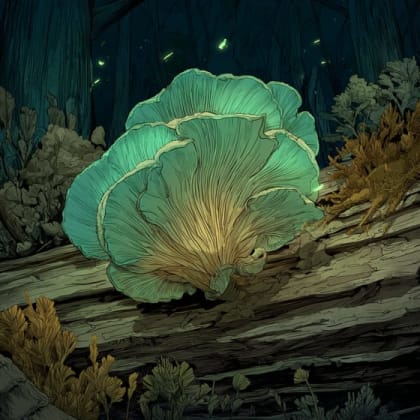
Hexagonal-Pored Polypore
neofavolus alveolaris
The Hexagonal-Pored Polypore is a unique fungus that looks like a honeycomb! It's often found growing on decaying wood, helping nature break down old trees.
Hábitat: Forests, usually on decaying wood.
The Hexagonal-Pored Polypore has a fan-shaped or kidney-shaped cap, often pale yellow, orange, or brownish when young. Its most distinctive feature is the underside, covered with prominent, angular, hexagonal pores that give it a honeycomb-like appearance, making it visually unique among shelf fungi.
Categoría
HongosRareza
Common
Peligro
0/5 · Sin peligro conocido
Snaps
¡Sé la primera persona en hacer un snap!
It changes color from bright orange when young to pale cream or brown as it ages!
Its scientific name, 'alveolaris,' means 'like a honeycomb' from its unique pore pattern!
This fungus can grow incredibly quickly, sometimes appearing almost overnight on dead logs after rain!
You might find tiny beetles or other insects nibbling on its cap or hiding in its honeycomb pores!
Hexagonal-Pored Polypore can break down dead wood because it releases special enzymes that help recycle nutrients into the soil.
Hexagonal-Pored Polypore has perfectly hexagonal pores that help it efficiently release and spread its tiny spores into the air.
Hexagonal-Pored Polypore has a tough, leathery texture that helps it stay attached and endure various weather conditions on wood.
Acer rubrum
Decomposes dead wood from this common tree.
Fagus grandifolia
Breaks down fallen branches and logs.
Quercus alba
Essential for nutrient recycling in forests.
Colorido describe a organismos u objetos que exhiben una amplia variedad de colores brillantes y distintivos.
Los hábitats boscosos son entornos terrestres dominados por una densa cubierta arbórea, que sustentan una gran diversidad de vida animal y vegetal.
Describe a los organismos que descomponen la materia orgánica muerta, reciclando los nutrientes de vuelta al ecosistema.
Peligro
0/5 · Sin peligro conocido
Todavía no hay notas especiales de seguridad.
0.5-2 cm
inedible
2-10 cm
Forests, usually on decaying wood.
wood
Spring to fall
White
Acércate para separar los grupos y explorar dónde se ha fotografiado este objeto.
Los snaps recientes aparecerán aquí a medida que se añadan nuevas observaciones.