






Holly Olive
osmanthus heterophyllus
The Holly Olive is a lovely evergreen plant with shiny green leaves. It produces sweet-smelling flowers that attract butterflies and bees!
Hábitat: Holly Olives thrive in gardens, parks, and wooded areas.
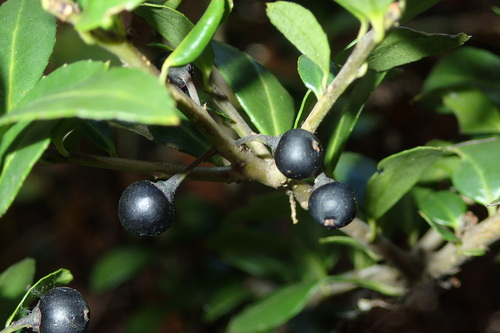
The Holly Olive is a dense evergreen shrub with glossy, dark green leaves that strikingly resemble common holly, though it is not a true holly. Its small, highly fragrant white flowers bloom in clusters, often subtly hidden among the foliage, providing a stark contrast to the dark, spiny leaves.
Categoría
PlantasRareza
Common
Peligro
0/5 · Sin peligro conocido
Snaps
¡Sé la primera persona en hacer un snap!
Despite its looks, the Holly Olive is actually related to common olives, not hollies!
Its incredibly strong, sweet scent can fill an entire garden from just a few small flowers!
Its scientific name 'Osmanthus' means 'fragrant flower' in Greek!
Some Holly Olive plants can have two different leaf shapes growing on the same branch!
Holly Olive has sharp, spiny leaves that mimic real holly to help it deter hungry animals from nibbling on its foliage.
Its tiny flowers release a powerful, sweet scent that travels far, helping to attract pollinators even in cooler weather.
Holly Olive can bloom from fall into early winter, providing a valuable source of nectar when most other plants are dormant.
Apis mellifera
Collects nectar and pollen.

Cervus nippon
Browses on its leaves and stems.
Chrysoperla carnea
Adults hide among dense foliage.
Los animales sociales viven en grupos organizados, cooperando para obtener beneficios de supervivencia como la búsqueda de alimento, la defensa y la cría de descendencia.
Colorido describe a organismos u objetos que exhiben una amplia variedad de colores brillantes y distintivos.
Este rasgo caracteriza a los organismos cuya dieta consiste total o principalmente en material vegetal.
Los hábitats boscosos son entornos terrestres dominados por una densa cubierta arbórea, que sustentan una gran diversidad de vida animal y vegetal.

Describe organismos que transfieren polen, permitiendo la fertilización y reproducción de las plantas.
Peligro
0/5 · Sin peligro conocido
Todavía no hay notas especiales de seguridad.
200-600 cm
150-400 cm
0.5-1 cm
Fall_to_winter
No
Ninguna
Perenne
Insectos
Acércate para separar los grupos y explorar dónde se ha fotografiado este objeto.
Los snaps recientes aparecerán aquí a medida que se añadan nuevas observaciones.




.jpg&width=800)







_(8395478679).jpg&width=800)




