






Humphead wrasse
Cheilinus undulatus
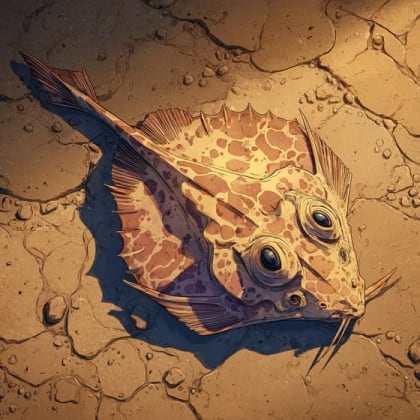
The humphead wrasse is a colorful fish with a big, bumpy forehead. It swims in warm, tropical waters and loves to hide among coral reefs.
Hábitat: Coral reefs
The Humphead wrasse is a giant reef fish characterized by a prominent hump on its forehead, especially in males, and thick fleshy lips. Its scales are large, and colors range from greenish-brown to vibrant blue-green, often with two black lines behind each eye.
Categoría
PecesRareza
Common
Peligro
1/5 · Muy bajo
Snaps
¡Sé la primera persona en hacer un snap!
These smart fish have been observed using rocks to help them smash open shellfish.
They are the largest wrasse in the world, growing over two meters long!
They sleep in a mucous cocoon they build each night to hide their scent.
Young wrasse look very different from adults, with camouflaged stripes and spots.
Humphead wrasse has a large, bony hump on its forehead that helps them ram and break apart corals to expose hidden prey.
Humphead wrasse can change sex from female to male when needed, which helps them maintain healthy breeding populations.
Humphead wrasse has a special immunity to toxins that lets them safely eat venomous prey like boxfish and sea urchins.
A mighty hunter that crunches on hard-shelled critters and venomous prey found on coral reefs.
Diferencias por edad: Juveniles eat smaller invertebrates; adults target larger, tougher prey like sea urchins and mollusks.
Diadema setosum
Feeds on venomous urchins, helping control their populations.
Acanthaster planci
Preys on this destructive starfish, protecting corals.
Tridacna gigas
Uses strong jaws to crack open and consume large clams.
Ostracion cubicus
Immune to toxins, they can safely consume boxfish.
Carcharhinus amblyrhynchos
Larger sharks occasionally prey on juvenile or sick Humphead wrasse.
Los animales sociales viven en grupos organizados, cooperando para obtener beneficios de supervivencia como la búsqueda de alimento, la defensa y la cría de descendencia.
Colorido describe a organismos u objetos que exhiben una amplia variedad de colores brillantes y distintivos.
Este rasgo caracteriza a los organismos con una esperanza de vida excepcionalmente larga en comparación con otros de su especie.
Este rasgo identifica a los organismos cuya dieta consiste total o principalmente en tejido animal.

Los animales diurnos están activos principalmente durante el día y suelen descansar o dormir por la noche.

Describe una especie cuya presencia y papel tienen un efecto desproporcionadamente grande en su entorno.

Gigante describe organismos u objetos de un tamaño significativamente mayor al promedio de su especie o tipo.

Los hábitats marinos abarcan todos los entornos de agua salada de los océanos de la Tierra, sustentando una inmensa diversidad de vida acuática.

El estado de peligro de extinción indica que una especie corre un riesgo muy alto de extinguirse en estado silvestre en un futuro próximo.
Peligro
1/5 · Muy bajo
Always watch from a distance when observing fish in the ocean.
100-230 cm
50-190 kg
20-50 años
A mighty hunter that crunches on hard-shelled critters and venomous prey found on coral reefs.
15 km/h
Coral reefs
Foraging
100 m
Acércate para separar los grupos y explorar dónde se ha fotografiado este objeto.
Los snaps recientes aparecerán aquí a medida que se añadan nuevas observaciones.













_01.jpg&width=800)