

Hydrangea Leaftier Moth
olethreutes ferriferana
The Hydrangea Leaftier Moth (Olethreutes ferriferana) is a fascinating micro-moth species belonging to the family Tortricidae, widely celebrated for its unique engineering skills during its larval stage. Found throughout eastern North America, this insect is closely tied to wild and cultivated hydrangeas. While the adult moth is small and easily overlooked, the caterpillars are famous for their architectural feats, binding the terminal leaves of their host plants together with strong silk to form a secure, pocket-like shelter. Inside this cozy enclosure, the developing larva feeds in safety from predators. For gardeners and nature enthusiasts, discovering these distinctive, spherical leaf packets on hydrangea bushes is a clear sign of the leaftier's presence. Despite their leaf-binding habit, they rarely cause severe damage to the plant, making them more of an intriguing curiosity than a harmful pest. This species serves as a wonderful example of ecological specialization and insect architecture in backyard ecosystems.
Hábitat: Typically found in deciduous forests, edge habitats, riparian zones, and suburban gardens where wild or cultivated hydrangea species grow.
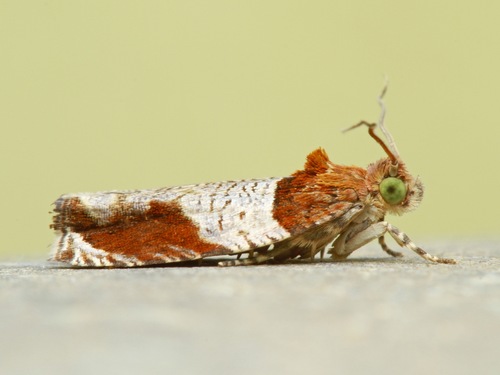
Adult Hydrangea Leaftier Moths are small, delicately patterned insects with a wingspan of approximately 1 to 2 centimeters. Their forewings feature a striking, mottled pattern of dark chocolate brown or charcoal grey on the basal half, contrasting sharply with a creamy white or pale pinkish-tan coloration on the outer half, which helps them mimic bird droppings when resting. The larvae are small, slender caterpillars, typically light green to bluish-green with a dark brown or black head capsule, measuring up to 1 centimeter in length before pupation.
Categoría
InsectosRareza
Common
Peligro
1/5 · Muy bajo
Snaps
¡Sé la primera persona en hacer un snap!
Inside the leaf shelter, the caterpillar keeps its home clean by actively ejecting its frass (feces) out of a small opening at the bottom.
The leaf purse constructed by the caterpillar is so tightly bound that it protects them from heavy rains and wind, acting like a waterproof tent.
While they cause aesthetic damage by preventing some hydrangea flowers from opening fully, they rarely harm the overall health of the shrub.
The caterpillar uses silk to pull the edges of opposite leaves together at the tip of a hydrangea branch, binding them into a tight, protective purse.
Adult moths possess a distinct coloration pattern that closely resembles a bird dropping when resting on leaves, effectively hiding them from predators.
By feeding entirely inside its constructed leaf dome, the larva minimizes its exposure to parasitoid wasps and weather extremes.
As caterpillars, they feed strictly on the leaves and developing flower buds of hydrangea plants, while adults likely feed on nectar or do not feed at all.
Diferencias por edad: Larvae feed exclusively on the foliage and buds of hydrangeas inside their silk nests, whereas the short-lived adults may drink nectar or survive on larval fat reserves.
Hydrangea arborescens
The primary host plant where females lay eggs and caterpillars construct their nests and feed.
Campoplex spp.
Parasitoid wasps target the caterpillars inside their shelters to lay eggs, helping control their population.
Baeolophus bicolor
Common insectivorous songbirds search for leaf shelters and tear them open to feed on the fat larvae.
Aún no hay insignias de rasgos asignadas a este objeto.
Todavía no hay alias listados.
Las colecciones para este objeto aparecerán aquí a medida que se añadan más temas.
Peligro
1/5 · Muy bajo
Todavía no hay notas especiales de seguridad.
La forma más fácil de identificar a Hydrangea Leaftier Moth es usar la aplicación de identificación de naturaleza Snappit.
1 cm
1-2 cm
0.00001-0.00005 kg
1 años
8 km/h
As caterpillars, they feed strictly on the leaves and developing flower buds of hydrangea plants, while adults likely feed on nectar or do not feed at all.
Typically found in deciduous forests, edge habitats, riparian zones, and suburban gardens where wild or cultivated hydrangea species grow.
Acércate para separar los grupos y explorar dónde se ha fotografiado este objeto.
Los snaps recientes aparecerán aquí a medida que se añadan nuevas observaciones.















