





Hydriomena manzanita
Hydriomena manzanita
La Hydriomena manzanita es una hermosa polilla a la que le encanta esconderse entre las hojas. Sus alas tienen patrones encantadores que la ayudan a camuflarse en la naturaleza, convirtiéndola en una criaturita muy especial de descubrir.
Hábitat: Bosques
La Hydriomena manzanita tiene alas moteadas de color gris, marrón y marrón rojizo, lo que crea una apariencia camuflada. Sus alas anteriores presentan líneas transversales onduladas y una pequeña mancha discal. Esta coloración le ayuda a mimetizarse a la perfección con la corteza y el follaje de los arbustos de manzanita que le dan nombre.
Categoría
InsectosRareza
Common
Peligro
1/5 · Muy bajo
Snaps
¡Sé la primera persona en hacer un snap!
¡Las polillas adultas de la manzanita a menudo vuelan en los días fríos de finales de invierno o principios de primavera!
Sus orugas son maestras del disfraz, ¡a menudo parecen exactamente pequeñas ramitas!
Algunas polillas, como la polilla de la manzanita, ¡pueden 'escuchar' los chasquidos de los murciélagos al cazar!
Esta polilla recibe su nombre de las plantas de manzanita, ¡cuyo nombre significa 'manzana pequeña' en español!
La Hydriomena manzanita puede camuflarse perfectamente con la corteza de los árboles gracias a los patrones moteados de sus alas, lo que le ayuda a esconderse de las aves hambrientas.
Las larvas de Hydriomena manzanita pueden comer las duras hojas de los arbustos de manzanita gracias a su sistema digestivo especializado, lo que les ayuda a prosperar donde otros no pueden.
La Hydriomena manzanita tiene ojos especializados que le ayudan a ver con poca luz, permitiéndole volar y encontrar pareja después del atardecer.
Las orugas mastican las duras hojas de la manzanita, mientras que las polillas adultas pueden sorber el dulce néctar de las flores.
Diferencias por edad: Las larvas (orugas) son folívoras, alimentándose de las hojas de las plantas. Las polillas adultas son nectarívoras, alimentándose del néctar de las flores (si es que se alimentan).
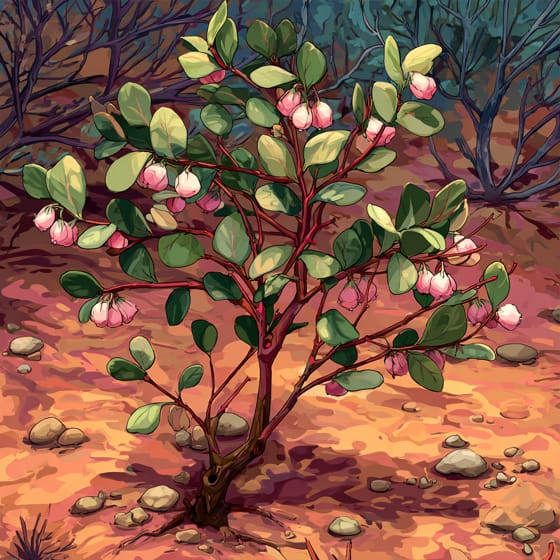
Arctostaphylos manzanita
Las larvas se alimentan de sus hojas
Myotis californicus
Los murciélagos son depredadores comunes de las polillas

Melanerpes formicivorus
Busca orugas en los árboles
Los animales solitarios viven solos durante la mayor parte de su vida y solo interactúan con otros para aparearse o cuidar de sus crías.
El camuflaje describe a los organismos que poseen colores o patrones que les permiten mezclarse con su entorno.
Colorido describe a organismos u objetos que exhiben una amplia variedad de colores brillantes y distintivos.
Este rasgo caracteriza a los organismos cuya dieta consiste total o principalmente en material vegetal.

Describe plantas que son particularmente atractivas y beneficiosas para una amplia variedad de organismos polinizadores.

Los hábitats boscosos son entornos terrestres dominados por una densa cubierta arbórea, que sustentan una gran diversidad de vida animal y vegetal.

Los animales nocturnos están principalmente activos durante la noche, y suelen descansar o dormir durante el día.

Describe organismos que transfieren polen, permitiendo la fertilización y reproducción de las plantas.
Todavía no hay alias listados.
Peligro
1/5 · Muy bajo
Observa siempre a los insectos desde lejos y no los toques, ya que algunos pueden ser delicados.
La forma más fácil de identificar a Hydriomena manzanita es usar la aplicación de identificación de naturaleza Snappit.
22-28 mm
10-15 mm
7-14 días
Las orugas mastican las duras hojas de la manzanita, mientras que las polillas adultas pueden sorber el dulce néctar de las flores.
Bosques
Forrajeo
6
Acércate para separar los grupos y explorar dónde se ha fotografiado este objeto.
Los snaps recientes aparecerán aquí a medida que se añadan nuevas observaciones.
Llévate el descubrimiento
Haz una foto con Snappit, identifica la especie y guarda el hallazgo en tu colección.








.jpg&width=800)


