

Iguanas And Chuckwallas
iguanidae
The family Iguanidae, comprising the true iguanas and chuckwallas, represents some of the most iconic and visually striking reptiles of the Americas. These medium-to-large lizards have adapted to a remarkable variety of environments, ranging from the arid rock piles of the Mojave Desert inhabited by chuckwallas to the lush canopy tops of tropical rainforests home to the green iguana. Known for their complex social behaviors, impressive posturing, and distinct herbivorous diets, iguanids play crucial ecological roles as seed dispersers and prey for larger predators. What makes this family especially fascinating is their physiological versatility; many species have evolved specialized salt glands to excrete excess mineral salts, allowing them to thrive in coastal or desert environments where water is scarce.
Hábitat: Found in a wide range of warm habitats, including tropical rainforests, dry deserts, coastal mangroves, and rocky scrublands.
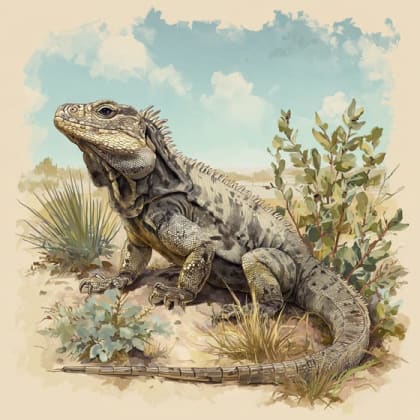
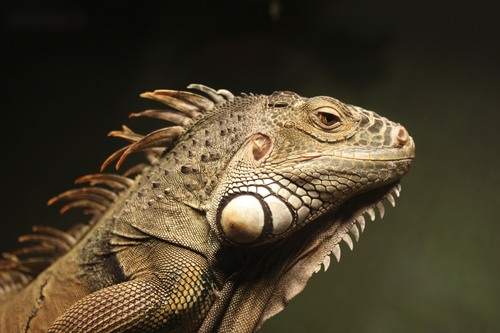
Iguanids are distinguished by their robust bodies, strong limbs, and long, powerful tails. They display an impressive array of coloration, from the vibrant greens and turquoise of tropical iguanas to the earthy browns, grays, and sandy yellows of desert-dwelling chuckwallas, which allows them to camouflage perfectly. Many species feature prominent physical structures such as saggy dewlaps under their chins, spiked crests running down their backs, and large, circular scales on their cheeks. Chuckwallas are easily identified by their loose, baggy skin folds along the sides of their bodies, which they inflate to wedge themselves securely into rock crevices.
Categoría
ReptilesRareza
Common
Peligro
1/5 · Muy bajo
Snaps
¡Sé la primera persona en hacer un snap!
Chuckwallas can change their skin color depending on the temperature; they appear darker in the cool morning to absorb heat and lighter in the hot afternoon to reflect it.
Green iguanas possess a 'third eye' on top of their head, known as the parietal eye, which helps them detect changes in light and spot aerial predators.
To escape predators, green iguanas can leap from tree branches as high as 40 feet (12 meters) onto the ground or water without injuring themselves.
Chuckwallas can squeeze into tight rock crevices and inflate their lungs with air, expanding their loose skin folds to wedge themselves tightly so predators cannot pull them out.
Many iguanids possess specialized nasal glands that excrete excess salt, helping them conserve fresh water in arid or coastal environments.
While less common in large adults, younger iguanids can self-amputate their tails to escape the grasp of a predator, later regenerating a cartilaginous replacement.
While young iguanids may occasionally feed on insects, adults are primarily herbivorous, consuming leaves, flowers, and fruits.
Diferencias por edad: Juveniles of many species supplement their diet with insects and small invertebrates to fuel rapid growth, gradually transitioning to a strictly plant-based diet as they mature.
Buteo jamaicensis
Preys on young and adult chuckwallas in desert environments.
Opuntia ficus-indica
Chuckwallas feed on the flowers and fruits, aiding in seed dispersal.
Harpia harpyja
Preys on green iguanas resting in the high forest canopy.
Aún no hay insignias de rasgos asignadas a este objeto.
Todavía no hay alias listados.
Las colecciones para este objeto aparecerán aquí a medida que se añadan más temas.
Peligro
1/5 · Muy bajo
Todavía no hay notas especiales de seguridad.
La forma más fácil de identificar a Iguanas And Chuckwallas es usar la aplicación de identificación de naturaleza Snappit.
While young iguanids may occasionally feed on insects, adults are primarily herbivorous, consuming leaves, flowers, and fruits.
Found in a wide range of warm habitats, including tropical rainforests, dry deserts, coastal mangroves, and rocky scrublands.
Foraging
Acércate para separar los grupos y explorar dónde se ha fotografiado este objeto.
Los snaps recientes aparecerán aquí a medida que se añadan nuevas observaciones.