

'Iliahi
santalum haleakalae
La 'Iliahi, o sándalo de Haleakalā (Santalum haleakalae), es un árbol legendario y culturalmente significativo, endémico de las laderas volcánicas de gran altitud de Maui, Hawái. Residiendo en las duras zonas subalpinas, esta planta resiliente se ha adaptado a la intensa radiación solar, los cambios extremos de temperatura y las condiciones secas. Es famosa por su duramen altamente aromático, que históricamente impulsó un lucrativo y devastador comercio de sándalo a principios del siglo XIX que casi llevó a la extinción a las especies de sándalo de Hawái. Hoy en día, la 'Iliahi se erige como un tesoro protegido de las tierras altas hawaianas. Lo que hace que la 'Iliahi sea verdaderamente fascinante es su estilo de vida como hemiparásita. Aunque posee hojas verdes para fotosintetizar, su sistema radicular busca activamente y penetra las raíces de las plantas vecinas para extraer agua y nutrientes clave. Esta compleja relación ecológica hace que el árbol sea increíblemente difícil de cultivar fuera de su hábitat natural, enfatizando la importancia crítica de conservar su ecosistema subalpino nativo.
Hábitat: Se encuentra en matorrales y bosques subalpinos secos a mésicos en las laderas volcánicas de Haleakalā, Maui, a elevaciones entre 1,800 y 2,700 metros.
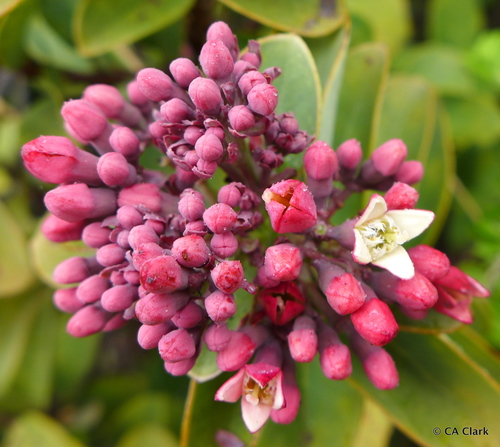
Un arbusto perenne o pequeño árbol multiramificado y de crecimiento lento que alcanza alturas de 200 a 600 centímetros. Presenta hojas ovaladas gruesas, coriáceas y suculentas de color verde oliva con un distintivo margen pálido o rojizo. Su característica más llamativa son los densos racimos de pequeñas flores en forma de estrella que florecen en vibrantes tonos de rojo brillante, rojo anaranjado o rosa oscuro. Después de la fertilización, produce pequeñas drupas en forma de huevo que se vuelven de un color negro púrpura oscuro cuando están maduras.
Categoría
PlantasRareza
Common
Peligro
1/5 · Muy bajo
Snaps
4
A principios del siglo XX, el intenso monopolio real y el comercio de sándalo hawaiano llevaron a la tala casi total de estos árboles maduros en todas las islas.
Las flores de la 'Iliahi experimentan un dramático cambio de color a medida que maduran, pasando de un sutil amarillo verdoso a un brillante carmesí intenso.
Aunque la 'Iliahi puede fotosintetizar por sí misma, le costaría sobrevivir sin robar agua y minerales de las raíces de sus vecinas.
Como hemiparásita, la 'Iliahi genera su propia energía a través de la fotosíntesis, pero depende de la extracción de agua, nitrógeno y nutrientes inorgánicos de los sistemas radiculares de las plantas huéspedes.
Diferencias por edad: Inicialmente depende de las reservas de semillas como plántula antes de desarrollar los haustorios parasitarios necesarios para unirse a una planta huésped.
Sophora chrysophylla
Santalum haleakalae parasita el sistema radicular de Sophora chrysophylla para absorber agua y minerales vitales en suelos secos.
Leptecophylla tameiameiae
Santalum haleakalae utiliza Leptecophylla tameiameiae como una planta huésped clave para mantener sus necesidades de agua en los matorrales subalpinos.
Apis mellifera
Las abejas melíferas introducidas visitan las flores de color rojo brillante de la 'Iliahi para recolectar néctar, ayudando en la polinización del árbol.
Aún no hay insignias de rasgos asignadas a este objeto.
Todavía no hay alias listados.
Las colecciones para este objeto aparecerán aquí a medida que se añadan más temas.
Peligro
1/5 · Muy bajo
Todavía no hay notas especiales de seguridad.
La forma más fácil de identificar a 'Iliahi es usar la aplicación de identificación de naturaleza Snappit.
200-600 cm
50-150 años
Como hemiparásita, la 'Iliahi genera su propia energía a través de la fotosíntesis, pero depende de la extracción de agua, nitrógeno y nutrientes inorgánicos de los sistemas radiculares de las plantas huéspedes.
Se encuentra en matorrales y bosques subalpinos secos a mésicos en las laderas volcánicas de Haleakalā, Maui, a elevaciones entre 1,800 y 2,700 metros.
Parasitismo Radicular
Acércate para separar los grupos y explorar dónde se ha fotografiado este objeto.

Hawaii, US
Puedes ver Geco Diurno De Polvo De Oro y Cirujano Amarillo.
Ver guía →

Hawaii, US
Puedes ver ʻōhiʻa Lehua, Pasionaria Fétida y Campanilla De Playa.
Ver guía →

Hawaii, US
Puedes ver 'āhinahina, Camaleón De Jackson y ʻamakihi De Hawái.
Ver guía →
Llévate el descubrimiento
Haz una foto con Snappit, identifica la especie y guarda el hallazgo en tu colección.











.jpg&width=800)



_001.jpg&width=800)




