

Italian Thistle
carduus pycnocephalus
The Italian Thistle (Carduus pycnocephalus) is a hardy, upright annual or biennial herb native to the Mediterranean region, but it has successfully spread globally, earning a reputation as a highly adaptable weed. Though often overlooked or dismissed due to its prickly defenses, this plant is a marvel of ecological resilience. It excels at colonizing disturbed soils, open pastures, and roadsides, where it can quickly establish dense stands. Its ability to thrive in poor soils and dry conditions makes it an impressive survivor, showcasing the fierce competition inherent in the plant kingdom.
Hábitat: Found in disturbed soils, overgrazed pastures, roadsides, and waste areas with Mediterranean-style climates.
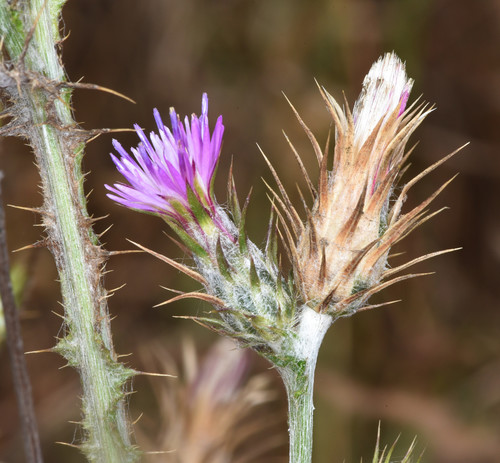
This thistle typically grows between 30 and 200 cm tall, characterized by erect, ribbed stems covered in fine woolly hairs and interrupted spiny wings. The leaves are deeply lobed and possess sharp, stiff spines along their margins, displaying a pale green hue with distinctive white veins. Its flower heads are small, cylindrical, and clustered in groups of two to five at the stem tips, featuring bright pink-to-purple disc florets. When mature, these flowers give way to feathered, wind-dispersed seeds equipped with a white, bristly pappus.
Categoría
PlantasRareza
Common
Peligro
1/5 · Muy bajo
Snaps
¡Sé la primera persona en hacer un snap!
A single healthy Italian Thistle plant can produce up to 20,000 seeds in a single growing season, allowing it to rapidly dominate new environments.
Because it accumulates nitrates, it can occasionally be toxic to livestock like cattle and sheep if consumed in large quantities, though most animals avoid its spines.
The seeds can remain viable in the soil for up to ten years, waiting for the perfect moisture and temperature conditions to germinate.
Stiff spines lining the leaves and stems deter herbivores from grazing on its foliage.
The seeds feature a fluffy pappus, allowing them to travel long distances on wind currents to colonize new areas.
Deep taproots and woolly hairs on stems help reduce water loss, allowing it to thrive in arid climates.
As a photoautotrophic plant, it produces its own food through photosynthesis, utilizing sunlight, carbon dioxide, water, and essential nutrients absorbed from the soil.
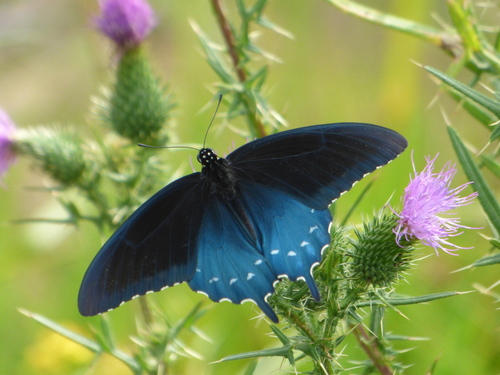
Vanessa cardui
Caterpillars feed on the foliage of the thistle, using its spiny leaves for protection.
Apis mellifera
Forages on the flower heads for nectar and pollen, acting as a key pollinator.
Rhinocyllus conicus
A weevil introduced as a biological control agent that feeds on the plant's receptacle and seeds.
Aún no hay insignias de rasgos asignadas a este objeto.
Todavía no hay alias listados.
Las colecciones para este objeto aparecerán aquí a medida que se añadan más temas.
Peligro
1/5 · Muy bajo
Todavía no hay notas especiales de seguridad.
La forma más fácil de identificar a Italian Thistle es usar la aplicación de identificación de naturaleza Snappit.
30-200 cm
1-2 años
As a photoautotrophic plant, it produces its own food through photosynthesis, utilizing sunlight, carbon dioxide, water, and essential nutrients absorbed from the soil.
Found in disturbed soils, overgrazed pastures, roadsides, and waste areas with Mediterranean-style climates.
Acércate para separar los grupos y explorar dónde se ha fotografiado este objeto.
Los snaps recientes aparecerán aquí a medida que se añadan nuevas observaciones.