






Jack-in-the-Pulpit
Arisaema triphyllum
Jack-in-the-Pulpit is a unique plant with a tall, green hood that looks like a little tent. It grows in shady forests and has a special flower that attracts curious insects.
Hábitat: Forests
The Jack-in-the-Pulpit has a unique flower structure, featuring a hooded, often striped 'pulpit' (spathe) that arches over a central column, the 'jack' (spadix). Its large, green trifoliate leaves, resembling a three-part umbrella, emerge distinctively from the forest floor.
Categoría
PlantasRareza
Common
Peligro
3/5 · Moderado
Snaps
¡Sé la primera persona en hacer un snap!
Ancient people used to dry and prepare its root for months to make it edible!
Its 'flower' actually makes its own heat, attracting flies like a warm invitation!
The plant's red berries are shiny and taste like spicy fire if eaten raw!
This amazing plant can live for many decades, possibly even a century underground!
Jack-in-the-Pulpit can change sex from male to female (and back!) as it grows, helping it adapt to resources.
Jack-in-the-Pulpit has a clever hooded structure that temporarily traps small flies, helping it get pollinated.
Jack-in-the-Pulpit produces irritating calcium oxalate crystals, protecting it from being eaten by most animals.
Bradysia impatiens
Attracted and temporarily trapped by the unique spathe.
Meleagris gallopavo
Feasts on its bright red, late-season berries.

Peromyscus leucopus
May dig up and consume the underground corms.
Turdus migratorius
Enjoys the plant's distinctive, ripe red berries.
Las plantas aromáticas producen y emiten compuestos orgánicos volátiles fragantes, a menudo como defensa o para atraer a los polinizadores.
Las plantas caducifolias pierden periódicamente todas sus hojas, por lo general durante el otoño o las estaciones secas.
Las flores en forma de campana poseen pétalos fusionados o dispuestos para formar una estructura acampanada o en forma de copa que se asemeja a una campana.
Las plantas con flores son cualquier planta que produce flores como parte de su ciclo reproductivo.

Las plantas tolerantes a la sombra están adaptadas para crecer y prosperar en áreas con bajos niveles de luz, requiriendo menos luz solar directa.

Las plantas frutales producen frutos, que son los ovarios maduros de las plantas con flores que contienen semillas.

Las plantas medicinales poseen compuestos químicos que pueden utilizarse con fines terapéuticos para tratar enfermedades o mantener la salud.

Describe plantas que son particularmente atractivas y beneficiosas para una amplia variedad de organismos polinizadores.

Los hábitats boscosos son entornos terrestres dominados por una densa cubierta arbórea, que sustentan una gran diversidad de vida animal y vegetal.

Este rasgo indica que los organismos pertenecen a un grupo evolutivo muy antiguo con antepasados que se remontan a millones de años.
Peligro
3/5 · Moderado
Don't touch the berries or leaves, as they can be harmful if eaten.
30-60 cm
20-40 cm
5-20 cm
Primavera
No
Moderada
Perenne
Insectos
Acércate para separar los grupos y explorar dónde se ha fotografiado este objeto.
Los snaps recientes aparecerán aquí a medida que se añadan nuevas observaciones.

Wisconsin, US
Puedes ver Ciervo De Cola Blanca, Common Eastern Bumble Bee y Pato.
Ver guía →

Minnesota, US
Puedes ver Rue Anemone, Eastern Skunk Cabbage y Bloodroot.
Ver guía →
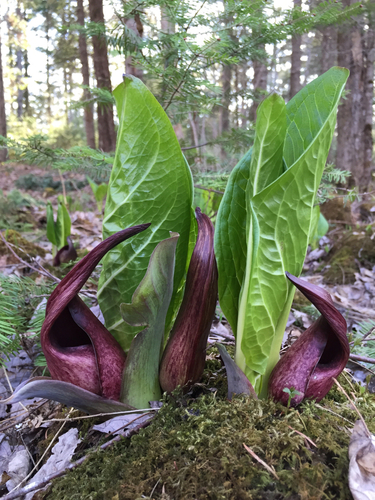
Virginia, US
Puedes ver Eastern Skunk Cabbage, Mayapple y Lesser Celandine.
Ver guía →
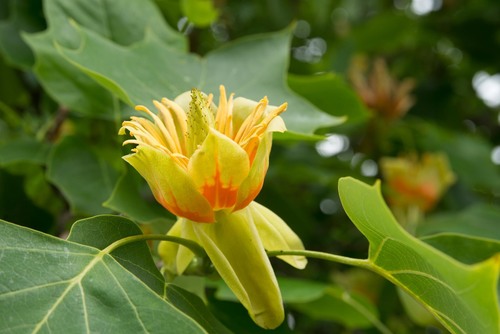
Virginia, US
Puedes ver American Tuliptree, Gorrión Común y Common Eastern Bumble Bee.
Ver guía →

Delaware, US
Puedes ver Virginia Bluebells, Sapo Americano y Bloodroot.
Ver guía →
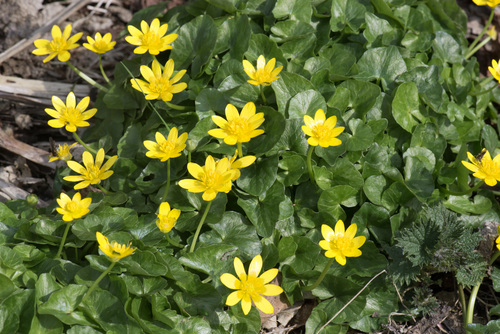
Virginia, US
Puedes ver Lesser Celandine, Amur Honeysuckle y Ciervo De Cola Blanca.
Ver guía →














