



Jackrogersella
jackrogersella
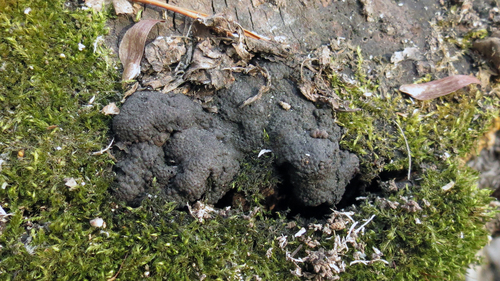
Jackrogersella es un fascinante género de hongos ascomicetos que pudren la madera, previamente agrupados dentro del género Hypoxylon, estrechamente relacionado. A menudo descubiertos colonizando ramas de madera dura muertas, particularmente abedules caídos, estos hongos resistentes juegan un papel crucial como saprótrofos, reciclando nutrientes vitales de vuelta a los suelos forestales. Forman estructuras fructíferas distintivas, oscuras y en forma de cojín, llamadas estromas, que se adhieren firmemente a la corteza, descomponiendo lentamente compuestos orgánicos complejos como la lignina y la celulosa que la mayoría de otros organismos no pueden digerir. Al descomponer los restos leñosos duros, Jackrogersella abre recursos para insectos, plantas y otros hongos, convirtiéndolo en un reciclador clave en los ecosistemas de bosques templados. Para los entusiastas de los hongos y los excursionistas forestales, avistar estas costras rugosas, parecidas al carbón, ofrece un vistazo al proceso oculto y continuo de descomposición y regeneración del bosque.
Hábitat: Se encuentra en bosques templados caducifolios y mixtos, típicamente creciendo en ramas muertas y caídas o troncos muertos en pie de árboles de madera dura, particularmente abedules.
Los cuerpos fructíferos, o estromas, de Jackrogersella son típicamente en forma de cojín, redondeados o hemisféricos, y a menudo se fusionan para formar costras alargadas y rugosas que van de 1 a 15 centímetros de longitud. Inicialmente, muestran un tono marrón rojizo o cobrizo oscuro, que madura con el tiempo hasta un color negro carbón profundo. La superficie es claramente granulada o texturizada con pequeños puntos elevados, que son las aberturas de los peritecios productores de esporas anidados justo debajo de la dura costra carbonácea.
Categoría
HongosRareza
Común
Peligro
1/5 · Muy bajo
Snaps
¡Sé la primera persona en hacer un snap!
A pesar de parecer carbón o madera quemada, estas costras oscuras son en realidad estructuras fúngicas vivas que contienen miles de sacos de esporas microscópicos.
El nombre del género Jackrogersella honra a Jack D. Rogers, un eminente micólogo estadounidense que se especializó en el estudio de los hongos Xylariaceae.
Estos hongos pueden permanecer inactivos durante inviernos helados o veranos secos y reanudar la esporulación una vez que los niveles de humedad aumentan de nuevo.
Como hongo saprótrofo, obtiene nutrientes descomponiendo tejido vegetal leñoso muerto, principalmente utilizando procesos enzimáticos para absorber azúcares y carbono.
Betula pendula
Proporciona el sustrato de madera muerta sobre el cual crece y se descompone el hongo.
Bolitophagus reticulatus
Los duros cuerpos fructíferos sirven como alimento y hábitat de reproducción para larvas de escarabajos micófagos especializados.
Peludo describe a los animales que poseen una cubierta densa de pelo o pelaje suave.
Los animales sociales viven en grupos organizados, cooperando para obtener beneficios de supervivencia como la búsqueda de alimento, la defensa y la cría de descendencia.
Este rasgo identifica organismos cuya dieta incluye tanto materia vegetal como animal.
Los hábitats boscosos son entornos terrestres dominados por una densa cubierta arbórea, que sustentan una gran diversidad de vida animal y vegetal.
Los animales diurnos están activos principalmente durante el día y suelen descansar o dormir por la noche.
Todavía no hay alias listados.
Las colecciones para este objeto aparecerán aquí a medida que se añadan más temas.
Peligro
1/5 · Muy bajo
Todavía no hay notas especiales de seguridad.
Compara la forma del sombrero, la parte inferior, el pie y su base, y si el hongo crece sobre madera o sobre el suelo. Unos tienen láminas, otros poros o aguijones. Un sombrero visto solo desde arriba suele ocultar los rasgos más útiles. Identificador de setas: sube una foto y compara los detalles visibles.
1+ cm
0.001+ kg
1+ años
Como hongo saprótrofo, obtiene nutrientes descomponiendo tejido vegetal leñoso muerto, principalmente utilizando procesos enzimáticos para absorber azúcares y carbono.
Se encuentra en bosques templados caducifolios y mixtos, típicamente creciendo en ramas muertas y caídas o troncos muertos en pie de árboles de madera dura, particularmente abedules.
Acércate para separar los grupos y explorar dónde se ha fotografiado este objeto.
Los snaps recientes aparecerán aquí a medida que se añadan nuevas observaciones.
Llévate el descubrimiento
Haz una foto con Snappit, identifica la especie y guarda el hallazgo en tu colección.