jelly blubber
Catostylus mosaicus
The jelly blubber is a soft, jelly-like creature that floats in the ocean. It has a beautiful, colorful body and can be found in warm waters, making it a fascinating sight for ocean explorers!
Hábitat: Coastal areas
The jelly blubber is a sleek marine mammal with smooth, semi-translucent grey skin that glistens like wet jelly. It has a robust, rounded body and a distinctive, bulbous head. Its exceptionally thick, gelatinous blubber gives it a somewhat flexible and fluid appearance underwater.
Categoría
InvertebrateRareza
Common
Peligro
3/5 · Moderado
Snaps
¡Sé la primera persona en hacer un snap!
Baby jelly blubbers are born live and can swim immediately after birth!
The jelly blubber communicates with squeaks and whistles that travel far underwater!
Their blubber isn't just for warmth; it stores energy for long migrations!
This unique mammal can hold its breath for over an hour during deep dives!
jelly blubber has thick, buoyant blubber that helps them float effortlessly and withstand immense pressures in deep ocean dives.
jelly blubber can navigate and locate prey in dark, murky waters using its advanced echolocation system to 'see' with sound.
Jelly blubbers hunt fish and squid, using their keen senses to find food in the vast ocean.
Diferencias por edad: Young jelly blubbers consume their mother's milk before learning to hunt small fish.
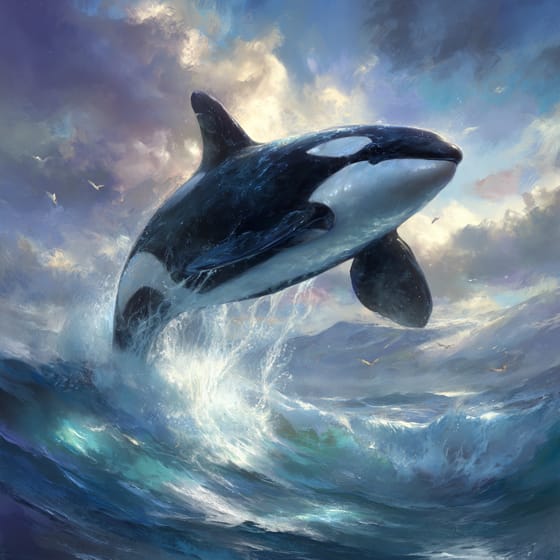
Orcinus orca
Adult orcas are known to hunt larger marine mammals.
Thunnus thynnus
Young tuna are a common prey for the jelly blubber.
Kogia breviceps
Sometimes found sharing feeding grounds, avoiding competition.
Stenella longirostris
Indirectly benefits from shared schooling fish populations.
Los animales solitarios viven solos durante la mayor parte de su vida y solo interactúan con otros para aparearse o cuidar de sus crías.
El camuflaje describe a los organismos que poseen colores o patrones que les permiten mezclarse con su entorno.
Colorido describe a organismos u objetos que exhiben una amplia variedad de colores brillantes y distintivos.
Los filtradores obtienen nutrientes filtrando partículas de alimentos suspendidos y pequeños organismos del agua.

Este rasgo caracteriza a los organismos cuya dieta consiste total o principalmente en material vegetal.

Los hábitats costeros son entornos dinámicos situados a lo largo de la interfaz entre la tierra y el mar, influenciados por las mareas, las olas y el agua salada.

Los animales diurnos están activos principalmente durante el día y suelen descansar o dormir por la noche.

Los hábitats acuáticos abarcan entornos donde los organismos viven principalmente en el agua, incluidos océanos, ríos, lagos y humedales.

Los hábitats marinos abarcan todos los entornos de agua salada de los océanos de la Tierra, sustentando una inmensa diversidad de vida acuática.

Relativo a los organismos que emiten luz a través de la bioluminiscencia o la fluorescencia.
Todavía no hay alias listados.
Peligro
3/5 · Moderado
Don't touch jelly blubbers; they can sting and make you feel uncomfortable.
150-300 cm
100-350 kg
25-40 años
45 km/h
Jelly blubbers hunt fish and squid, using their keen senses to find food in the vast ocean.
Coastal areas
Pursuit
1
Acércate para separar los grupos y explorar dónde se ha fotografiado este objeto.
Los snaps recientes aparecerán aquí a medida que se añadan nuevas observaciones.