
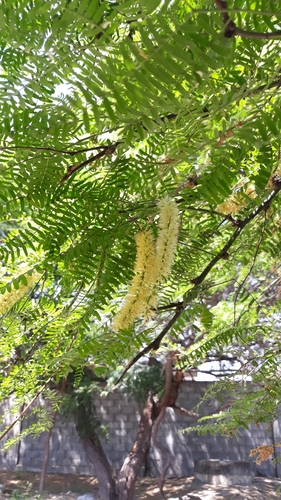


Kiawe
neltuma pallida
El Kiawe (Neltuma pallida, anteriormente Prosopis pallida) es un árbol espinoso increíblemente resistente de la familia de las leguminosas. Nativo de las regiones costeras secas de América del Sur, se ha naturalizado con éxito en varias regiones tropicales de todo el mundo, notablemente en las Islas Hawaianas. Reconocido por su capacidad para prosperar en condiciones hiperáridas y salinas donde pocas otras cosas pueden crecer, el Kiawe desempeña un doble papel: es muy valorado por producir miel de primera calidad, carbón vegetal y alimento para el ganado, sin embargo, también es visto como una especie invasora muy agresiva que compite con la vegetación nativa. Sus raíces pivotantes profundas y espinas afiladas lo convierten en una presencia formidable y dominante en paisajes áridos.
Hábitat: Se encuentra en tierras bajas costeras secas, matorrales áridos, playas de arena y llanuras alteradas, prosperando frecuentemente en suelos salobres o hipersalinos.
El Kiawe suele crecer como un árbol extendido que alcanza alturas de 8 a 15 metros, a menudo con un tronco retorcido y rústico, y una corteza marrón grisácea y polvorienta. Sus ramas están armadas con espinas afiladas y robustas que pueden medir varios centímetros de longitud. El follaje consiste en hojas compuestas bipinnadas de color verde pálido y polvoriento que ayudan a la planta a minimizar la pérdida de agua bajo el sol abrasador. Durante su período de floración, produce espigas cilíndricas densas de flores de color amarillo pálido o amarillo verdoso, que finalmente maduran en vainas de semillas largas, colgantes y de color pajizo, que se asemejan a frijoles verdes pálidos.
Categoría
PlantasRareza
Común
Peligro
1/5 · Muy bajo
Snaps
¡Sé la primera persona en hacer un snap!
Se cree que cada árbol de Kiawe en las islas Hawaianas desciende de una sola semilla plantada en Honolulu en 1828 por el Padre Alexis Bachelot.
Sus espinas son tan notoriamente duras y afiladas que se sabe que perforan fácilmente neumáticos de bicicleta e incluso calzado de suela fina.
La madera de Kiawe es mundialmente famosa para la barbacoa, impartiendo un sabor ahumado distintivo, dulce y denso que es muy codiciado por los chefs.
Despliega un sistema de raíces pivotantes excepcionalmente profundo que puede alcanzar hasta 50 metros bajo tierra, permitiendo al árbol acceder a las capas freáticas profundas durante sequías severas.
Exhibe una excelente capacidad para filtrar y tolerar altas concentraciones de salinidad del suelo, lo que le permite crecer directamente a lo largo de las costas oceánicas.
Se asocia con bacterias especializadas del suelo para convertir el nitrógeno atmosférico en una forma orgánica utilizable, enriqueciendo los suelos pobres y arenosos.
Como otras plantas, el Kiawe es un fotoautótrofo que genera su propia energía química capturando la luz solar y convirtiendo el dióxido de carbono y el agua en azúcares.

Apis mellifera
Las abejas forrajean activamente en las flores de color amarillo pálido para producir una miel blanca delicada y muy apreciada.
Bos taurus
El ganado de pastoreo se alimenta de las vainas de semillas dulces caídas, dispersando posteriormente las semillas duraderas en su estiércol.
Cenchrus ciliaris
Una especie de pasto agresiva que compite con el Kiawe por agua y nutrientes en hábitats secos y propensos a incendios.
Aún no hay insignias de rasgos asignadas a este objeto.
Todavía no hay alias listados.
Las colecciones para este objeto aparecerán aquí a medida que se añadan más temas.
Peligro
1/5 · Muy bajo
Todavía no hay notas especiales de seguridad.
Empieza por la planta entera y luego compara la disposición de las hojas, sus bordes, los tallos y las flores o frutos, si los hay. Las hojas opuestas crecen en parejas; las alternas salen de una en una a lo largo del tallo. Juntos, estos detalles dicen mucho más que una sola hoja verde. Identificador de plantas: sube una foto y compara los detalles visibles.
800+ cm
50+ años
Como otras plantas, el Kiawe es un fotoautótrofo que genera su propia energía química capturando la luz solar y convirtiendo el dióxido de carbono y el agua en azúcares.
Se encuentra en tierras bajas costeras secas, matorrales áridos, playas de arena y llanuras alteradas, prosperando frecuentemente en suelos salobres o hipersalinos.
Acércate para separar los grupos y explorar dónde se ha fotografiado este objeto.
Los snaps recientes aparecerán aquí a medida que se añadan nuevas observaciones.
Llévate el descubrimiento
Haz una foto con Snappit, identifica la especie y guarda el hallazgo en tu colección.

















