
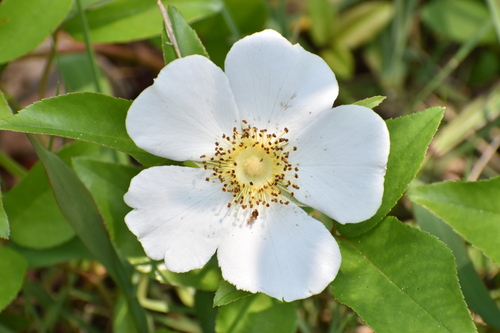


Laevigatae
laevigatae
Laevigatae, comúnmente representada por la especie Rosa laevigata (la Rosa de los Cheroqui), es una rosa trepadora robusta caracterizada por su follaje perenne brillante y sus grandes y fragantes flores blancas. Originaria del sur de China y Taiwán, esta vigorosa trepadora se ha naturalizado con éxito en muchas regiones templadas cálidas a nivel mundial, particularmente en el sureste de los Estados Unidos, donde es celebrada como la flor estatal de Georgia. Desempeña un papel importante en los ecosistemas locales al proporcionar una densa cobertura para anidar a las aves y abundante néctar para los polinizadores nativos.
Hábitat: Comúnmente se encuentra creciendo a lo largo de los bordes de los bosques, a la orilla de carreteras, en cercas y en zonas ribereñas en climas templados cálidos.
Este arbusto leñoso trepador presenta ramas verdes largas y arqueadas, armadas con espinas robustas y ganchudas. Sus hojas compuestas suelen contener tres folíolos elípticos muy brillantes con márgenes finamente serrados. A finales de primavera, produce flores solitarias de un solo pétalo que miden de 6 a 10 centímetros de diámetro, mostrando pétalos de color blanco puro que rodean un denso centro amarillo dorado de numerosos estambres. Los frutos posteriores (escaramujos) tienen una forma distintiva de pera y están cubiertos de cerdas rígidas.
Categoría
PlantasRareza
Común
Peligro
1/5 · Muy bajo
Snaps
¡Sé la primera persona en hacer un snap!
La Rosa de los Cheroqui está famosamente asociada con el Sendero de las Lágrimas, donde la leyenda dice que las flores crecieron donde caía la lágrima de una madre.
Los escaramujos se cosechan tradicionalmente en el este de Asia para preparar un té tónico utilizado en la medicina tradicional por sus propiedades astringentes.
A diferencia de la mayoría de las rosas silvestres que tienen de cinco a nueve folíolos por hoja, la sección Laevigatae típicamente tiene hojas con solo tres folíolos muy pulidos.
Como planta, crea su propio alimento a través de la fotosíntesis, utilizando la luz solar, el dióxido de carbono y el agua para producir glucosa, mientras absorbe minerales del suelo.
Aún no hay insignias de rasgos asignadas a este objeto.
Las colecciones para este objeto aparecerán aquí a medida que se añadan más temas.
Peligro
1/5 · Muy bajo
Todavía no hay notas especiales de seguridad.
Empieza por la planta entera y luego compara la disposición de las hojas, sus bordes, los tallos y las flores o frutos, si los hay. Las hojas opuestas crecen en parejas; las alternas salen de una en una a lo largo del tallo. Juntos, estos detalles dicen mucho más que una sola hoja verde. Identificador de plantas: sube una foto y compara los detalles visibles.
200+ cm
10+ años
Como planta, crea su propio alimento a través de la fotosíntesis, utilizando la luz solar, el dióxido de carbono y el agua para producir glucosa, mientras absorbe minerales del suelo.
Comúnmente se encuentra creciendo a lo largo de los bordes de los bosques, a la orilla de carreteras, en cercas y en zonas ribereñas en climas templados cálidos.
Acércate para separar los grupos y explorar dónde se ha fotografiado este objeto.
Los snaps recientes aparecerán aquí a medida que se añadan nuevas observaciones.
Llévate el descubrimiento
Haz una foto con Snappit, identifica la especie y guarda el hallazgo en tu colección.

















