.jpg&width=800)




Large-leaved lupine
Lupinus polyphyllus
Large-leaved lupine is a colorful flower that grows in big clusters. Its leaves are wide and can look like a hand with many fingers. These flowers are great for gardens and attract butterflies!
Hábitat: Grasslands
The Large-leaved lupine has tall, stately spires of densely packed, pea-like flowers, typically in shades of purple, blue, pink, or white. Its large, palmate leaves are divided into 9-17 leaflets, resembling a fan, often with a silvery underside.
Categoría
PlantasRareza
Common
Peligro
1/5 · Muy bajo
Snaps
¡Sé la primera persona en hacer un snap!
Its seed pods can explosively twist open, flinging seeds like tiny rockets!
Lupine flowers on a spike often bloom from the bottom upwards!
Sometimes, this plant is called 'quaker bonnets' because of its flower shape!
The name 'lupine' comes from 'lupus,' the Latin word for wolf!
Large-leaved lupine can team up with tiny soil bacteria to grab nitrogen from the air, enriching the ground for itself and neighbors.
Large-leaved lupine has special chemicals called alkaloids in its seeds and leaves that protect it from hungry animals.
Large-leaved lupine has a long, strong taproot that can reach deep underground to find water, helping it survive drier times.
Bombus mixtus
Feeds on nectar and collects pollen from flowers.
Rhizobium leguminosarum
Lives in root nodules, converting atmospheric nitrogen for the plant.
Cervus canadensis
Browses on foliage and flowers, especially when other forage is scarce.
Peromyscus maniculatus
Consumes the seeds from the plant's pods.
Describe a los organismos capaces de convertir el nitrógeno atmosférico en compuestos utilizables por las plantas.
Las plantas con flores son cualquier planta que produce flores como parte de su ciclo reproductivo.
Las flores en racimo son inflorescencias donde las flores individuales están dispuestas muy juntas en un tallo común.
Las plantas de floración primaveral producen sus flores durante la temporada de primavera, lo que a menudo significa el final del invierno y el comienzo de un nuevo crecimiento.

Las plantas medicinales poseen compuestos químicos que pueden utilizarse con fines terapéuticos para tratar enfermedades o mantener la salud.

Colorido describe a organismos u objetos que exhiben una amplia variedad de colores brillantes y distintivos.

Describe plantas que son particularmente atractivas y beneficiosas para una amplia variedad de organismos polinizadores.

Los hábitats de pastizales son biomas terrestres dominados por pastos y plantas herbáceas, que sustentan a una variedad de animales de pastoreo.
Todavía no hay alias listados.
Peligro
1/5 · Muy bajo
Always look but don't touch wild flowers, as some might not be safe.
60-150 cm
60-90 cm
1-2 cm
Verano
No
Leve
Perenne
Insectos
Acércate para separar los grupos y explorar dónde se ha fotografiado este objeto.
Los snaps recientes aparecerán aquí a medida que se añadan nuevas observaciones.

Washington, US
Puedes ver Bigleaf Maple, Common Snowberry y Osoberry.
Ver guía →
Washington, US
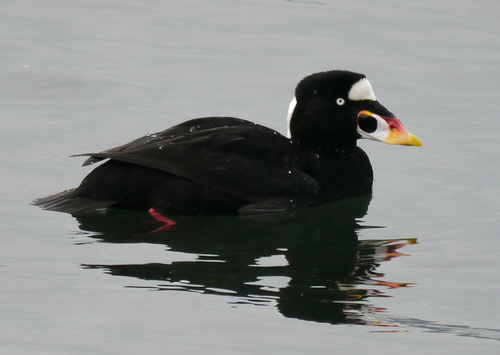
Puedes ver Surf Scoter, Eastern Cottontail y Rosa Silvestre.
Ver guía →

Washington, US
Puedes ver California Bumble Bee, Yellow-Faced Bumble Bee y Autumn Olive.
Ver guía →
British Columbia, CA
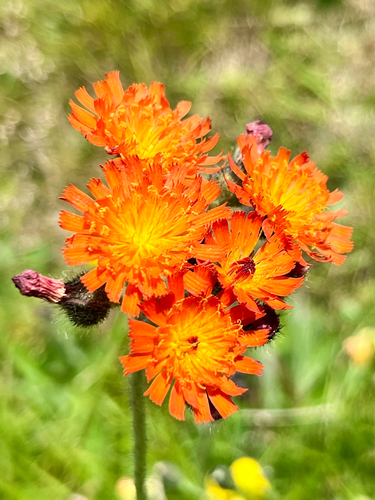
Puedes ver Orange Hawkweed, Shinyleaf Meadowsweet y Columbia Lily.
Ver guía →




.jpg&width=800)