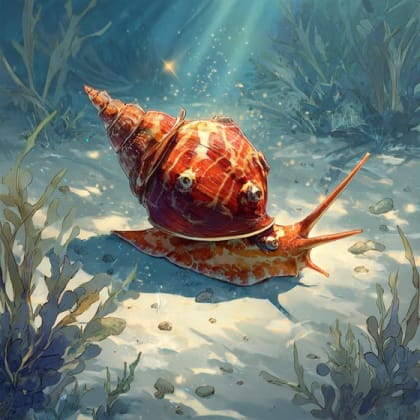
Leafy Hornmouth
Ceratostoma foliatum
The Leafy Hornmouth is a special sea snail that looks like a tiny leaf! It has a unique shape and can blend in with its surroundings, making it hard to spot.
Hábitat: Coastal areas
The Leafy Hornmouth is a master of disguise, featuring a flattened, bright green or mottled brown body that perfectly mimics a fresh or decaying leaf. It possesses two short, horn-like protrusions near its powerful mouthparts, giving it a unique, rugged appearance.
Categoría
InvertebrateRareza
Common
Peligro
1/5 · Muy bajo
Snaps
¡Sé la primera persona en hacer un snap!
Baby Leafy Hornmouths are called nymphs and look like miniature, wingless versions!
Its wings are so leaf-like, even experienced bug-spotters often miss it!
Some Leafy Hornmouths can even sway in the wind, just like a real leaf!
This insect moves incredibly slowly to avoid being detected by hungry birds.
The Leafy Hornmouth can perfectly blend into its leafy surroundings because of its flattened body and textured wings that resemble plant foliage, helping them hide from predators.
The Leafy Hornmouth has strong, horn-like mandibles that help them defend against small attackers or strip tough plant matter for food.
The Leafy Hornmouth can produce subtle vibrations through its legs and abdomen that helps them communicate warnings or attract mates without attracting predators.
This insect munches on leaves, buds, and soft plant stems, helping to keep forests tidy.
Quercus alba
Chews its leaves for essential nutrients.
Turdus migratorius
A common meal for hungry forest birds.
Mantis religiosa
Stalked and ambushed by this patient hunter.
Los animales solitarios viven solos durante la mayor parte de su vida y solo interactúan con otros para aparearse o cuidar de sus crías.
El camuflaje describe a los organismos que poseen colores o patrones que les permiten mezclarse con su entorno.
Los filtradores obtienen nutrientes filtrando partículas de alimentos suspendidos y pequeños organismos del agua.
Este rasgo caracteriza a los organismos cuya dieta consiste total o principalmente en material vegetal.

Los hábitats costeros son entornos dinámicos situados a lo largo de la interfaz entre la tierra y el mar, influenciados por las mareas, las olas y el agua salada.

Este rasgo identifica a los organismos cuya dieta consiste total o principalmente en tejido animal.

Los animales diurnos están activos principalmente durante el día y suelen descansar o dormir por la noche.

Relativo a especies que son significativamente más pequeñas que lo típico o promedio de su tipo.

Los hábitats marinos abarcan todos los entornos de agua salada de los océanos de la Tierra, sustentando una inmensa diversidad de vida acuática.
Todavía no hay alias listados.
Peligro
1/5 · Muy bajo
Always look but don't touch sea creatures without asking an adult.
40-80 mm
25-50 mm
100-200 días
5 km/h
This insect munches on leaves, buds, and soft plant stems, helping to keep forests tidy.
Coastal areas
Foraging
6
Acércate para separar los grupos y explorar dónde se ha fotografiado este objeto.
Los snaps recientes aparecerán aquí a medida que se añadan nuevas observaciones.