

Leatherstem
jatropha dioica
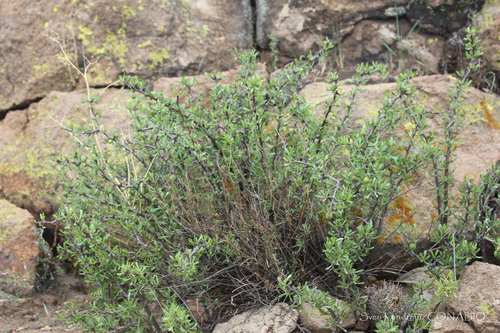
Leatherstem (Jatropha dioica) is an extraordinary succulent shrub native to the arid regions of northern Mexico and the southwestern United States, particularly the Chihuahuan Desert. This resilient plant is famously known as 'sangregado' or 'sangre de drago' because its clear, watery sap turns a dramatic blood-red color upon exposure to air. This unusual feature has historically made it a source of traditional medicine and natural dyes. It possesses incredibly limber, rubbery branches that can be bent into complete loops without snapping. This extreme flexibility is an adaptation that helps the plant survive physical disturbances in its harsh, rocky environment, such as being stepped on by large desert animals or battered by strong winds. During the rainy season, leatherstem produces small, bright green leaves and delicate pale pink flowers, which quickly drop during drought to conserve precious water.
Hábitat: Found in dry, rocky limestone soils, desert scrublands, and gravelly slopes of the Chihuahuan Desert.
Leatherstem grows as a clustering, multi-stemmed shrub typically reaching 30 to 100 centimeters in height. Its most identifying feature is its smooth, reddish-brown to dark gray stems which are highly pliable and rubbery to the touch. The leaves are spatula-shaped, bright green, and grow in small clusters or singly along the stems. During its brief blooming period, it produces tiny, bell-shaped flowers that are white to light pink. The plant's fruit consists of small, rounded green capsules that dry and split to release seeds.
Categoría
PlantasRareza
Common
Peligro
1/5 · Muy bajo
Snaps
¡Sé la primera persona en hacer un snap!
Because of their incredible elasticity, the stems were historically used by indigenous populations to weave baskets and construct durable handles.
The common name 'Sangregado' translates to 'bleeder' or 'bloody', referring to the clear sap that dramatically turns red when exposed to air.
The roots of the leatherstem have been traditionally used in Mexico as a natural tooth cleanser and to strengthen gums.
The stems contain highly flexible, rubbery tissues that allow them to bend completely without breaking, preventing damage from trampling.
The plant quickly sheds its leaves at the onset of dry conditions to prevent water loss through transpiration, entering a dormant state until rain returns.
It secretes a clear sap that rapidly oxidizes to a dark reddish-brown upon injury, sealing wounds and acting as a chemical defense against herbivores.
As a photoautotrophic plant, leatherstem synthesizes its own organic nutrients using sunlight, water, and carbon dioxide through photosynthesis.
Apis mellifera
Pollinates the small pink flowers of the leatherstem during its brief summer bloom.
Sylvilagus audubonii
Occasionally browses on the young shoots and leaves despite the toxic, astringent sap.
Aún no hay insignias de rasgos asignadas a este objeto.
Todavía no hay alias listados.
Las colecciones para este objeto aparecerán aquí a medida que se añadan más temas.
Peligro
1/5 · Muy bajo
Todavía no hay notas especiales de seguridad.
La forma más fácil de identificar a Leatherstem es usar la aplicación de identificación de naturaleza Snappit.
30-100 cm
1-5 kg
15-50 años
As a photoautotrophic plant, leatherstem synthesizes its own organic nutrients using sunlight, water, and carbon dioxide through photosynthesis.
Found in dry, rocky limestone soils, desert scrublands, and gravelly slopes of the Chihuahuan Desert.
Acércate para separar los grupos y explorar dónde se ha fotografiado este objeto.
Los snaps recientes aparecerán aquí a medida que se añadan nuevas observaciones.












