



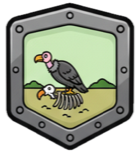


Lesser Black-backed Gull
Larus fuscus
The Lesser Black-backed Gull is a medium-sized bird with a striking black back and white wings. These gulls are often seen near the coast, where they love to hunt for fish and scavenge for food.
Hábitat: Coastal areas
The Lesser Black-backed Gull has a dark slate-grey to black back and wings, which contrasts sharply with its white underside. It sports bright yellow legs and a yellow bill tipped with a distinct red spot, making it visually distinct from similar gulls.
Categoría
AvesRareza
Common
Peligro
2/5 · Bajo
Snaps
¡Sé la primera persona en hacer un snap!
Some gulls are super smart and can remember human faces for years!
These birds are amazing travellers, following fishing boats far out to sea!
They can drink both fresh and saltwater without getting sick!
They often build their nests on city rooftops high above the ground!
Lesser Black-backed Gulls have excellent vision because it helps them spot food from high in the sky or over water.
Lesser Black-backed Gulls can fly long distances because their strong wings help them migrate across continents.
Lesser Black-backed Gulls have a flexible diet because they can eat almost anything, from fish to discarded food.
A hungry bird that eats almost anything, from fish and insects to human scraps!
Scomber scombrus
Preys on small fish in coastal waters.
Rattus norvegicus
Rats often raid nests, eating eggs and chicks.
Sterna hirundo
Preys on eggs and chicks from their colonies.
Vulpes vulpes
Foxes can prey on gull eggs, chicks, or adults.
Describe a los animales, principalmente aves, que poseen una cubierta de plumas.
Los animales sociales viven en grupos organizados, cooperando para obtener beneficios de supervivencia como la búsqueda de alimento, la defensa y la cría de descendencia.
Los carroñeros consumen materia orgánica muerta, ayudando a descomponer los cadáveres y otros desechos en el ecosistema.
Los organismos piscívoros son animales que subsisten principalmente de una dieta a base de peces.

Este rasgo caracteriza a los organismos con una esperanza de vida excepcionalmente larga en comparación con otros de su especie.

Los hábitats costeros son entornos dinámicos situados a lo largo de la interfaz entre la tierra y el mar, influenciados por las mareas, las olas y el agua salada.

Este rasgo identifica a los organismos cuya dieta consiste total o principalmente en tejido animal.

Los animales diurnos están activos principalmente durante el día y suelen descansar o dormir por la noche.

Los animales migratorios emprenden movimientos estacionales de una región a otra, típicamente en respuesta a cambios en el clima o la disponibilidad de alimentos.
Peligro
2/5 · Bajo
Watch from a distance and don't feed the gulls, as they can be a bit cheeky!
50-60 cm
125-150 cm
0.69-1.1 kg
20-25 años
70 km/h
A hungry bird that eats almost anything, from fish and insects to human scraps!
Coastal areas
Scavenging
Acércate para separar los grupos y explorar dónde se ha fotografiado este objeto.
Los snaps recientes aparecerán aquí a medida que se añadan nuevas observaciones.








.jpg&width=800)

.jpg&width=800)


