



Leucoptera pachystimella
Leucoptera pachystimella
La Leucoptera pachystimella es una pequeña polilla a la que le encanta esconderse en las hojas. Tiene hermosas alas blancas que pueden ser difíciles de detectar en la naturaleza, lo que la convierte en una amiguita especial en el jardín.
Hábitat: Jardines
La Leucoptera pachystimella es una polilla diminuta, típicamente de 2-3 mm de largo, con alas delanteras blancas brillantes o plateadas que a menudo presentan algunas manchas oscuras distintivas o marcas metálicas, especialmente cerca de las puntas de las alas. Su cuerpo delgado y sus delicados flecos la hacen parecer casi fantasmal.
Categoría
InsectosRareza
Común
Peligro
1/5 · Muy bajo
Snaps
¡Sé la primera persona en hacer un snap!
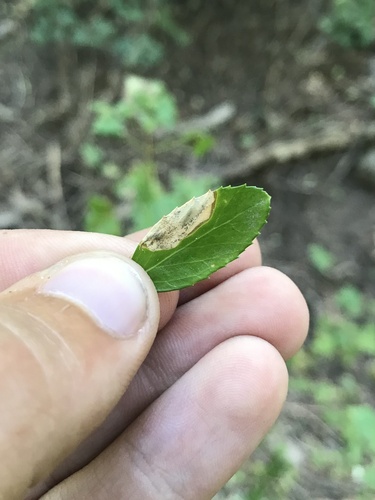
Si sostienes una hoja de su planta huésped a la luz, ¡podrías ver los túneles serpenteantes que sus larvas hicieron dentro!
¡Su nombre de especie 'pachystimella' proviene de la planta específica que a sus orugas les encanta comer.
¡Esta diminuta polilla es a menudo más pequeña que un grano de arroz, lo que la convierte en una de las miniaturas de la naturaleza!
A diferencia de muchas polillas, ¡las Leucoptera pachystimella adultas suelen estar activas y volar durante el día!
Las larvas de Leucoptera pachystimella pueden excavar túneles dentro de las hojas de las plantas, creando hogares ocultos y alimentándose de los tejidos verdes a salvo de muchos depredadores.
Leucoptera pachystimella tiene diminutas alas blancas que le ayudan a mimetizarse perfectamente con flores blancas o hojas salpicadas de sol, haciéndolas muy difíciles de detectar.
Leucoptera pachystimella puede completar su ciclo de vida completo de huevo a adulto en solo unas pocas semanas, permitiendo que muchas generaciones eclosionen cada año.
Las larvas mordisquean las hojas de las plantas, mientras que las polillas adultas sorben néctar dulce para obtener energía.
Diferencias por edad: Las larvas se entierran y consumen los tejidos internos de las hojas de las plantas, mientras que los adultos se alimentan de néctar de las flores.
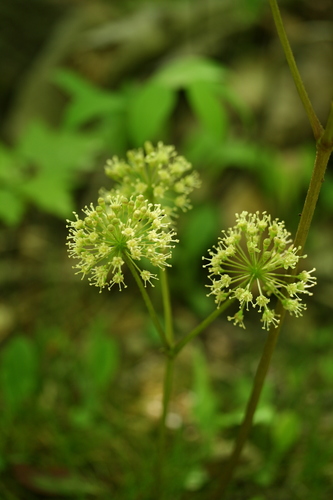
Pachystima myrsinites
Sus larvas se alimentan exclusivamente de las hojas de este arbusto.
Parus atricapillus
Pequeños pájaros pueden atrapar polillas adultas para una comida rápida.

Argiope aurantia
Las arañas a menudo atrapan polillas adultas en sus telarañas pegajosas para alimentarse.
Los animales solitarios viven solos durante la mayor parte de su vida y solo interactúan con otros para aparearse o cuidar de sus crías.
El camuflaje describe a los organismos que poseen colores o patrones que les permiten mezclarse con su entorno.
Este rasgo caracteriza a los organismos cuya dieta consiste total o principalmente en material vegetal.
Describe plantas que son particularmente atractivas y beneficiosas para una amplia variedad de organismos polinizadores.
Los animales diurnos están activos principalmente durante el día y suelen descansar o dormir por la noche.
Relativo a especies que son significativamente más pequeñas que lo típico o promedio de su tipo.
Esta característica de hábitat indica especies que pueden coexistir con los humanos en entornos urbanos y suburbanos, utilizando estructuras artificiales y espacios verdes.
Describe organismos que transfieren polen, permitiendo la fertilización y reproducción de las plantas.
Todavía no hay alias listados.
Peligro
1/5 · Muy bajo
Es mejor observar las polillas a distancia y no tocarlas.
Compara la forma de las alas en reposo, las marcas de las alas anteriores, las antenas y la complexión del cuerpo. En las polillas pequeñas y marrones, todo puede depender de detalles finos que una foto de móvil no siempre capta. Identificador de polillas: sube una foto y compara los detalles visibles.
4-6 mm
2-3 mm
7-21 días
Las larvas mordisquean las hojas de las plantas, mientras que las polillas adultas sorben néctar dulce para obtener energía.
Jardines
Forrajeo
6
Acércate para separar los grupos y explorar dónde se ha fotografiado este objeto.
Los snaps recientes aparecerán aquí a medida que se añadan nuevas observaciones.
Llévate el descubrimiento
Haz una foto con Snappit, identifica la especie y guarda el hallazgo en tu colección.