

Limestone Oak Fern
gymnocarpium robertianum
The Limestone Oak Fern (Gymnocarpium robertianum) is a delicate, deciduous fern that brings a touch of vibrant green to rugged, rocky terrains. Known for its affinity for calcareous environments, this plant is a classic specialist of limestone screes, cliffs, and rocky woods. Unlike many other ferns that prefer acidic soils, this resilient species thrives where calcium carbonate is abundant, forming dense, low-growing colonies through its creeping underground rhizomes. Its presence is often an indicator of pristine, alkaline, and rocky habitats. The fern stands out not just for its habitat, but also for its distinctive scent. When bruised or brushed against, the fronds release a subtle, pleasant aroma reminiscent of crushed almonds or sweet resins, a consequence of the tiny, yellow glandular hairs covering its leaves. For nature enthusiasts, discovering a patch of Limestone Oak Fern tucked into a limestone crevice offers a rewarding glimpse into the specialized ecology of alkaline rock barrens.
Hábitat: Found on damp calcareous screes, limestone cliffs, rocky woodlands, and limestone pavement grikes, where alkaline soils and rocky crevices provide protection.
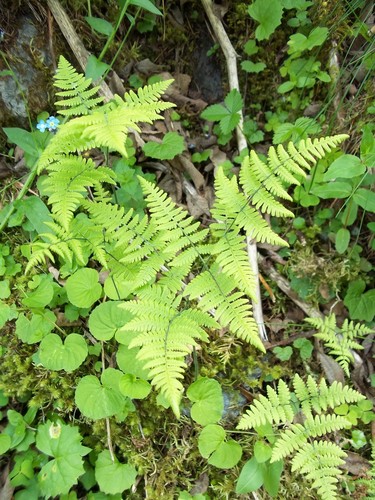
The Limestone Oak Fern features tri-pinnate, triangular fronds that are typically a dull, grayish-green or pale green, contrasting with the bright green of its close relative, the Common Oak Fern. The fronds emerge on long, brittle, reddish-brown to dark purple stems and grow up to 15 to 35 cm long. A key visual identifier is the abundance of tiny, sticky, pale-yellow glandular hairs covering both the stalks and the undersides of the leaflets, giving the plant a somewhat matte, textured, and dusty appearance. Sori (spore clusters) are small, round, and lack an indusium (covering), arranged neatly along the margins of the pinnules on the underside of mature leaves.
Categoría
PlantasRareza
Common
Peligro
1/5 · Muy bajo
Snaps
¡Sé la primera persona en hacer un snap!
It is a strict calciphile, meaning it is virtually never found growing in acidic soils; its presence is a reliable indicator of limestone geology.
Its scientific name robertianum is thought by some to refer to Saint Robert of Molesme, though others link it to the reddish stems resembling Herb Robert.
Unlike its close relative the Common Oak Fern, this species is covered in sticky, yellow glandular hairs that give it a distinctive scent and dusty appearance.
Specially adapted to absorb essential nutrients and thrive in highly alkaline, calcium-rich soils that would stunt other plants.
Produces sticky glandular hairs that secrete aromatic oils, helping to deter generalist insect herbivores and reduce moisture loss.
Utilizes thin, horizontal underground stems to quickly colonize unstable rocky screes and anchor securely in narrow limestone cracks.
As a photosynthetic plant, the Limestone Oak Fern generates its own energy using sunlight, water, and carbon dioxide, while absorbing essential minerals like calcium from alkaline soils.
Glomus intraradices
Forms symbiotic relationships with arbuscular mycorrhizal fungi in the soil to enhance nutrient uptake in calcium-rich, low-phosphorus soils.
Arianta arbustorum
The foliage is occasionally grazed upon by snails that thrive in the same calcium-rich limestone habitats.
Asplenium trichomanes
Competes for space and light in damp limestone crevices with other specialized rock ferns.
Aún no hay insignias de rasgos asignadas a este objeto.
Todavía no hay alias listados.
Las colecciones para este objeto aparecerán aquí a medida que se añadan más temas.
Peligro
1/5 · Muy bajo
Todavía no hay notas especiales de seguridad.
La forma más fácil de identificar a Limestone Oak Fern es usar la aplicación de identificación de naturaleza Snappit.
10-35 cm
5-20 años
As a photosynthetic plant, the Limestone Oak Fern generates its own energy using sunlight, water, and carbon dioxide, while absorbing essential minerals like calcium from alkaline soils.
Found on damp calcareous screes, limestone cliffs, rocky woodlands, and limestone pavement grikes, where alkaline soils and rocky crevices provide protection.
Acércate para separar los grupos y explorar dónde se ha fotografiado este objeto.
Los snaps recientes aparecerán aquí a medida que se añadan nuevas observaciones.