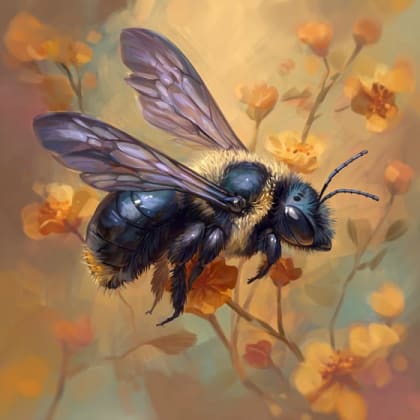




Lion Beetle
Ulochaetes leoninus
The Lion Beetle is a colorful insect known for its striking patterns. It loves to hide in leaves and is often found in gardens and forests, making it a fun little friend to discover!
Hábitat: Forests
The Lion Beetle is a medium-sized, robust beetle with a furry, mane-like collar of dense, yellowish-orange hairs around its head and thorax. Its body is typically dark brown to black, contrasting with the vibrant 'mane' and often having long, segmented antennae.
Categoría
InsectosRareza
Common
Peligro
1/5 · Muy bajo
Snaps
¡Sé la primera persona en hacer un snap!
Baby Lion Beetles live inside dead wood for years before becoming adults!
Its 'mane' of golden hairs makes it look like a tiny lion!
These beetles help clear forests by breaking down old, fallen trees!
They buzz loudly when they fly, sounding like a big bee!
Lion Beetle can pretend to be a stinging insect because of its hairy, colored body and buzzing flight, which helps deter predators.
Lion Beetle has powerful mandibles that help them bore into dead wood, creating tunnels for their larvae to develop safely.
Lion Beetle can hide from predators because its mottled brown body blends perfectly with tree bark, making it hard to spot.
Lion Beetle uses long antennae to sense subtle chemical signals, helping them locate decaying wood for egg-laying.
Adults might sip nectar, but larvae are dedicated wood-eaters, feasting on dead hardwood.
Diferencias por edad: Larvae bore and feed on dead hardwood; adults primarily seek mates and may consume nectar or pollen.

Quercus agrifolia
larvae decompose dead wood from this tree.

Picoides nuttallii
larvae are a food source for woodpeckers.
Phrynosoma coronatum
adult beetles may be prey for these lizards.
Marcado con manchas o parches de un color diferente.
Los animales solitarios viven solos durante la mayor parte de su vida y solo interactúan con otros para aparearse o cuidar de sus crías.
Colorido describe a organismos u objetos que exhiben una amplia variedad de colores brillantes y distintivos.
Este rasgo caracteriza a los organismos cuya dieta consiste total o principalmente en material vegetal.

Este rasgo identifica a los organismos cuya dieta consiste principalmente en insectos y otros pequeños invertebrados.

Los hábitats boscosos son entornos terrestres dominados por una densa cubierta arbórea, que sustentan una gran diversidad de vida animal y vegetal.

Describe a los organismos que descomponen la materia orgánica muerta, reciclando los nutrientes de vuelta al ecosistema.

Este rasgo identifica a los organismos cuya dieta consiste total o principalmente en tejido animal.

Este rasgo identifica a los organismos que exhiben una rapidez excepcional en sus movimientos para cazar, escapar o desplazarse.

Describe organismos que transfieren polen, permitiendo la fertilización y reproducción de las plantas.
Todavía no hay alias listados.
Peligro
1/5 · Muy bajo
Be gentle if you see a Lion Beetle, and don't try to pick it up.
30-50 mm
15-25 mm
30-90 días
8 km/h
Adults might sip nectar, but larvae are dedicated wood-eaters, feasting on dead hardwood.
Forests
Foraging
6
Acércate para separar los grupos y explorar dónde se ha fotografiado este objeto.
Los snaps recientes aparecerán aquí a medida que se añadan nuevas observaciones.