




Liotrichus umbripennis
Liotrichus umbripennis
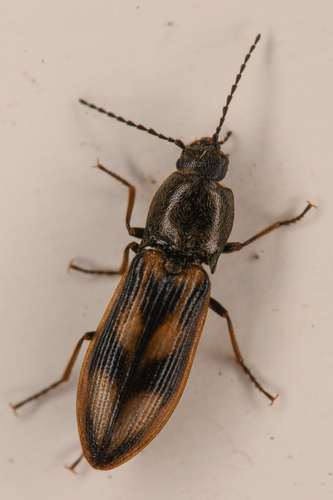
El Liotrichus umbripennis es un pequeño y colorido escarabajo al que le encanta esconderse bajo las hojas. Tiene alas brillantes que relucen a la luz del sol y a menudo se encuentra en jardines y bosques.
Hábitat: Bosques
El Liotrichus umbripennis es un escarabajo pequeño y ovalado con un llamativo exoesqueleto iridiscente que brilla en tonos verde cobrizo, cambiando a violeta oscuro bajo diferentes luces. Sus élitros (cubiertas alares) son notablemente más anchos y redondeados que los de muchos escarabajos forestales similares, a menudo salpicados de pequeños puntos más oscuros. Esta coloración vibrante le ayuda a destacar de sus contrapartes más opacas.
Categoría
InsectosRareza
Común
Peligro
1/5 · Muy bajo
Snaps
¡Sé la primera persona en hacer un snap!
¡Sus antenas son como pequeños radares, oliendo hongos deliciosos desde lejos!
¡Algunos escarabajos Liotrichus pueden brillar débilmente en la oscuridad, una pequeña luz nocturna del bosque!
¡Sus caparazones duros y brillantes son más resistentes que muchas rocas, ofreciendo una protección asombrosa!
¡Este escarabajo ayuda a limpiar el suelo del bosque reciclando hojas muertas y trozos de madera!
Liotrichus umbripennis puede oscurecer rápidamente su cutícula iridiscente debido a células pigmentarias especializadas, lo que les ayuda a camuflarse perfectamente en la maleza sombría del bosque.
Liotrichus umbripennis puede detectar pequeñas vibraciones del suelo a través de sensores sensibles en sus patas, lo que les ayuda a percibir peligros cercanos o incluso encontrar comida oculta.
Liotrichus umbripennis tiene poderosas alas traseras membranosas ocultas bajo sus duros élitros, lo que les ayuda a realizar rápidas fugas aéreas de los depredadores.
Pequeños trozos de plantas, varios hongos y hojas en descomposición son la cena de este pequeño escarabajo del bosque.
Turdus migratorius
Un depredador común de aves que forrajea en el suelo del bosque.
Sorex cinereus
Pequeño mamífero que caza insectos en la hojarasca.
Pterostichus melanarius
Escarabajo depredador que comparte el mismo hábitat.

Quercus alba
Consume hojarasca en descomposición de varios árboles.
El camuflaje describe a los organismos que poseen colores o patrones que les permiten mezclarse con su entorno.
Colorido describe a organismos u objetos que exhiben una amplia variedad de colores brillantes y distintivos.
Este rasgo caracteriza a los organismos cuya dieta consiste total o principalmente en material vegetal.
Describe plantas que son particularmente atractivas y beneficiosas para una amplia variedad de organismos polinizadores.
Los hábitats boscosos son entornos terrestres dominados por una densa cubierta arbórea, que sustentan una gran diversidad de vida animal y vegetal.
Los animales diurnos están activos principalmente durante el día y suelen descansar o dormir por la noche.
Este rasgo identifica a los organismos que exhiben una rapidez excepcional en sus movimientos para cazar, escapar o desplazarse.
Describe organismos que transfieren polen, permitiendo la fertilización y reproducción de las plantas.
Todavía no hay alias listados.
Peligro
1/5 · Muy bajo
Sé delicado y mira por dónde pisas para evitar dañar pequeños insectos como este escarabajo.
Busca élitros duros que se juntan en una línea por el lomo y compara después las antenas, la forma del cuerpo, las patas y las marcas. Los colores metálicos cambian mucho con la luz. Identificador de escarabajos: sube una foto y compara los detalles visibles.
10-25 mm
5-12 mm
45-90 días
8 km/h
Pequeños trozos de plantas, varios hongos y hojas en descomposición son la cena de este pequeño escarabajo del bosque.
Bosques
Forrajeo
Acércate para separar los grupos y explorar dónde se ha fotografiado este objeto.
Los snaps recientes aparecerán aquí a medida que se añadan nuevas observaciones.
Llévate el descubrimiento
Haz una foto con Snappit, identifica la especie y guarda el hallazgo en tu colección.