




Liriomyza cracentis
Liriomyza cracentis
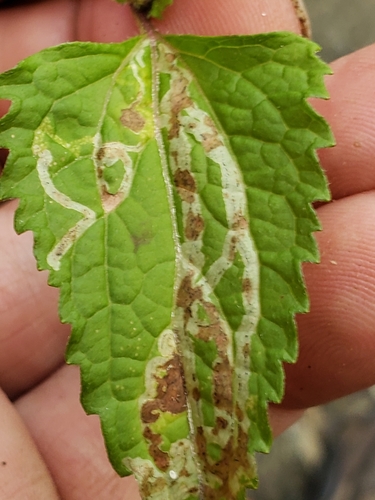
La Liriomyza cracentis es una pequeña mosca a la que le encanta mordisquear las hojas de las plantas. Hacen pequeños túneles en las hojas, que pueden parecer pequeños laberintos. Estas moscas son importantes para la naturaleza porque ayudan a las plantas a crecer fuertes.
Hábitat: Zonas urbanas, jardines
La Liriomyza cracentis es una mosca diminuta de cuerpo oscuro, a menudo de color negro o gris oscuro con sutiles marcas amarillas, especialmente en la cabeza o el tórax. Tiene alas claras y delicadas y antenas cortas. Su tamaño minúsculo la hace difícil de detectar sin un examen detallado.
Categoría
InsectosRareza
Común
Peligro
1/5 · Muy bajo
Snaps
¡Sé la primera persona en hacer un snap!
¡Los minadores de hojas crean patrones sinuosos únicos en las hojas, como pequeños mapas secretos!
Las moscas hembras hacen pequeñas perforaciones para alimentarse, pero solo se pone un huevo por perforación.
¡Sus intrincados túneles en las hojas se llaman 'minas' y se pueden ver desde fuera de la hoja!
¡Se desarrollan tan rápido que pueden completar su ciclo de vida entero en solo dos semanas!
Las larvas de Liriomyza cracentis pueden perforar túneles a través de las hojas gracias a sus piezas bucales especializadas que les ayudan a masticar y crear 'minas' sinuosas dentro del tejido vegetal.
Las hembras adultas de Liriomyza cracentis pueden perforar las hojas de las plantas con su ovipositor para alimentarse de savia nutritiva, lo que les ayuda a obtener energía para la puesta de huevos.
Pequeños herbívoros, sus larvas mastican dentro de las hojas mientras que los adultos sorben savia de plantas y néctar.
Diferencias por edad: Las larvas se alimentan exclusivamente de los tejidos internos de las hojas de las plantas huésped, mientras que los adultos se alimentan principalmente de savia de plantas y algo de néctar.
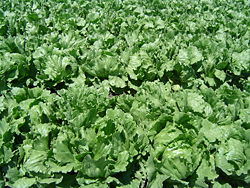
Lactuca sativa
Las larvas hacen túneles dentro de las hojas causando daños a los cultivos.

Helianthus annuus
Las larvas crean minas características dentro de las hojas.
Diglyphus isaea
Las larvas de avispa se desarrollan dentro o sobre las larvas del minador de hojas.
Orius insidiosus
Los insectos depredadores se alimentan de adultos y larvas de minadores de hojas.
Los animales solitarios viven solos durante la mayor parte de su vida y solo interactúan con otros para aparearse o cuidar de sus crías.
Este rasgo caracteriza a los organismos cuya dieta consiste total o principalmente en material vegetal.
Los animales diurnos están activos principalmente durante el día y suelen descansar o dormir por la noche.
Describe una especie cuya presencia y papel tienen un efecto desproporcionadamente grande en su entorno.
Relativo a especies que son significativamente más pequeñas que lo típico o promedio de su tipo.
Esta característica de hábitat indica especies que pueden coexistir con los humanos en entornos urbanos y suburbanos, utilizando estructuras artificiales y espacios verdes.
Describe organismos que transfieren polen, permitiendo la fertilización y reproducción de las plantas.
Todavía no hay alias listados.
Peligro
1/5 · Muy bajo
Estas moscas no son dañinas para las personas, pero es mejor dejarlas solas en la naturaleza.
Busca seis patas, antenas, tres secciones en el cuerpo y la forma de las alas. Los escarabajos tienen las alas delanteras endurecidas; las moscas solo tienen un par que funciona. Los insectos diminutos pueden necesitar un primer plano antes de que se vea su grupo. Identificador de insectos: sube una foto y compara los detalles visibles.
2-4 mm
1-3 mm
15-30 días
Pequeños herbívoros, sus larvas mastican dentro de las hojas mientras que los adultos sorben savia de plantas y néctar.
Zonas urbanas, jardines
Forrajeo
6
Acércate para separar los grupos y explorar dónde se ha fotografiado este objeto.
Los snaps recientes aparecerán aquí a medida que se añadan nuevas observaciones.
Llévate el descubrimiento
Haz una foto con Snappit, identifica la especie y guarda el hallazgo en tu colección.