






Lissotriton
Lissotriton
The Lissotriton, also known as the smooth newt, is a small, colorful amphibian that loves to swim and explore ponds. They have smooth skin and can be found in gardens and wetlands.
Hábitat: Wetlands
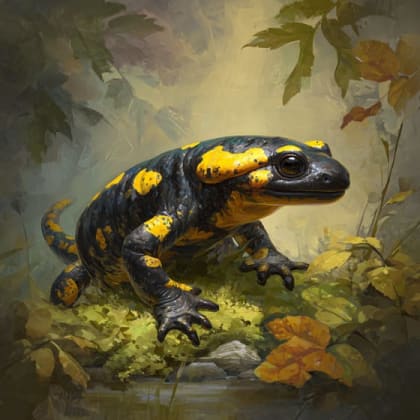
The Lissotriton is a small newt, typically brownish-green with a bright yellow or orange belly, often dotted with dark spots. During breeding, males develop a distinct wavy crest along their backs and tails. Its smooth, moist skin helps differentiate it from rough-skinned toads.
Categoría
AnfibiosRareza
Common
Peligro
1/5 · Muy bajo
Snaps
¡Sé la primera persona en hacer un snap!
Baby newts, called larvae, use feathery gills to breathe underwater, totally different from adults!
Each female newt can carefully lay hundreds of tiny eggs, one by one, on underwater leaves!
Male newts grow amazing wavy crests during springtime to attract mates!
When cold, newts can hibernate in mud or under logs until warmer weather returns!
Lissotriton can regrow lost limbs, parts of their tail, jaws, or even eyes because of special stem cells.
Lissotriton has skin glands that produce mild toxins, helping them deter hungry predators that might try to eat them.
Lissotriton can absorb oxygen directly through their moist skin, which helps them breathe underwater or on land.
Lissotriton are little hunters, feasting on small creepy-crawlies both in water and on land!
Diferencias por edad: Larvae primarily eat aquatic invertebrates like water fleas; adults consume a broader range of terrestrial and aquatic invertebrates.
Natrix natrix
often preys on adult newts.
Anas platyrhynchos
ducks can consume newts in ponds.
_female.jpg&width=800)
Libellula depressa
dragonfly larvae prey on newt larvae.
Lumbricus terrestris
newts eat these worms on land.
Los animales sociales viven en grupos organizados, cooperando para obtener beneficios de supervivencia como la búsqueda de alimento, la defensa y la cría de descendencia.
El camuflaje describe a los organismos que poseen colores o patrones que les permiten mezclarse con su entorno.
Colorido describe a organismos u objetos que exhiben una amplia variedad de colores brillantes y distintivos.
Este rasgo identifica a los organismos cuya dieta consiste principalmente en insectos y otros pequeños invertebrados.

Este rasgo de hábitat identifica especies que se encuentran en humedales, que son áreas de tierra saturadas de agua, ya sea permanente o estacionalmente, e incluyen marismas, pantanos y ciénagas.

Los hábitats de agua dulce incluyen entornos acuáticos no salinos como ríos, lagos, estanques y humedales, vitales para numerosas especies.

Los animales diurnos están activos principalmente durante el día y suelen descansar o dormir por la noche.

Los organismos regenerativos poseen la capacidad de volver a desarrollar partes del cuerpo, tejidos u órganos perdidos o dañados.

Describe organismos que transfieren polen, permitiendo la fertilización y reproducción de las plantas.
Todavía no hay alias listados.
Peligro
1/5 · Muy bajo
Always wash your hands after touching newts, as they can have sensitive skin.
6-11 cm
0.002-0.01 kg
6-10 años
0.5 km/h
Lissotriton are little hunters, feasting on small creepy-crawlies both in water and on land!
Wetlands
Ambush
100-300
Acércate para separar los grupos y explorar dónde se ha fotografiado este objeto.
Los snaps recientes aparecerán aquí a medida que se añadan nuevas observaciones.






_-_1.jpg&width=800)



_crop.jpg&width=800)

.jpg&width=800)